



You did the exercises. The swelling went down. Yet when you try to cut, jump, or sprint, your knee still feels like it might not hold. That gap between “healed” and “ready” is exactly what a well-built rehab program is designed to close.
A knee injury rehab program is a phased, criteria-based plan that restores motion, strength, and control in your knee before you return to sport. It moves you forward when your knee hits clear milestones, not when a date on the calendar arrives. If you want expert help building one, our knee pain treatment team, led by Dr. Jaime Mor, PT, DPT, ATC, designs these programs for athletes and active adults every day.
What Is a Knee Injury Rehab Program?
A knee injury rehab program is a structured series of exercises and treatments that takes your knee from injured to fully functional. Good knee injury rehabilitation follows a clear order: calm the joint, restore movement, rebuild strength, then train for sport.
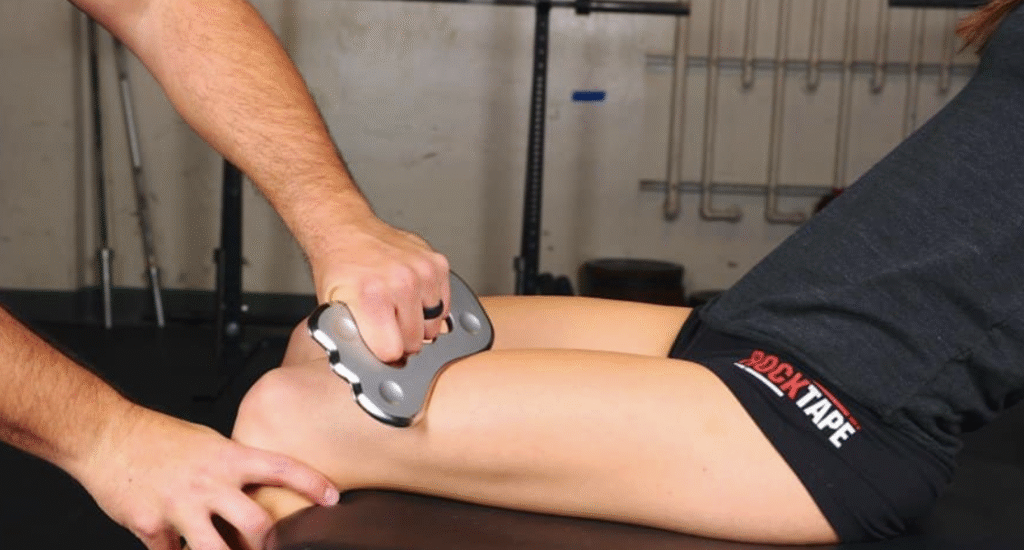
Here is how physical therapy delivers that process:
- Evaluation: Your therapist measures range of motion, strength, swelling, walking pattern, and balance, and asks about your sport and goals.
- A personal plan: Exercises and hands-on care are matched to your injury and your current stage.
- Milestone-based progression: You advance when you pass specific tests, not because a certain number of weeks have gone by.
- A home program: Most of your reps happen between visits, so your plan must be simple to follow.
Rehabbing a knee injury this way is the backbone of sports injury physical therapy, because athletes need more than pain relief. They need a knee that can handle game speed.
Common Knee Injuries That Need a Structured Rehab Program
Most knee injuries respond best to a guided program rather than rest alone. The table below shows the most common ones and what rehab focuses on.
|
Injury |
What happens |
Rehab focus |
| ACL tear | A key stabilizing ligament tears, often during a cut or landing | Quad strength, stability, landing control |
| MCL or LCL sprain | A side ligament stretches or tears (grade 1, 2, or 3) | Protecting the ligament, then side-to-side control |
| Meniscus tear | The cartilage cushion tears, often with twisting | Swelling control, load tolerance, full motion |
| Patellar tendinopathy | The tendon below the kneecap becomes irritated from jumping | Gradual tendon loading |
| Patellofemoral pain | Pain around the kneecap from overload | Hip and quad strength, load management |
| Post-surgical knee | Recovery after a repair or reconstruction | Protected motion, then progressive strength |
Physical therapy for a knee sprain depends on the grade. A grade 1 sprain usually needs a short program focused on strength and confidence, while a grade 3 tear may need bracing first. Knee ligament injury rehabilitation for the ACL is the longest path, which is why expert ACL injury treatment matters. For specific injuries, see our guides on the MCL sprain recovery timeline and recovery after meniscus surgery.
The 5 Phases of a Knee Injury Rehab Protocol
The best physical therapy programs for knee injury recovery move you through clear phases, and each phase has a goal and an exit test. This knee injury rehab protocol applies to most injuries. If you have had surgery, your surgeon’s precautions come first, and a dedicated post-surgical rehabilitation plan will adjust the timing of each step.
Phase 1: Protect the Knee and Calm Swelling
The first goal is to settle the joint. Swelling shuts down the quadriceps, so controlling it early protects your strength later. Expect compression, elevation, ice for comfort, and gentle quad sets to keep the thigh muscle switched on. Getting the knee fully straight is a top priority, because lost extension is hard to win back.
Move on when swelling is minimal and you can walk with little or no pain.
Phase 2: Restore Mobility and Quad Control
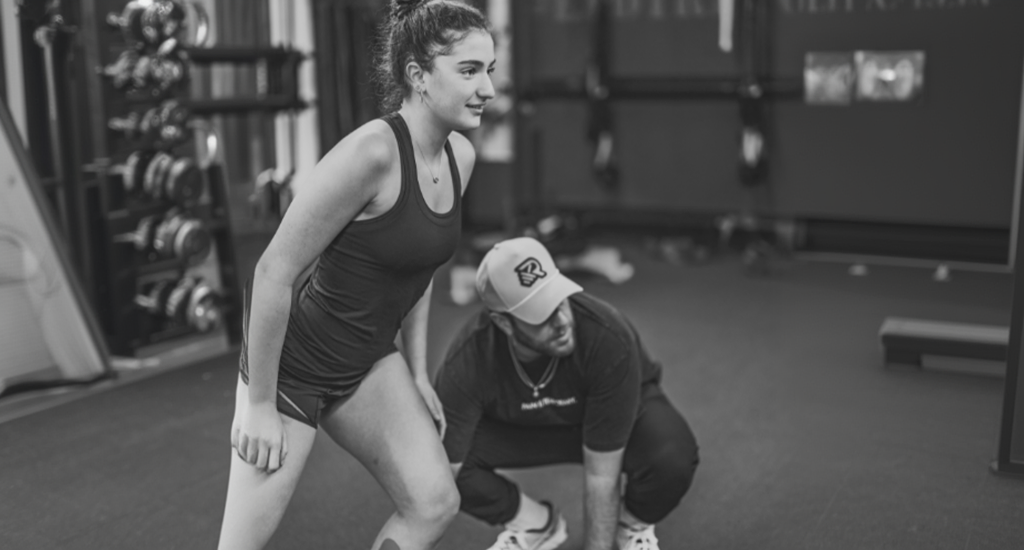
Now the focus shifts to bending and straightening the knee freely. A good mobility improvement program here includes heel slides, kneecap mobility work, and easy pedaling on a stationary bike. You will also relearn a normal walking pattern, because limping teaches bad habits.
Move on when: you have near-full range of motion, no limp, and you can do a straight leg raise without your knee sagging.
Phase 3: Build Strength and Stability
This phase rebuilds the muscles that protect your knee: quads, hamstrings, glutes, and calves. Loads increase step by step with squats, step-ups, and split squats.
Physical therapy for knee instability lives here too. If your knee buckles or “gives way,” balance and proprioception drills retrain the fast reflexes that keep the joint steady. Many people ask how to strengthen knee ligaments. Ligaments adapt slowly to gradual, repeated load, so the safest approach is progressive strength work combined with strong surrounding muscles that share the stress. Our blood flow restriction training helps you build strength with lighter weights when heavy loading is not yet safe.
Move on when: your injured leg reaches roughly 80 percent of the other leg’s strength with no swelling the next day.
Phase 4: Power, Agility, and Sport Skills
Here your knee learns to handle speed. Expect jumping and landing drills, a gradual running progression, lateral shuffles, and change-of-direction work. Coaching focuses on landing with the knee tracking over the toes rather than caving inward.
Move on when: you can run, hop, and cut without pain, swelling, or hesitation.
Phase 5: Return to Sport and Stay Healthy
Return to sport should be earned through testing. Strength comparisons, hop tests, and force plate testing show whether both legs produce and absorb force evenly. After clearance, a short maintenance routine helps keep your knee from getting hurt again.
|
Phase |
Main goal | Sample exercises |
Move-on criteria |
|
1 |
Calm swelling | Quad sets, heel props | Minimal swelling, easy walking |
|
2 |
Restore motion | Heel slides, bike | Near-full motion, no limp |
|
3 |
Build strength | Split squats, balance drills | About 80 percent strength symmetry |
|
4 |
Add power | Jumps, running, cutting | Pain-free agility |
|
5 |
Return to sport | Testing, maintenance | Passed return-to-sport tests |
Knee Injury Exercises by Recovery Stage
The right exercise depends on your stage, so knee injury exercise recovery should always match the phase you are in. For a full visual walkthrough, see our step-by-step knee rehab exercises.
Early-Stage Exercises for Knee Pain
These physiotherapy exercises for knee pain are gentle but important:
- Quad sets: Tighten your thigh with your leg straight and hold for 5 seconds.
- Straight leg raises: Lift a locked-straight leg to the height of the other knee.
- Heel slides: Slide your heel toward your hip to build bend.
- Wall sits: Hold a shallow squat against a wall for 20 to 30 seconds.
- Stationary bike: Pedal easily to boost motion and blood flow.
A simple rule: pain during exercise should stay at or below about 3 out of 10 and settle by the next morning.
Advanced Knee Strengthening Exercises
Once you have strength and control, these advanced knee strengthening exercises prepare you for sport:
- Rear-foot elevated split squats: Build single-leg strength.
- Single-leg Romanian deadlifts: Strengthen hamstrings and balance.
- Slow step-downs: Train knee control as you lower.
- Nordic hamstring curls: Protect the knee during sprinting.
- Lateral band walks: Strengthen the hips that guide the knee.
- Single-leg hops and lateral bounds: Teach safe landing.
Swimming and Cycling During Knee Rehab
Yes, both can help, as long as you choose the right version. Swimming rehab for a knee injury usually starts with pool walking and a gentle flutter kick, because water reduces body weight and lets you move with less stress. Avoid the breaststroke “whip” kick early on, especially with an MCL or meniscus injury, since it twists and strains the inner knee.
Cycling is one of the most useful tools in early rehab. It restores bend and builds endurance without impact. Start with low resistance, and set the seat high enough that your knee stays slightly bent at the bottom of the pedal stroke. If your doctor and therapist seem to give mixed advice, ask your therapist to explain why a specific activity fits your current phase.
How Long Does Knee Injury Recovery Take?
Knee injury recovery takes anywhere from a few weeks to a year, depending on the injury, its severity, and whether surgery is involved. These are typical ranges for active people who follow a consistent program:
|
Injury |
Typical recovery range |
| Mild (grade 1) ligament sprain | 1 to 3 weeks |
| Moderate (grade 2) ligament sprain | 4 to 8 weeks |
| Meniscus tear without surgery | 6 to 12 weeks |
| Partial meniscus removal | 4 to 8 weeks |
| Meniscus repair | 3 to 6 months |
| Patellar tendinopathy | 6 to 12 weeks or more |
| ACL reconstruction | 9 to 12 months for return to sport |
Your timeline also depends on your age, fitness before the injury, the demands of your sport, and how consistently you do your home program.
How to Tell If Your Knee Rehab Program Is Working
Knee pain rehabilitation should feel like steady progress, even if it is not perfectly linear. Good signs include less swelling the morning after a session, more bend and straightening each week, and easier stairs, squats, and walking.
Talk to your therapist about adjusting your plan if you notice:
- No improvement for two weeks or more
- Sharp pain during an exercise
- Swelling that builds from session to session
- Your knee giving way during normal activity
A setback does not mean failure. It usually means the load needs a small adjustment.
How Active Rehab Tools Support Knee Recovery
Active rehab, which is exercise-based care rooted in kinesiology (the science of human movement), is the core of every strong knee program. Tools simply help you train better. Kinesiology taping gives your knee light support and body-awareness feedback while you move, which can help you feel more confident during drills. Blood flow restriction builds strength with lighter loads. Manual therapy and dry needling can ease pain and stiffness so you can complete your exercises with better form. None of these replace exercise; instead, they make each session more productive.
What to Look for in Knee Rehab Facilities
The right clinic can shorten your road back. When comparing knee rehab facilities, look for:
- Sports-focused physical therapists who understand your sport’s demands
- One-on-one time rather than a crowded room
- Objective testing to guide return-to-sport decisions
- Criteria-based progression instead of a one-size-fits-all schedule
- A clear home program you can follow between visits
App-based programs can help with mild issues, but a hands-on evaluation catches problems an app cannot see. For more guidance, read our tips on choosing a sports physical therapist.
Knee Injury Rehab Programs in Cherry Hill Township, NJ
At Rehabletics Sports Physical Therapy, 5 Esterbrook Lane in Cherry Hill Township, we build knee injury rehab programs around your sport and your goals. Founder Dr. Jaime Mor, PT, DPT, ATC, has worked in clinical orthopedics, sports performance, and sideline care since 2013, and Rehabletics serves as a sports physical therapy contractor for the Philadelphia Flyers and Philadelphia Eagles.
Our R.E.P.A.I.R. Lab approach combines patient education, better movement patterns, and consistent progress tracking, so you always know where you stand. Athletes and active adults across Cherry Hill and South Jersey trust us to get them back to the game stronger. Ready to start? Book your free consultation today.