


Neck Pain Treatment in Cherry Hill, NJ That Gets You Moving Again

Google Rating · 62 Reviews
Treatment Modalities
Athlete-First Approach
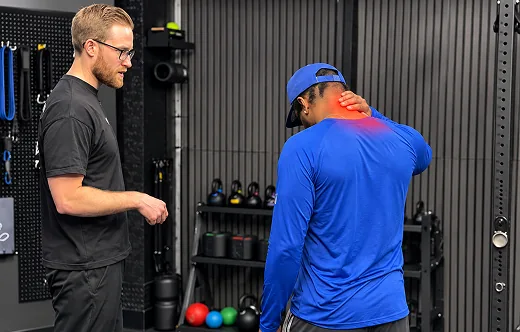
You woke up and couldn’t turn your head. Or that dull ache between your shoulder blades has been creeping up into your neck for weeks, and now it follows you to work, to bed and through every glance at your phone. The good news is that sports physical therapy can help, often without medication or injections. At Rehabletics, our neck pain treatment goes after the reason your neck hurts, not just the pain you feel today. Dr. Jaime Mor, PT, DPT, ATC, and our team build a one-on-one plan to calm the pain, restore your motion and keep it from coming back.
Ready to feel better? Request a neck pain evaluation or call our Cherry Hill clinic today.
What Is Neck Pain, and What Does It Feel Like?
Neck pain is pain or stiffness anywhere in the cervical spine, the seven small bones that run from the base of your skull to the top of your shoulders. Your neck holds up a head that weighs roughly ten pounds and lets it turn, tilt and nod all day. That’s a lot of work for a small group of muscles, joints and discs. Neck pain affects roughly 10% to 20% of adults, and it becomes more common with age, so if yours is slowing you down, you’re far from alone.
Therapists usually split neck pain into two types:
- Axial neck pain stays in the neck. It may feel achy, tight or sharp when you move.
- Radicular pain spreads from the neck into the shoulder, arm or hand, often with numbness, tingling or weakness. This usually points to an irritated nerve.
Why Does the Back of My Neck Hurt?
Pain at the back of the neck most often comes from tight or overworked muscles that hold your head up, such as the upper trapezius and the small muscles at the base of the skull. Long hours looking down at a screen, a forward-head posture or a hard workout can overload them. This type of pain often brings headaches at the base of the skull along with it.
What Causes Lower Neck Pain?
Lower neck pain, where the neck meets the shoulders and upper back, is often linked to rounded shoulders, a weak upper back and long periods of sitting. It can also come from the lower neck joints or discs. If the ache spreads between your shoulder blades or down one arm, have a physical therapist check it.
Stiff Neck and Shoulders: Why They Often Go Together
The muscles that move your neck also attach to your shoulder blades. When one area tightens up, the other usually follows. That’s why a stiff neck often comes with tight, sore shoulders, especially after a stressful week or a long drive. Treating both areas together usually works better than treating either one alone. If your shoulder is the main problem, learn more about our shoulder pain treatment options.
Symptoms You Should Not Brush Off
- Pain that gets worse when you hold one position, such as driving or working at a screen
- Stiffness that makes it hard to turn your head to check a blind spot
- Muscle tightness or spasms in the neck and upper shoulders
- Headaches that start at the base of your skull
- Stabbing or burning pain
- Numbness, tingling or weakness spreading into the shoulder or arm
Common Neck Pain Causes in Athletes and Active Adults
Most neck pain causes fall into a few groups. Knowing which one fits your case shapes how we treat it.
Muscle Strain and Posture
This is the most common cause we see. Slouching at a desk, looking down at a phone or sitting still for more than six hours a day overloads the muscles and joints that support your head. Over time, those muscles tighten, tire and start to hurt.
Pulled Neck Muscle or Neck Sprain
A strain is an injury to a muscle or tendon. A sprain is an injury to the ligaments that hold the neck joints together. Both can come from a sudden movement, a hard tackle or check, lifting something heavy with poor form, or simply sleeping in an awkward position.
Worn Joints and Aging
As we get older, the joints and discs in the neck can wear down. Conditions such as osteoarthritis and spinal stenosis can cause stiffness and pain, especially first thing in the morning.
Herniated Discs and Pinched Nerves
When a disc bulges or a bone spur narrows the space around a nerve, pain can travel into the arm along with tingling or weakness. This is the radicular pain described above.
Whiplash and Sports Injuries
Car accidents, falls and contact sports can snap the head forward and back quickly. That can strain muscles, sprain ligaments and irritate the joints of the neck. Whiplash is one of the injuries we treat often.
Stress and Tension
Stress makes many people clench their neck and shoulder muscles without noticing. Over days and weeks, that constant tightness can turn into real pain.
Pulled a Muscle in Your Neck? Here’s What to Know
A pulled neck muscle usually feels like a sharp or aching pain on one side of the neck, with stiffness that makes it hard to turn your head. It’s often worst in the first day or two. The pain is real, but most neck muscle strains respond well to the right care.
How Long Does a Pulled Muscle in the Neck Take to Heal?
It depends on how bad the strain is. Many mild strains feel noticeably better within a few days to two weeks. A more serious strain or neck sprain can take several weeks or longer to fully settle. If your pain isn’t improving after about a week, keeps coming back or comes with arm symptoms, a physical therapy evaluation can help you recover with more confidence.
How to Heal a Pulled Neck Muscle
- Calm it down first. Ease off the activity that hurt it, but don’t stay still all day. Long bed rest tends to make stiffness worse.
- Use cold, then heat. Ice can help in the first 48 to 72 hours. After that, heat helps relax tight muscles.
- Keep it moving gently. Slow, pain-free head turns and tilts help keep the neck from locking up.
- Get guided rehab. A physical therapist can loosen the tight tissue, restore motion and add strength work so the strain is less likely to come back.
Our muscle strain treatment uses the same step-by-step approach for strains anywhere in the body.
How to Treat Neck Pain From Sleeping Wrong
Waking up with a stiff neck is very common. Try a warm shower or a heating pad to relax the muscles, then move your head slowly through small, comfortable ranges. Over the next few nights, use a pillow that keeps your neck level with your spine, and favor sleeping on your back or side instead of your stomach with your head twisted to one side. If the stiffness doesn’t ease within a few days, or it keeps happening, let us take a look.
When to See a Neck Specialist
See a sports physical therapist if your neck pain:
- Lasts more than a week without getting better
- Keeps coming back
- Limits your training, work or sleep
- Spreads into your shoulder, arm or hand
In New Jersey, you can start physical therapy without a doctor’s referral. Learn how direct access physical therapy in NJ works. For more signs that it’s time to get help, read our guide on when to see a sports physical therapist.
When Neck Pain Needs Urgent Medical Care
Get emergency care right away if neck pain comes with any of the following:
- Pain after a car accident, fall or direct blow to the head or neck
- Severe stiffness with a fever or a bad headache
- Loss of bladder or bowel control
- Leg weakness, poor balance or trouble walking
- A sudden severe headache, dizziness, vision changes or slurred speech
- Numbness or weakness in the arms or legs that keeps getting worse
Ask a Specialist!
🔒 Your info is safe. We never share it.
How Rehabletics Provides Neck Pain Treatment
Our goal isn’t just to stop today’s pain. We want to rebuild your neck so the pain doesn’t come back. Every plan is one-on-one, with one therapist focused on you for the full session, and built around how you live, work and train.
Step 1: A Detailed Evaluation
We start by finding out what’s really driving your pain. We look at your posture, neck and shoulder range of motion, strength, nerve function, and the daily habits or sport demands that load your neck.
Step 2: Hands-On Care to Release Neck Pain
Manual therapy releases tight muscles and gently mobilizes stiff neck joints, which often brings quick relief. Depending on your case, we may add other tools from our 20+ treatment options:
- Dry needling for tight neck muscles and stubborn trigger points
- Kinesiology taping to support posture and ease muscle strain between visits
- Heat, ice and electrical stimulation (TENS) to calm pain and irritation
Step 3: Targeted Exercise and Corrective Movement
Pain relief only lasts if the muscles that support your neck get stronger. We use targeted exercises for the deep neck stabilizers, upper back and shoulder blades so your neck can handle desk work, lifting and sport again.
Step 4: Posture and Ergonomic Coaching
We help you adjust your workstation, screen height, phone habits, sleep setup and training form. Small changes here add up and help keep neck pain from returning.
What Recovery Looks Like
Every neck is different, but recovery usually moves through three general phases:
- Calm the pain. Reduce muscle guarding and irritation so you can move more comfortably.
- Restore motion and strength. Get your full range of motion back and build strength in the neck, upper back and shoulders.
- Return to full activity. Get back to training, competing and daily life with habits that protect your neck.
Some people feel better in a few visits. Others with longer-lasting or nerve-related pain need more time. We’ll show you your progress at each stage so you always know where you stand.
How to Keep Neck Pain From Coming Back
- Stack your posture. Keep your shoulders over your hips and your ears over your shoulders when you sit and stand.
- Raise your screens. Hold your phone and tablet closer to eye level instead of looking down.
- Set up your workspace. Put your monitor at eye level and keep your knees about level with your hips.
- Take movement breaks. Stand up, roll your shoulders and move your neck every 30 to 60 minutes, including on long drives.
- Sleep with support. Use a pillow that keeps your neck in line with your spine, and sleep on your back or side.
- Strengthen your upper back. A strong upper back takes pressure off your neck.
Why Athletes and Active Adults Choose Rehabletics
- One-on-one care. You get one therapist’s full attention for the entire session, every visit.
- Root-cause treatment. We treat why your neck hurts, not just where.
- Sports-level expertise. Dr. Jaime Mor, PT, DPT, ATC, leads our team, which serves as a sports physical therapy contractor for the Philadelphia Flyers and Philadelphia Eagles. We’ve worked with athletes from the NFL, NHL, MLB, NBA, UFC, NWSL and NCAA.
- 20+ treatment options under one roof. Your plan can include the tools that fit your case, all in one place.
Hear how others got back to doing what they love in our patient success story videos.
Neck Pain Relief in Cherry Hill and South Jersey
Our clinic at 5 Esterbrook Lane, Cherry Hill Township, NJ 08003, is easy to reach from across South Jersey. Many of our patients come from nearby towns such as Haddonfield and Voorhees. We’re open seven days a week, with weekday hours from 7:00 AM to 7:00 PM, so it’s easier to fit treatment around work and training.
Your Path to Lasting Neck Pain Relief
You don’t have to keep living with a stiff, sore neck. A clear evaluation and a plan built around your goals can get you moving, training and sleeping comfortably again. Call our Cherry Hill clinic at 609-354-7987 or book your free consultation today.
Ask a Specialist!
🔒 Your info is safe. We never share it.
Frequently Asked Questions
What is the best neck pain treatment?
For most people, the best results come from combining hands-on care with targeted strengthening and posture changes. Physical therapy goes after the cause of your pain, such as posture, weakness or joint stiffness, while medication mainly masks the symptoms. That's why the results of therapy tend to last longer and the pain is less likely to return.
How long does neck pain take to heal?
It depends on the cause. Neck pain from everyday strain or stress often improves within a few weeks, though it can take a few months to fully resolve. A herniated disc, whiplash or nerve-related pain usually needs a structured rehab program and more time.
What should I do for neck pain at home right now?
Use ice for the first 48 to 72 hours after a strain, then switch to heat. Keep moving gently, take regular breaks from screens, sleep with a supportive pillow and avoid long periods of bed rest. If your pain lasts more than a week, book an evaluation.
How do I release tension in my neck?
Gentle heat, slow head turns and tilts, shoulder rolls and deep breathing can help in the moment. For tension that keeps returning, a physical therapist can release tight muscles with manual therapy and give you strengthening work that keeps it from building back up.
Can poor posture really cause neck pain?
Yes, and it's one of the most common causes we see. Slouching at a desk or looking down at your phone overloads the muscles and joints that support your head. Over time, that strain builds into real pain, so posture correction and upper back strengthening matter for both relief and prevention.
Do I need a referral to see a physical therapist for neck pain in Cherry Hill?
No. Cherry Hill allows direct access, so you can book an evaluation with Rehabletics without a doctor's referral.