


Ankle Pain Relief in Cherry Hill, NJ: Get Back on Your Feet With Confidence

Google Rating · 62 Reviews
Treatment Modalities
Athlete-First Approach
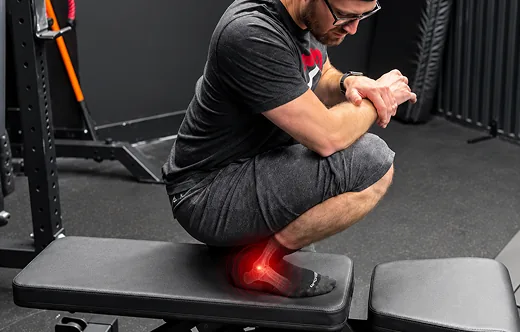
Maybe you rolled it stepping off a curb. Maybe it aches at the back of your heel every time you run. Or maybe your ankle just never felt the same after that sprain last season. Whatever started it, ankle pain makes every step a reminder. The good news: real ankle pain relief is possible, and sports physical therapy is one of the most effective ways to get it. At Rehabletics, Dr. Jaime Mor, PT, DPT, ATC, and our team find out why your ankle hurts and build a one-on-one plan to get you walking, training and playing without holding back.
What Is Ankle Pain, and Why Does It Happen?
Your ankle is where three bones meet: the tibia and fibula of your lower leg and the talus, which sits on top of your heel bone. Strong ligaments hold those bones together, while tendons and muscles move the joint and keep it stable every time you walk, cut, jump, or land.
Ankle pain can feel sharp or dull, constant or only during certain activities. It may come with swelling, stiffness or a feeling that the ankle could give way. However it shows up, ankle pain almost always has a cause we can identify, and once you know the cause, you can treat it.
Where Is the Achilles Tendon?
The Achilles tendon runs down the back of your lower leg and attaches to your heel bone. It connects your two main calf muscles (the gastrocnemius and the soleus) to the heel, and it’s the largest and strongest tendon in the body. You have one Achilles tendon in each leg. You can feel yours by pinching the thick cord just above the back of your heel.
Every time you walk, run, jump, or rise onto your toes, the Achilles tendon transfers force from your calf to your foot. That constant workload is exactly why it’s such a common source of pain in runners, court athletes, and active adults who ramp up their training quickly.
Where Is Achilles Tendon Pain Felt?
Achilles tendon pain is usually felt at the back of the ankle, either right where the tendon meets the heel bone or a few centimeters above it, along the cord. Many people notice:
- Stiffness and pain with the first steps in the morning
- An ache that warms up during activity, then returns later or the next day
- Tenderness when you squeeze the tendon
- Pain when you push off, climb stairs or go up on your toes
- Thickening or a small bump along the tendon
When the pain sits low, where the tendon attaches to the heel, it is called insertional Achilles pain. When it sits higher along the cord, it is usually midportion tendinopathy. Both respond well to a structured loading program, and our Achilles tendinopathy treatment is built around exactly that.
I Hit My Achilles Tendon and It Hurts. What Now?
A direct hit to the back of the ankle, from a cleat, a shopping cart, or a teammate’s stick, usually causes a bruise to the tendon and the tissue around it. It’s sore to the touch and may swell a little, but you can still walk normally and rise onto your toes. Most of these bumps settle within several days with ice, relative rest, and shoes that don’t rub the area.
Get checked the same day if you felt a pop, heard a snap, feel a gap in the tendon, or can’t push off or stand on your toes on that side. Those can be signs of an Achilles tear, which needs prompt medical care. If the pain from a simple knock lingers for more than a week or two, a sports physical therapist can assess the tendon and get you moving again safely.
Common Causes of Ankle Pain
H3: Ankle Injuries
- Ankle sprains: a stretched or torn ligament, most often on the outside of the ankle after rolling it
- Strains: an overstretched muscle or tendon around the ankle
- Fractures: a break in one of the ankle bones, often after a fall or a hard landing
- Achilles tendon injuries: irritation, partial tears, or full ruptures at the back of the ankle
- Tendinitis: painful, irritated tendons from overload or a sudden jump in training
Ankle Pain Without an Obvious Injury
- Arthritis: wear on the joint surfaces that brings stiffness and aching
- A past sprain that never fully healed: leftover weakness, poor balance, and repeat rolling
- Foot alignment: flat feet or high arches that change how load travels through the ankle
- Stress fractures: tiny bone cracks from repeated impact, common in runners
- Tarsal tunnel syndrome: a pinched nerve on the inner ankle that can cause burning or tingling
- Systemic conditions: inflammatory arthritis, gout, and other conditions that affect the joints
Where Does Your Ankle Hurt? What the Location Can Tell You
Where and how your ankle hurts gives useful clues about what is going on.
When It Hurts All Around Your Ankle
If it hurts all around your ankle rather than in one spot, the joint itself is often involved. A recent sprain can cause swelling that spreads around the whole joint. Arthritis tends to cause a general, achy stiffness that is worse in the morning or after sitting. A sudden increase in walking, hiking, or training can also irritate several structures at once. Widespread pain with redness, heat and swelling and no clear injury should be checked by a medical provider, since it can point to gout or an inflammatory condition.
Pain in the Muscle on the Side of Your Ankle
The “muscle on the side of the ankle” people usually feel is actually a tendon. On the outer side, the peroneal (fibularis) tendons run just behind the bony bump of your ankle. They help steady your foot on uneven ground, and they often get sore after sprains, on cambered roads or with a lot of cutting. On the inner side, the posterior tibialis tendon supports your arch, and it tends to ache in people with flat feet or after long days on their feet. Pain, swelling or a snapping feeling along either side is a sign the tendon needs better strength and support.
Pain in the Right Ankle and the Joints of the Right Foot
When your right ankle and the joints of your right foot hurt at the same time, the problem often starts in one place and spreads through the way you move. After a sprain or a sore Achilles, people shift their weight and change their stride without realizing it, and the small joints of the foot pick up the extra load. A collapsing arch, arthritis in the midfoot or a stress fracture can also cause pain in both areas. A proper evaluation looks at the ankle and foot together, and our foot pain relief care often goes hand in hand with ankle treatment. If several joints are swollen, red or warm, see a physician to rule out inflammatory arthritis or gout.
My Child Hurt Their Ankle. Where Can I Take Them in Cherry Hill, NJ?
If your child hurt their ankle at practice, on the playground or in a game, the first step depends on how bad it looks.
Go to urgent care or the ER first if your child:
- Can’t take four steps on the ankle, even with a limp
- Has pain right on the bone, especially at the back or tip of the ankle bones
- Has an ankle that looks bent or out of place
- Has numbness, a cold foot or severe swelling
These are signs that an X-ray is needed. In young athletes, an injury that looks like a sprain can involve a growth plate, so it’s worth ruling out a fracture before anything else.
Once a fracture is ruled out, or if the injury is a mild to moderate sprain, a sports physical therapist is a smart next step. At our Cherry Hill clinic, we evaluate the ankle, calm the pain and swelling, and rebuild strength and balance so young athletes return to their sport with an ankle they can trust. That last part matters. Kids who rush back without rehab are more likely to roll the same ankle again, which is one of the main reasons sports injuries keep coming back.
In New Jersey, you can start physical therapy without a doctor’s referral. Learn how direct access physical therapy in NJ works.
Ask a Specialist!
🔒 Your info is safe. We never share it.
When You Should See Someone About Ankle Pain
Book an evaluation with a sports physical therapist if:
- Your pain lasts more than a few days despite rest
- Swelling won’t go down
- Your ankle feels unstable or keeps rolling
- You have trouble putting weight on the foot
- Pain returns every time you get back to running or sport
- Your ankle still doesn’t feel right weeks after a sprain
Get immediate medical care for an obvious deformity, a foot that is numb or cold, an inability to bear any weight, or signs of an Achilles rupture.
How Rehabletics Delivers Ankle Pain Relief
Every session is one-on-one with your therapist. Here is how we take you from pain to performance.
Step 1: A Thorough Evaluation
Your first visit is all about understanding your ankle. We review your symptoms and history, then test how your ankle moves, how strong and stable it is, and how much load it can handle. We also look at your foot, knee, and hip, and we watch how you walk, balance, and land. Then we explain what we found in plain language.
Step 2: A Custom Treatment Plan
Your plan is built around your ankle, your goals and your sport. Depending on your case, it may include:
- Hands-on manual therapy to restore joint motion and ease tight tissue
- Targeted strengthening for the calf, the peroneal muscles and the muscles around the foot and hip
- Balance and proprioception training to retrain how your ankle reacts on uneven ground
- Gait retraining to clean up how you walk and run
- Kinesiology taping for support as you return to activity
- Shockwave therapy for stubborn Achilles tendon pain and other long-standing tendon problems
- Guidance on bracing or orthotics when they will help
- An activity plan that keeps you moving while the ankle heals, then a step-by-step return to sport
Step 3: Education That Protects Your Progress
Recovery doesn’t stop at the clinic door. You’ll leave with a home program, a clear understanding of what to do and what to avoid, and the tools to prevent the next flare-up. We believe motion is medicine, so our goal is to keep you as active as your ankle safely allows.
What Exercises Should You Avoid After Ankle Surgery?
After ankle surgery, the exercises to avoid depend on the procedure and your surgeon’s protocol, so always follow their guidance first. In the early weeks, most people should avoid:
- Putting more weight on the foot than you’ve been cleared for, even if it feels fine
- High-impact activity such as running, jumping and plyometrics
- Cutting, pivoting and quick changes of direction
- Aggressive calf stretching, especially after an Achilles repair, where overstretching can strain the healing tendon
- Heavy or single-leg calf raises before your therapist has progressed you to them
- Balance work on unstable surfaces or uneven ground before the ankle is ready
- Pushing through sharp pain or new swelling
What you can do matters just as much. Gentle range of motion, toe and hip exercises, upper body training, and cycling (once cleared) help you stay fit while the ankle heals. Our post-surgical rehabilitation program works alongside your surgeon’s plan and progresses each exercise at the right time.
What Recovery Looks Like With Us
Many people put off care because they imagine months of frustration with little progress. The reality is usually more encouraging. Recovery typically moves through four phases:
- Calm the pain. Reduce swelling and irritation so you can move more comfortably.
- Restore motion. Get your ankle bending, pointing and turning freely again.
- Rebuild strength and stability. Strengthen the calf and the muscles around the ankle, and retrain your balance.
- Return to full activity. Get back to running, lifting and sport with confidence.
Many people notice meaningful improvement within the first few weeks. Ligament tears, Achilles injuries, and post-surgical recovery typically take longer, and we track your progress at every stage so you always know where you stand.
Why Choose Rehabletics in Cherry Hill, NJ
- One-on-one care. Your therapist works with you directly, not while juggling five other patients.
- A clear goal. Our goal isn’t endless appointments. It’s a stronger, more stable ankle.
- Non-surgical first. Most ankle pain responds well to conservative care, and we tell you when another opinion makes sense.
- Sports-level expertise. Dr. Jaime Mor, PT, DPT, ATC, leads our team, which serves as a PT contractor for the Philadelphia Flyers and Philadelphia Eagles.
- 20+ treatment options under one roof. Your plan can include the tools that fit your ankle, all in one place.
- A local practice. We’ve helped 1,000+ patients in the greater Cherry Hill area since 2013.
Proudly Serving Cherry Hill and South Jersey
Our clinic at 5 Esterbrook Lane, Cherry Hill Township, NJ 08003, is easy to reach from across South Jersey, and many of our ankle patients come from nearby towns such as Voorhees. We’re open Monday through Friday from 7:00 AM to 7:00 PM, Saturday from 8:00 AM to 12:00 PM and Sunday from 9:00 AM to 12:30 PM, so it’s easier to fit care around work, school and practice.
Take the Next Step Toward a Pain-Free Ankle
Ankle pain doesn’t have to keep you on the sidelines. The sooner you treat the cause, the sooner you can get back to the trail, the court, the field, and your everyday routine. Call our Cherry Hill clinic at 609-354-7987 or book your free consultation to start your ankle pain relief today.
Ask a Specialist!
🔒 Your info is safe. We never share it.
Frequently Asked Questions
How long does it take to recover from ankle pain?
It depends on the cause and how severe it is. A mild sprain may settle within a few weeks, while long-standing pain, Achilles problems, and post-surgical recovery can take a few months. Most people notice meaningful improvement within the first few weeks of starting care.
Can ankle pain go away on its own?
Mild soreness sometimes settles with rest. Pain that lingers, keeps coming back or leaves the ankle feeling unstable usually needs treatment that addresses the cause, so it doesn't turn into a chronic problem.
Will I need surgery for my ankle pain?
In most cases, no. The vast majority of ankle pain responds well to conservative, non-surgical treatment. If we believe a surgical opinion is the right next step, we'll tell you and help you prepare.
Is it okay to walk with ankle pain?
Often, yes. Gentle, low-impact movement usually supports healing rather than harming your ankle. How much activity is right depends on your diagnosis, and we'll give you clear guidance at your first visit.
Can a physical therapist treat my child's ankle injury?
Yes. Once a fracture has been ruled out, a sports physical therapist can treat sprains and other ankle injuries in young athletes and guide a safe return to their sport. If your child can't bear weight or has pain right on the bone, get an X-ray first.
What happens at my first appointment?
Your first visit is all about understanding your ankle. We review your history, examine how your ankle moves and how strong and stable it is, and build a custom treatment plan with you before you leave.