


A sports injury keeps coming back because the pain went away before the problem did. Rest lets tissue calm down, but it does not rebuild the strength, control, and load tolerance that failed in the first place. When you return to full training with those gaps still in place, the same spot breaks down again.
The numbers back this up. A 2020 review in the British Journal of Sports Medicine, covering more than 71,000 athletes, found that a previous hamstring strain makes another one about 2.7 times more likely. At Rehabletics, Dr. Jaime Mor, PT, DPT, ATC, treats recurring injuries by finding the root cause first, which is the core of our sports injury care in Cherry Hill.
The Recurring Injury Cycle: Why Feeling Better Is Not the Same as Being Ready

Most athletes with a recurring injury know this loop well:
- You get hurt.
- You rest until it stops hurting.
- You feel ready and return to full training.
- The demands of your sport hit tissue that is still underprepared.
- The injury flares again, often in the same spot.
This is not bad luck. Each lap of the cycle leaves you a little weaker and more cautious, which makes the next setback more likely.
7 Reasons Your Sports Injury Keeps Coming Back
Most recurring injuries trace back to one or more of these seven causes.
You Returned on a Date, Not on a Test
“Six weeks” is a guess, not a measurement. Your heart and lungs regain fitness faster than tendons and bones adapt, so you can feel ready long before your tissue is. A safe return depends on passing strength and movement tests rather than reaching a date on the calendar.
Rehab Stopped When the Pain Stopped
Pain is usually the first thing to improve and the worst sign of readiness. Many athletes quit their exercises once they feel fine, which leaves the late, sport-specific stage of rehab unfinished.
The Real Problem Is Somewhere Else
The painful spot is often the victim, not the cause. Weak hips can overload the knee, stiff ankles can strain the Achilles, and poor pelvic control can set up hamstring strains. If treatment only targets the sore area, the source keeps doing damage.
One Side Is Still Weaker Than the Other
After an injury, the involved leg or arm often stays weaker, even when daily life feels normal. That gap stays hidden until a sprint, jump, or hard cut asks for full power.
Your Body Is Still Using a Compensation Pattern
This is why movement problems keep returning. While you were hurt, your brain learned a protective way to move, such as shifting weight or shortening your stride. That habit does not switch off on its own, so it keeps loading other tissues the wrong way.
Training Load Jumped Too Fast
Sudden spikes in mileage, minutes, or intensity are a classic trigger for overuse injuries. Ignoring small early warning signs makes the problem worse.
Recovery Is Not Keeping Up
Tissue repairs between sessions, not during them. Short sleep, under-fueling, and high life stress all slow that repair, so each workout adds more damage than your body can clear.
Why Does My Muscle Strain Keep Coming Back?
A muscle strain keeps coming back because the healed muscle is rarely as strong or as elastic as it was before. Scar tissue forms at the injury site and stretches less than healthy muscle. The muscle also tends to lose eccentric strength, which is its ability to control force while lengthening, and that is exactly what sprinting and kicking demand.
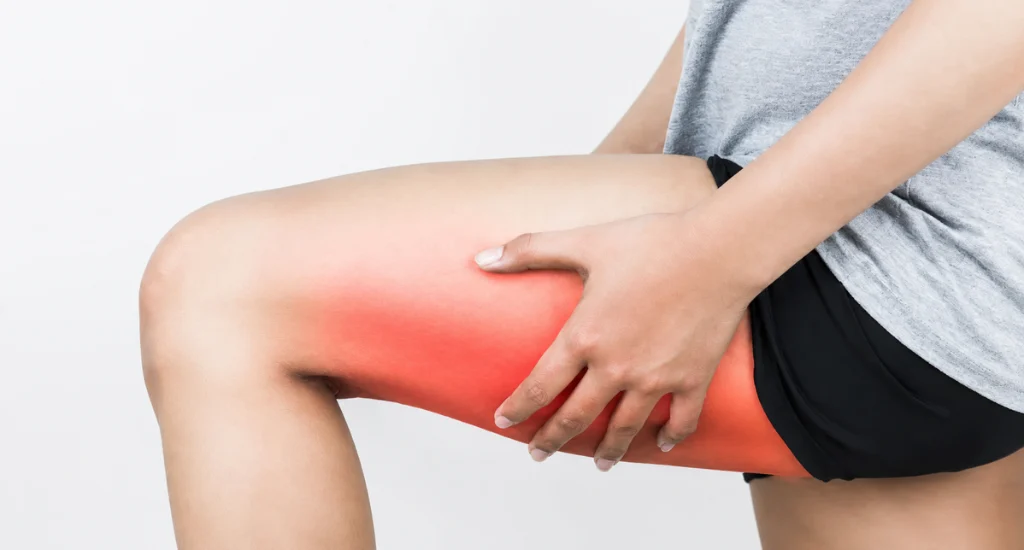
Hamstrings, calves, groins, and quads are the usual repeat offenders. Timing matters too. The same British Journal of Sports Medicine review found that a recent hamstring strain raised the risk of another one about 4.8 times. A common pattern on athlete forums is the soccer player who strains a thigh after every full match, returns within two weeks, and then strains it again.
The fix is progressive strengthening plus gradual exposure to top speed before full return. Learn more about treating muscle strains and how we manage recurring hamstring injuries.
Why Pain Comes Back After an Injury Has Healed
Pain can come back after an injury has healed because healed tissue is not the same as strong tissue. The tissue may be repaired, yet still unable to handle the load you put on it, so it complains when you push hard.
Your nervous system plays a role as well. After an injury, it can stay on high alert and treat normal activity as a threat, which produces pain even without new damage. Scar tissue and stiffness can add to this, and some old injuries flare up for years if their underlying weakness is never addressed.
Returning pain does not always mean you are hurt again, but it does mean the area needs a plan. If symptoms keep lingering, our approach to lingering and chronic pain can help.
How to Break the Cycle for Good
To break the cycle, you need to fix the cause, rebuild capacity, and prove you are ready with objective testing.
Start With a Root-Cause Evaluation
A full-body assessment looks at strength, mobility, balance, and how you move, not just the sore spot. Here is how a Rehabletics evaluation works and why it changes the way athletes recover.
Rebuild Strength Past Your Pre-Injury Level
Getting back to your old strength is not enough, because your old strength is the level at which you got hurt. Your goal should be to build a buffer above it.
Retrain How You Move
Targeted drills replace the compensation pattern with efficient mechanics for landing, cutting, running, and throwing.
Return Based on Testing, Not the Calendar
Tools such as force plate testing measure power and side-to-side balance, so your return is based on real numbers.
|
Factor |
Time-Based Return |
Test-Based Return |
| Decided by | Weeks since injury | Strength and movement results |
| Measures | How it feels | Power, balance, control |
| Re-injury risk | Higher | Lower |
| Result | Hope it holds | Proof you are ready |
Manage Load and Recovery
Increase training gradually, keep up maintenance strength work two times a week, and protect your sleep and nutrition. Treat small aches early, before they turn into another full setback.
When to See a Sports Physical Therapist
You should get a professional assessment if:
- You have injured the same area twice.
- Pain lasts longer than a few weeks.
- You notice swelling, weakness, or a joint giving way.
- You cannot train at full intensity.
- You are unsure whether it is safe to play.
Here are more signs it is time to see a sports physical therapist.
Stop the Cycle With Rehabletics in Cherry Hill
You do not have to keep starting over. Dr. Jaime Mor and the Rehabletics team find the root cause, rebuild your capacity, and test your readiness before you return. Visit us at 5 Esterbrook Lane in Cherry Hill, NJ, with no referral needed, and book a free consultation to start breaking the cycle today.