



Knee Pain Relief in Cherry Hill, NJ: Walk, Run and Play Without Thinking About Your Knee

Google Rating · 62 Reviews
Treatment Modalities
Athlete-First Approach
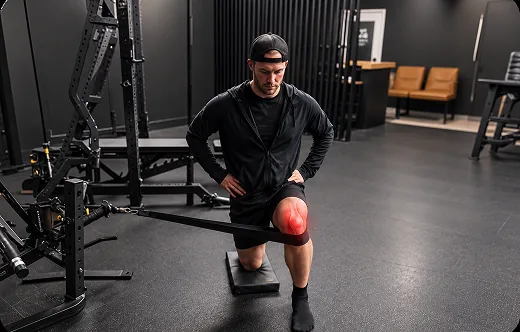
You felt it on the stairs this morning. A sharp catch when you stood up from your desk. A dull ache that shows up every night after a busy day. Knee pain has a way of shrinking your world one activity at a time. The good news: lasting knee pain relief is possible, and sports physical therapy is one of the most effective ways to get there. At Rehabletics, Dr. Jaime Mor, PT, DPT, ATC, and our team find out exactly why your knee hurts and build a one-on-one plan to fix it, so you can walk, work, train and play with confidence again.
Ready to stop guessing? Book your knee evaluation at Rehabletics today.
Your Knee Pain Has a Cause. We Help You Fix It.
Knee pain is not something you simply have to wait out or accept as part of getting older. Your knee is a hinge that sits between your hip and your ankle, and it takes the load every time you walk, squat, jump or climb stairs. When something above or below it isn’t doing its job, the knee usually pays the price.
That’s why the sore spot is not always the source. A weak hip, a stiff ankle or a movement habit you picked up years ago can all put extra strain on the knee. Our job is to find the real cause, not just quiet the symptom.
Signs Your Knee Needs Attention
- Pain on stairs, when squatting or when getting up from a chair
- Swelling, warmth or stiffness around the joint
- Clicking, popping or grinding with pain
- A knee that feels weak, unstable or like it might “give way”
- Pain that wakes you up at night
- Trouble fully bending or straightening the leg
What Causes Knee Pain in Athletes and Active Adults?
Most knee pain comes from a handful of problems. Knowing which one you have is the first step toward the right treatment.
Overuse Injuries
Repeating the same motion again and again, such as running, jumping or cycling, can irritate the tendons and the cartilage behind the kneecap. Patellar tendinitis (jumper’s knee), quadriceps tendinitis, patellofemoral pain syndrome (runner’s knee) and IT band syndrome all fall into this group.
Twisting Injuries, Ligament Sprains and Meniscus Tears
So how do you twist your knee? It usually happens when your foot stays planted while your body turns, for example when you cut on a soccer field, land awkwardly from a jump or slip on a wet step. That twisting force can sprain a ligament (ACL, MCL, LCL or PCL) or tear the meniscus, the rubbery cartilage that cushions the joint.
Why Does My ACL Hurt?
If your ACL hurts, it is usually because the ligament was stretched or torn during a pivot, a sudden stop or a hard landing. Many athletes describe a “pop,” fast swelling within a few hours and a knee that feels unstable when they try to change direction. Pain deep inside the knee can also come from the swelling and from other structures injured at the same time, such as the meniscus. A torn ACL needs a proper evaluation, and our ACL injury rehabilitation program covers both non-surgical care and recovery after reconstruction.
Osteoarthritis and Joint Wear
Over time, the cartilage that lines the knee can thin out. This often brings stiffness in the morning, an ache after activity and a grinding feeling. Arthritis can’t be reversed, but the right mix of strength, mobility and load management can greatly reduce pain and keep you active.
Muscle Weakness, Imbalance and Old Injuries
Weak glutes or quads let the knee collapse inward or absorb too much force. An old sprain that never fully healed can leave the joint less stable than it should be. Pain that seems to start in the knee can also come from the hip, which is why we often check for hip pain and weakness during your evaluation.
Where Does Your Knee Hurt? What the Location Can Tell You
Where and how your knee hurts gives useful clues about what’s going on inside.
Bottom of Knee Hurts
When the bottom of your knee hurts, just below the kneecap, the patellar tendon is the most common source. This is the classic spot for jumper’s knee in basketball and volleyball players and in runners who added hills or mileage too fast. In younger athletes, pain over the bony bump below the knee can be Osgood-Schlatter disease, an irritation of a growth area.
Pain at the Back of the Left (or Right) Knee
Pain at the back of the left knee, or the right, often comes from a strained hamstring or calf tendon, an irritated meniscus or a Baker’s cyst. It tends to feel tight or full when you bend the knee all the way or squat deep.
Lump on the Back of the Knee With Pain
A soft lump on the back of the knee with pain is often a Baker’s cyst (popliteal cyst). It forms when extra joint fluid collects behind the knee, usually because of an underlying problem such as arthritis or a meniscus tear. Treating that underlying problem is usually what settles the cyst.
Important safety note: If the back of your calf or knee is suddenly swollen, red, warm and painful, see a doctor right away. These can be signs of a blood clot (deep vein thrombosis), which needs urgent medical care.
Knee Bone Pain
Pain that feels like it is “in the bone” is often coming from the joint surfaces and cartilage, as with arthritis, or from irritated bone under the cartilage after repeated impact. Less often, it can be a stress reaction or fracture. Deep, constant bone pain that is worse at night or doesn’t ease with rest should be checked by a medical provider.
Burning Pain in the Knee
A burning feeling at the front of the knee is common with patellofemoral pain and patellar tendinitis. A burning sensation on the outside of the knee often points to IT band syndrome, especially in runners and cyclists. Burning paired with numbness or tingling can come from an irritated nerve and is worth getting checked.
Common Knee Pain Patterns and What They Mean
Knee Joint Pain When Walking
Knee joint pain when walking is often linked to arthritis, a meniscus problem or kneecap tracking issues. If it hurts more on stairs or slopes, the cartilage behind the kneecap is often involved. Pain that eases after you warm up and returns later in the day is a typical arthritis pattern.
Knee Clicking and Pain When Bending or Straightening
Clicking on its own, with no pain, is usually harmless. Knee pain and clicking when bending, or clicking with pain when straightening the leg, deserves a closer look. Common causes include rough cartilage behind the kneecap, a kneecap that doesn’t track smoothly or a torn piece of meniscus that catches as the joint moves. A knee that locks or won’t fully straighten should be evaluated soon.
Sudden Knee Pain Without Injury or Swelling
Sudden knee pain without injury or swelling is often an overload problem. A jump in training, a new pair of shoes, a long hike or a weekend of yard work can irritate a tendon or the joint before you notice anything is wrong. A small meniscus tear can also show up after a simple squat or twist. If the pain comes with fever, redness or a hot joint, see a doctor promptly.
How to Relieve Knee Pain at Night
Knee pain at night is common with arthritis, tendinitis and bursitis, and it often signals inflammation or a joint that was overloaded during the day. To ease it, try sleeping on your side with a pillow between your knees, or on your back with a pillow under the knee. A short ice session before bed can calm a flare. If night pain keeps waking you up, that’s a good reason to book an evaluation.
Ask a Specialist!
🔒 Your info is safe. We never share it.
How Do You Know if You Tore Something in Your Knee?
If you’re wondering how to know if you tore something in your knee, these are the most common signs:
- You felt or heard a “pop” at the moment of injury
- The knee swelled quickly, within a few hours
- You couldn’t keep playing or put full weight on the leg
- The knee feels unstable or gives way when you turn
- The joint catches, locks or won’t fully straighten
Any of these is a reason to get your knee evaluated rather than wait it out. A physical therapist can run hands-on tests to check your ligaments and meniscus and tell you whether imaging or a surgical opinion makes sense.
Knee Sprain Symptoms
Common knee sprain symptoms include pain, swelling, bruising, stiffness, tenderness along the ligament and a feeling that the knee is loose. Sprains are graded by how much the ligament is damaged:
- Grade 1: the ligament is stretched but not torn
- Grade 2: the ligament is partly torn, with more swelling and looseness
- Grade 3: the ligament is fully torn, and the knee often feels unstable
How Long Does It Take to Recover From a Knee Sprain?
A mild knee sprain typically improves within a few weeks. A partial tear often takes several weeks to a few months. A complete tear can take many months, especially if surgery is involved. Guided rehab helps you rebuild strength and stability so you return to sport with a knee you can trust.
When to See a Knee Pain Specialist in Cherry Hill, NJ
Book an evaluation with a sports physical therapist if:
- Your knee pain lasts more than a week or two despite rest and home care
- The pain keeps coming back every time you return to training
- Your knee feels unstable, locks or catches
- Swelling won’t go away
- Pain is changing how you walk, sleep or move
Get immediate medical care for an obvious deformity, a knee you can’t put any weight on, or signs of infection or a blood clot.
In New Jersey, you can start physical therapy without a doctor’s referral. Learn how direct access physical therapy in NJ works.
How Rehabletics Delivers Knee Pain Relief
Every session is one-on-one, with the same therapist focused on you for the full visit. Here’s how we take you from pain to performance.
Step 1: A Thorough Movement Evaluation
We review your history, test your strength, flexibility and balance, and watch how you walk, squat, step and land. We look at your hips and ankles, not just your knee. Then we explain what we found in plain language, so you know exactly what’s going on.
Step 2: Hands-On Care to Calm the Pain
Manual therapy reduces pain, improves joint motion and releases tight tissue around the knee. Depending on your case, we may add:
- Dry needling to release tight quads, hamstrings and calves
- Shockwave therapy for stubborn knee tendon pain, such as patellar tendinitis
Step 3: Targeted Strength Work
Progressive exercise rebuilds the quads, hamstrings, glutes and calves so the knee can handle load again. When heavy lifting isn’t possible yet, blood flow restriction training lets you build strength with lighter weights, which is especially helpful after knee surgery or injury.
Step 4: A Return-to-Activity Plan
We retrain how you run, jump, cut and land, then progress you back to your sport or daily activities step by step. You’ll leave with a home program that keeps your knee strong long after your last visit.
How to Stop Your Knee From Hurting at Home
If you’re asking how to stop your knee from hurting right now, these steps can help while you wait for your evaluation or between visits:
- Calm a fresh flare-up. Rest from the activity that triggered it, and keep the leg elevated when swelling is present.
- Keep moving gently. Easy, pain-free bending and straightening helps prevent stiffness.
- Switch to low-impact exercise. Cycling, swimming and walking on flat ground keep you fit while the knee settles.
- Avoid sharp pain. Mild discomfort is often fine, but sharp or rising pain means back off.
- Support the joint. A compression sleeve can help some people feel more stable during daily activity.
Knee Pain: Hot or Cold Compress?
Use a cold compress for a new injury, swelling or a flare-up after activity. Wrap ice in a thin towel and apply it for about 15 minutes at a time. Use a warm compress for stiffness and long-standing aches, such as arthritis, especially before activity. As a simple rule, cold for swelling, heat for stiffness.
How to Cure Aching Knees for Good
The way to cure aching knees for the long term is to treat the cause, not just the ache. For most people, that means calming the irritated tissue, restoring full motion, strengthening the muscles around the hip and knee, and changing the training errors or habits that started the problem. Our guide to knee injury rehab exercises walks through what that looks like phase by phase.
How to Heal a Knee Injury Faster
You can’t rush tissue healing, but you can avoid slowing it down. Start rehab early, stay as active as your knee allows, sleep well, eat enough protein and follow a structured strength plan. Many athletes recover faster when they get a clear diagnosis early instead of guessing for weeks.
How Long Does It Take to Recover From Knee Pain?
Recovery depends on the cause, how long you’ve had the pain and your goals. In general, it moves through three phases:
- Calm the pain. Reduce swelling and irritation so you can move more comfortably.
- Restore motion and strength. Regain full range of motion and rebuild strength around the hip, knee and ankle.
- Return to full activity. Get back to running, lifting and sport with mechanics that protect your knee.
Many people notice meaningful improvement within a few weeks of starting care. Ligament tears, meniscus injuries and post-surgical recovery typically take longer. We track your progress at every stage so you always know where you stand.
Knee Conditions We Help With
- Knee osteoarthritis
- Patellofemoral pain syndrome (runner’s knee)
- Patellar and quadriceps tendinitis
- Meniscus injuries and post-surgical recovery
- ACL, MCL and other ligament injuries
- IT band syndrome
- Recovery after knee replacement
- General stiffness and instability
Why Cherry Hill Chooses Rehabletics for Knee Pain
- One-on-one care. You work with the same therapist from start to finish, never passed between assistants.
- Root-cause treatment. We treat why your knee hurts, not just where.
- Clear plans. We explain your diagnosis and plan in plain language so you know what each step is for.
- Sports-level expertise. Dr. Jaime Mor, PT, DPT, ATC, leads our team, which serves as a PT contractor for the Philadelphia Flyers and Philadelphia Eagles.
- 20+ treatment options under one roof. Your plan can include the tools that fit your knee, all in one place.
Proudly Serving Cherry Hill and South Jersey
Our clinic at 5 Esterbrook Lane, Cherry Hill Township, NJ 08003, is easy to reach from across South Jersey, and many of our knee patients come from nearby towns such as Haddonfield. We’re open Monday through Friday from 7:00 AM to 7:00 PM, Saturday from 8:00 AM to 12:00 PM and Sunday from 9:00 AM to 12:30 PM, so it’s easier to fit care around work and training.
Get Back to the Things You Love
Knee pain doesn’t have to decide what you can and can’t do. The sooner you address the cause, the sooner you can get back to the stairs, the trail, the field and the gym without a second thought. Call our Cherry Hill clinic at 609-354-7987 or book your free consultation to start your knee pain relief today.
Ask a Specialist!
🔒 Your info is safe. We never share it.
Frequently Asked Questions
How long does it take to recover from knee pain with physical therapy?
It depends on the cause and how long you've had it, but many people notice meaningful improvement within a few weeks of starting care. Overuse problems often settle sooner, while ligament, meniscus and post-surgical recovery typically take longer. Your therapist will give you a realistic picture after your evaluation.
Can physical therapy help knee pain without surgery?
Very often, yes. Many knee problems, including tendinitis, runner's knee, mild to moderate arthritis and many meniscus and ligament injuries, respond well to conservative care. If we believe a surgical opinion is the right next step, we'll tell you honestly and help you prepare.
Is it normal to have knee pain at night?
It's common, and it's treatable. Night pain usually signals inflammation or a joint that was overloaded during the day. Sleeping with a pillow between or under your knees and using ice before bed can help, but pain that keeps waking you up should be evaluated.
Should I use a hot or cold compress for knee pain?
Use cold for new injuries, swelling and flare-ups, about 15 minutes at a time through a thin towel. Use heat for stiffness and long-standing aches such as arthritis, especially before activity.
What should I bring to my first appointment?
Wear comfortable clothes that let us see and move your knee, such as shorts. Bring any imaging reports or doctor's notes you have, your insurance information and a clear picture of when your pain started and what makes it better or worse.
How is Rehabletics different from other physical therapy clinics in Cherry Hill?
Every visit is one-on-one with the same therapist, and we focus on the root cause rather than just the symptom. Your plan is built around your body and your goals, whether that's a pain-free walk or a return to competition.