


If you just had knee surgery, the first question is simple: how long until you are back? After a partial meniscectomy, most people return to normal daily activity in 4 to 8 weeks. After a meniscus repair, plan on 3 to 6 months, with cutting and pivoting sports often taking 4 to 9 months.
Almost all meniscus surgery is done arthroscopically through small incisions, so the recovery time for arthroscopic surgery sounds quick. The incisions heal fast; the meniscus itself takes longer, depending on what your surgeon did inside the knee.
This guide from Dr. Jaime Mor, PT, DPT, ATC breaks recovery down by surgery type, by week, and by milestone. It follows the structure of our post-surgical rehabilitation program in Cherry Hill.
Meniscus Surgery Recovery Time at a Glance
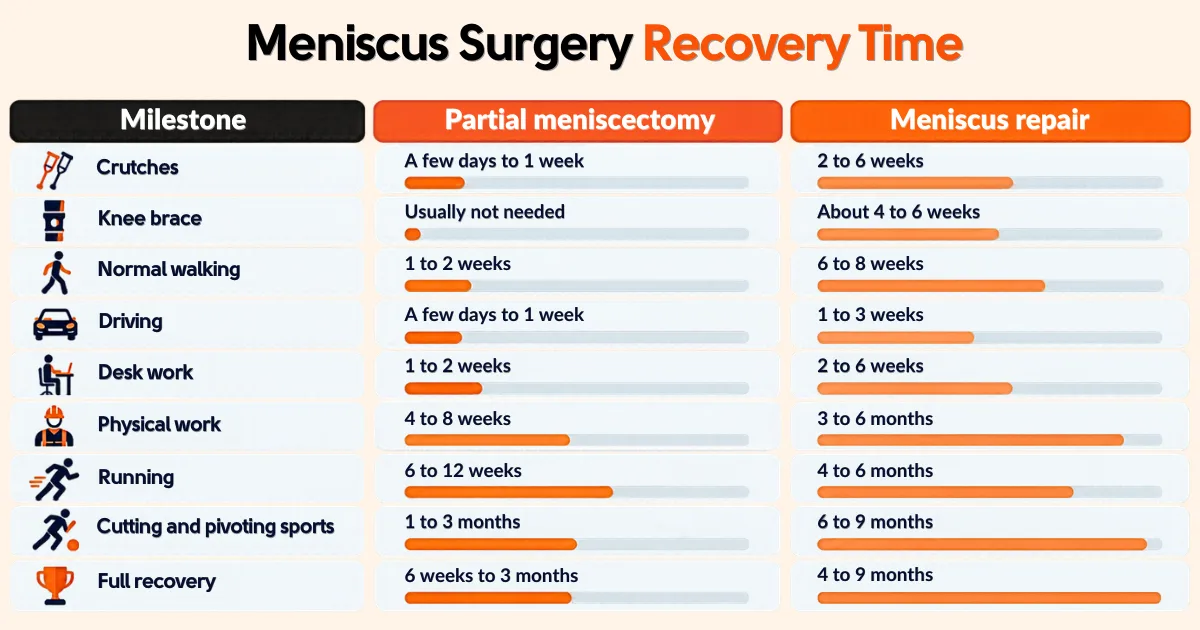
Meniscus surgery recovery time depends mostly on whether the torn tissue was trimmed or stitched. Use this table as a guide; your surgeon’s protocol always comes first.
|
Milestone |
Partial meniscectomy | Meniscus repair |
Meniscus root repair |
| Put weight on the leg | Same day, as tolerated | Protected for 0 to 6 weeks | Little or none for 4 to 6 weeks |
| Walk without crutches | 2 to 7 days | 4 to 6 weeks | 6 weeks or more |
| Bend past 90 degrees | Within 1 to 2 weeks | After about 4 to 6 weeks | After about 4 to 6 weeks |
| Drive | 1 to 2 weeks | 4 to 6 weeks | 6 weeks or more |
| Desk work | A few days to 2 weeks | 1 to 2 weeks with crutches | 1 to 2 weeks with crutches |
| Physical work | 4 to 8 weeks | 3 to 4 months or more | 4 months or more |
| Running | 4 to 8 weeks | 3 to 5 months | When your surgeon clears it |
| Cutting and pivoting sports | 6 to 12 weeks | 4 to 9 months | 6 to 9 months |
These are typical ranges, not deadlines. Age, tear pattern, and rehab consistency move you toward either end.
Which Meniscus Surgery Did You Have? Why It Changes Your Timeline
Your operative report matters more than any online timeline. If you are unsure which procedure you had, ask your surgeon’s office for a copy.
What Is a Partial Meniscectomy (Meniscus Trim)?
A partial meniscectomy removes the torn, unstable piece of meniscus and smooths the edge while keeping as much healthy cartilage as possible. It is the most common meniscus surgery. The procedure usually takes 30 to 60 minutes, and you go home the same day.
Because nothing has to heal together, recovery focuses on swelling, motion, and quad strength. Most people walk on the leg the same day, put the crutches away within a week, and feel close to normal for daily life within a few weeks. Feeling fine is not the same as being strong, though.
Meniscus Repair: Why Stitched Tissue Needs More Time
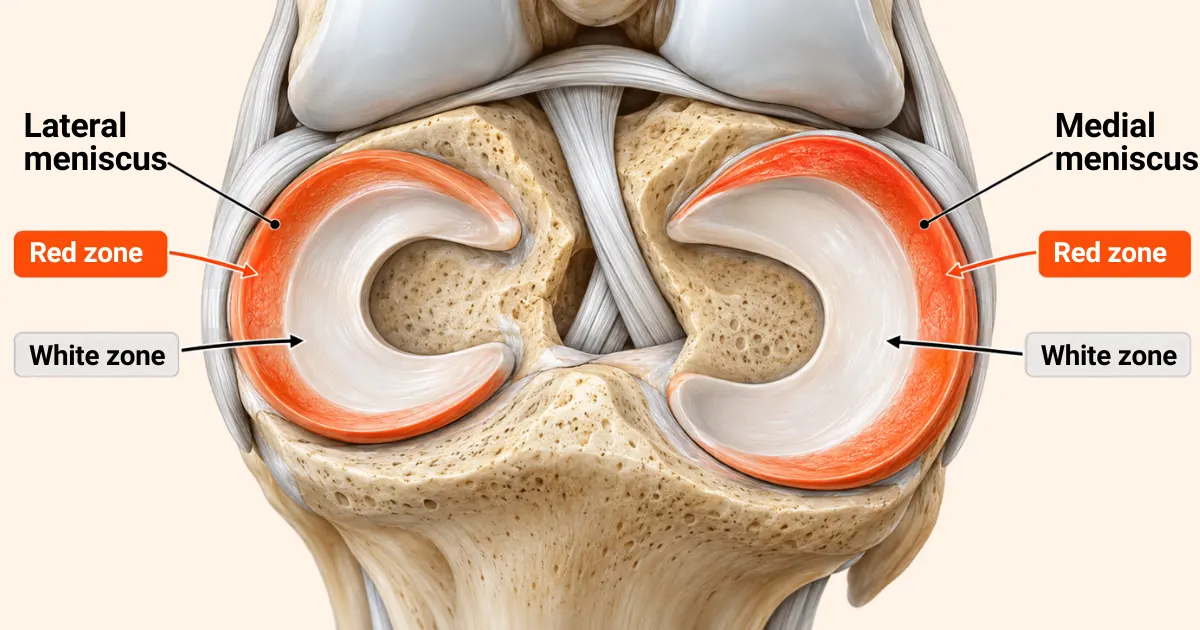
A meniscus repair sews the torn edges together so the tissue can heal. That only works where the blood supply is good. The outer rim, called the red zone, has blood flow, while the inner white zone does not, so tears there are usually trimmed instead.
After a repair, expect a brace, crutches, limits on how far you bend the knee, and a slower climb back. It is a longer road, but you keep your knee’s shock absorber.
Factors That Stretch the Timeline
Several details push recovery toward the longer end:
- Root repairs need the strictest early protection.
- Lateral (outer) meniscus surgery tends to take a little longer than medial (inner) surgery, so lateral meniscectomy recovery time often runs a week or two behind.
- Complex, bucket-handle, and degenerative tears usually heal more slowly.
- Cartilage wear or a ligament tear adds time.
- Age, body weight, and missed rehab sessions all slow progress.
If your knee ached for months before surgery, a full knee pain treatment plan also addresses the hip and movement habits around it. Still deciding about a fresh tear? Our guide to playing through a torn meniscus explains your options.
Meniscus Surgery Recovery Timeline Week by Week
Here is the post-operative recovery timeline with exercises for each phase. Move on when your knee meets a phase’s goals (swelling, motion, strength), not when the calendar says so.
Days 1 to 7: Calm the Knee and Wake Up the Quad
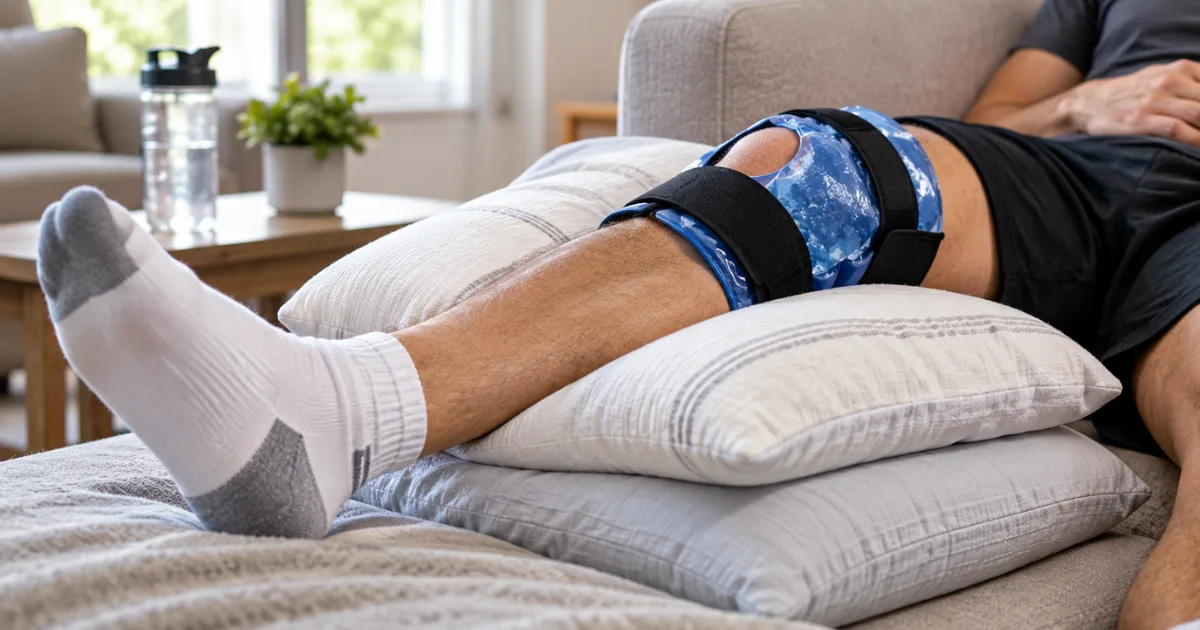
Elevate the leg above heart level, ice on a schedule, and pump your ankles hourly while awake. Pain usually peaks around day 2 or 3.
Gentle exercises start right away: quad sets (tightening the thigh with the knee straight), straight leg raises, and heel slides. After a repair, heel slides stay within your surgeon’s bending limit, usually 90 degrees, and you wear the brace when you walk. That is what to expect after meniscus repair surgery in the first week: protection first, but not bed rest.
Weeks 1 to 6: Restore Motion and a Normal Walk
After a trim, most people regain full motion by week 2, walk without a limp, and start a stationary bike once the knee bends far enough for a full pedal stroke.
After a repair, the knee is still protected with partial weight bearing, a brace, and bending capped near 90 degrees for 4 to 6 weeks. Focus on full knee extension, quad control, and hip and core strength. Our knee injury rehab exercises show safe options for this stage.
Weeks 6 to 12: Rebuild Strength

Strength is now the goal, with mini squats, step-ups, leg press in a limited range, bridges, and single-leg balance work. Repair patients begin closed-chain strengthening now.
The quad shrinks quickly, but heavy loads are not allowed yet. Blood flow restriction training builds quad strength with light weights, which keeps your meniscus repair recovery timeline on track without stressing the healing tissue.
Months 3 to 6 and Beyond: Running, Cutting and Full Sport
After a trim, most people finish this phase by week 8 to 12 with a return to running, agility drills, jumping, and then sport. After a repair, jogging usually starts around month 3 or 4. Plyometrics, cutting, and sport drills then build toward a full return between month 4 and month 9.
When Can You Walk, Drive, Work, and Run After Meniscus Surgery?
How Long Until You Can Walk Normally?
After a partial meniscectomy, you can usually put weight on the leg the same day and walk without crutches within 2 to 7 days. After a repair, expect crutches for 4 to 6 weeks.
Walking after 6 weeks of non-weight-bearing feels strange: the knee is stiff, the quad is weak, and many people limp. A gradual plan helps:
- Move from two crutches to one, held in the hand opposite your surgical knee.
- Drop the crutch indoors first, then outdoors.
- Practice heel-to-toe walking with an even stride in front of a mirror.
- Add a few minutes to your walks each day.
A normal walk usually returns within a few weeks of coming off crutches. On stairs, lead with the good leg going up and the operated leg going down.
How Long After Meniscus Surgery Can You Drive?
You can drive when three things are true: you no longer take opioid pain medicine, you can press the brake hard without hesitation, and your surgeon has cleared you. After a right-knee trim, that is usually 1 to 2 weeks, while a left-knee trim in an automatic car can take only a few days. After a repair, plan on 4 to 6 weeks. Before your first drive, sit in the parked car and press the brake hard ten times. If you hesitate or it hurts, wait.
When Can You Go Back to Work?
Meniscus tear surgery recovery time before going back to work depends on your job:
|
Job type |
Partial meniscectomy |
Meniscus repair |
| Desk or remote work | A few days to 2 weeks | 1 to 2 weeks, with crutches and a brace |
| Job on your feet | 2 to 6 weeks | 2 to 3 months |
| Heavy labor | 4 to 8 weeks | 3 to 4 months or more |
Ask your surgeon for written restrictions so your employer can offer modified duty.
When Can You Run or Lift Weights Again?
How long after a partial meniscectomy can you run? Usually 4 to 8 weeks, once the knee has full motion, stays calm after activity, and shows good single-leg control. After a repair, running usually waits about 3 to 5 months.
Weight lifting after meniscus surgery follows a ladder. Upper-body and core training can start within days. Leg training then progresses from range of motion to bodyweight, then to light loads, and finally to heavier loads. Deep, loaded squats come last because they compress the back of the meniscus, which often means 3 to 4 months or longer after a repair.
Is Pain After a Partial Meniscectomy Normal?
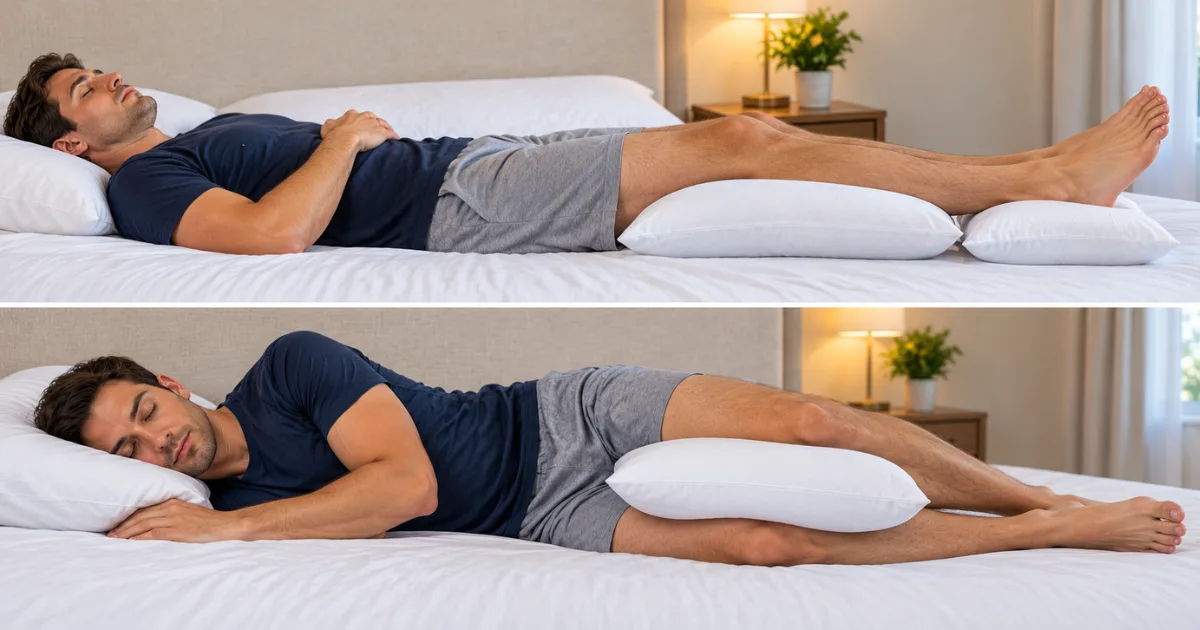
Yes, some pain is normal: a deep ache and tightness for several days, then steady improvement. Many people still feel occasional sharp twinges and swelling after a busy day at week 4, and that is usually part of healing rather than a sign of damage. Ice, elevation, and cold therapy for post-op swelling help keep the knee calm while you stay active.
|
Usually normal |
Call your surgeon |
| An ache that improves each week | Pain that gets worse after day 4 or 5 |
| Swelling after a more active day | Rapid swelling that does not settle with rest |
| Occasional sharp twinges | Locking, catching, or giving way |
| Bruising around the knee or shin | Fever over 101°F or drainage from an incision |
| Morning stiffness | Calf pain or swelling; chest pain or shortness of breath needs emergency care |
Do You Need Physical Therapy After Meniscus Surgery?
After a repair, yes. Physical therapy protects the repair while you regain motion, then rebuilds strength in the right order. After a trim, it is still strongly recommended. Pain often fades before quad strength and control return, and that gap is where stiffness and new injuries start.
A good PT plan measures progress: motion, swelling, quad strength versus the other leg, and single-leg control. At Rehabletics, every session is one-on-one with a Doctor of Physical Therapy, and your plan follows your surgeon’s protocol. If you are wondering what happens at your first visit, this guide explains it.
New Jersey allows direct access physical therapy, so you can start without a referral.
Return to Sport After Meniscus Surgery
Why NFL Players Return From a Meniscus Trim in Weeks
When an NFL player has a meniscus trim, reports often list 2 to 6 weeks out. A full repair usually costs a pro player 4 to 6 months. Lateral trims also run slower: research on elite soccer players found a median return of about 7 weeks after a lateral partial meniscectomy, compared with 5 weeks after a medial one.
Pros rehab every day with full-time medical staff. A weekend athlete with a job often needs the longer end of the range, so base your timeline on your knee, not a headline.
Clearance Tests That Matter More Than the Calendar
Return to sport after meniscus repair usually takes 4 to 6 months, and up to 9 months for competitive cutting and jumping sports. Before you are cleared, your knee should pass these checks:
- No swelling after training
- Full, pain-free motion
- Quad and hamstring strength of at least 90 percent of the other leg
- Hop test results within 10 percent of the other leg
- Full-speed sport drills without hesitation
We use force plate testing to measure how each leg produces and absorbs force, as the final step of our sports injury rehab process.
ACL and Meniscus Tear Recovery: How the Timeline Changes
Meniscus tears often happen alongside an ACL tear. When both are treated together, the ACL graft sets the clock, and return to sport usually takes 9 months or more. A meniscus trim adds little time. A meniscus repair adds limits on weight-bearing and bending for the first 4 to 6 weeks, although the overall return-to-sport timeline stays similar.
Our torn ACL and meniscus recovery guide compares both paths side by side, and our ACL rehab program covers the full plan from surgery to sport.
Meniscus Surgery Rehab in Cherry Hill, NJ
Meniscus surgery recovery goes better with a plan built around your knee, your surgeon’s protocol, and your goals. At Rehabletics, Dr. Jaime Mor and our team bring the same approach used with professional athletes; Dr. Mor works as a sports physical therapy contractor for the Philadelphia Flyers and Philadelphia Eagles. You get one-on-one sessions, objective testing, and a clear path back to your sport.
If your surgery is still ahead, start with pre-surgical rehabilitation, because a stronger, calmer knee going into the operating room can make the first weeks afterward easier. Ready to get started? Book a free call with our team at 5 Esterbrook Lane in Cherry Hill.