



Safe knee injury rehab starts with gentle activation work like quad sets, heel slides and straight leg raises, then progresses into strength, balance and finally power. The exercises are not complicated. What separates a knee that recovers fully from one that keeps flaring up is knowing which stage you are in and what has to be true before you move on.
This guide covers all three phases of knee injury rehabilitation, with reps and hold times for every exercise and guidance on which movements fit your specific injury. It follows the progression model Dr. Jaime Mor uses with athletes at Rehabletics in Cherry Hill, New Jersey.
What Knee Injury Rehab Exercises Actually Do
Knee injury rehab exercises restore motion, switch the muscles back on and rebuild the support system around the joint so it can handle load again. Four things happen when you rehab properly:
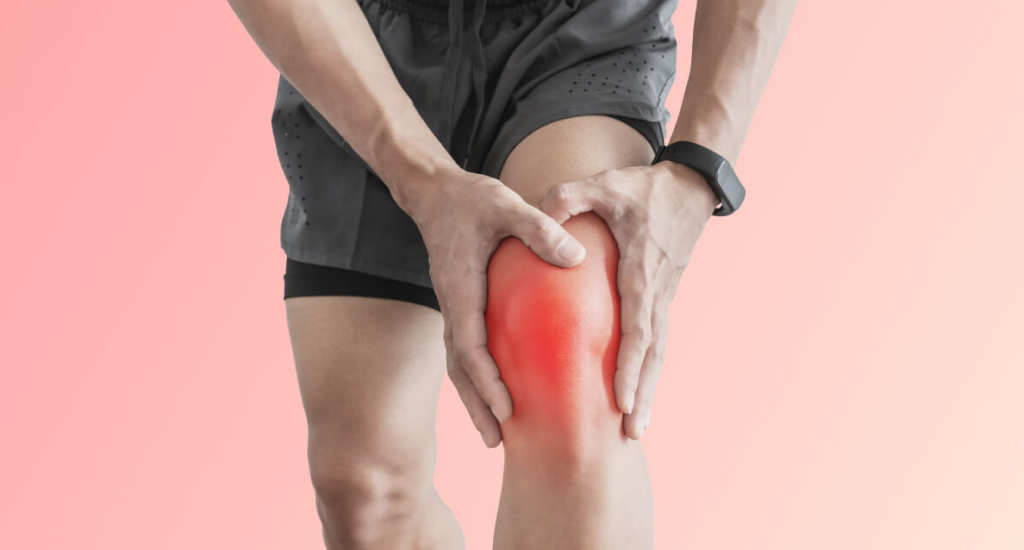
- Range of motion comes back. A knee that cannot fully straighten changes how you walk, which pushes extra stress onto your hip and your other leg.
- Quad shutdown gets reversed. Within days of a knee injury the quadriceps switch off as a protective reflex, and gentle isometric work restarts them before the muscle loses real size.
- The surrounding muscles take the load. Your quadriceps, hamstrings, glutes and calves work as shock absorbers, so stronger support means less force through the joint itself.
- Re injury risk drops. Structured neuromuscular programs that combine strength, balance and dynamic drills reduce lower body injury risk by roughly 25 percent.
Before You Start: Safety Rules and Red Flags
The Pain Rule That Decides Everything
Mild muscle fatigue and a dull ache during knee pain rehab are normal. Sharp pain inside the joint is not. If a movement produces a stabbing sensation, stop it instead of pushing through.
The more honest test happens the next morning. If your knee is more swollen or stiffer than the day before, the dose was too high, so cut the volume by a third and build back up. Swelling is usually worst in the first 2 to 3 weeks and can linger, so treat it as feedback rather than failure.
Warning Signs That Mean Stop and Get Assessed
- The knee locks or catches and will not fully straighten
- The knee gives way or buckles underneath you
- You cannot put weight through the leg
- Swelling keeps getting worse despite ice and elevation
- Sharp pain continues even at rest
- You have made no progress after several weeks of consistent work
The Three Phases of Knee Injury Rehabilitation
Every knee rehabilitation program moves through the same three stages. The exercises change, but the sequence does not.
| Phase | Goal | Main focus | You are ready to move on when |
|---|---|---|---|
| Phase 1 | Protect the joint and restore motion | Isometrics and gentle range of motion | Swelling is settling and your knee bends and straightens close to the other side |
| Phase 2 | Rebuild strength | Bodyweight and resistance band strength work | You walk without a limp and handle stairs confidently |
| Phase 3 | Balance, control and power | Single leg, dynamic and impact work | Your injured side matches the other side on strength, balance and hop tests |
Phases are earned, not scheduled. Two people with the same injury can be weeks apart, because progression depends on how your knee responds rather than what the calendar says. Use the right hand column as your gate every time.
Phase 1 Knee Injury Rehab Exercises: Protect and Restore Motion
Phase 1 covers the first days after a knee injury or surgery. Alongside these exercises, protect the joint, ice for up to 20 minutes every 3 hours using crushed ice or frozen peas in a damp towel, and elevate the leg so your ankle sits above heart level.
Quad Sets
Sit or lie with your leg straight. Tighten the muscle on the front of your thigh so the back of your knee presses toward the floor. Hold 5 to 10 seconds, then relax.
Do 10 to 15 repetitions every 1 to 2 hours while awake. This is the most valuable exercise in early knee injury rehabilitation, because it reverses quad shutdown before it becomes weakness you chase for months.
Heel Slides
Lie on your back and slowly slide your heel toward your hip so the knee bends as far as it comfortably allows, then slide it back. Do 10 to 15 repetitions. Never force the bend, and stop where the stretch turns into a pinch.
Straight Leg Raise
Lie on your back with the injured leg straight and the other knee bent. Tighten the thigh, then lift the straight leg 6 to 8 inches. Hold for 5 to 10 seconds and lower with control, 10 to 15 repetitions.
The knee must stay locked straight throughout. If it sags during the lift, go back to quad sets for a few more days.
Passive Knee Extension
Prop your heel on a rolled towel so the back of your knee hangs free, and let gravity straighten it for 5 to 10 minutes several times a day. A 1 to 2 pound weight just above the kneecap helps. Losing full extension is the most expensive mistake in early knee recovery exercise work, and it is far easier to protect than to get back.
Ankle Pumps and Calf Stretch
Point and flex your foot regularly to keep circulation moving. Then loop a towel around your foot and pull gently to stretch the calf, holding 20 to 30 seconds, 5 to 6 times, first with the knee straight and again slightly bent.
Phase 2 Knee Injury Rehab Exercises: Rebuild Strength
Four muscle groups protect your knee: the quadriceps, hamstrings, glutes and calves. Phase 2 rebuilds all four. These knee strengthening exercises after injury should feel like work, but should not leave the joint sore the next day.
Glute Bridges
Lie on your back with knees bent and feet flat. Push through your heels and lift your hips until your body forms a straight line from shoulder to knee. Start with 2 sets of 15, then progress to single leg bridges or add a band above the knees.
Mini Squats
Stand with feet shoulder width apart and bend your knees only about 25 to 30 degrees, keeping your chest tall and weight through the middle of your feet. Do 2 sets of 10, and earn depth before you add weight.
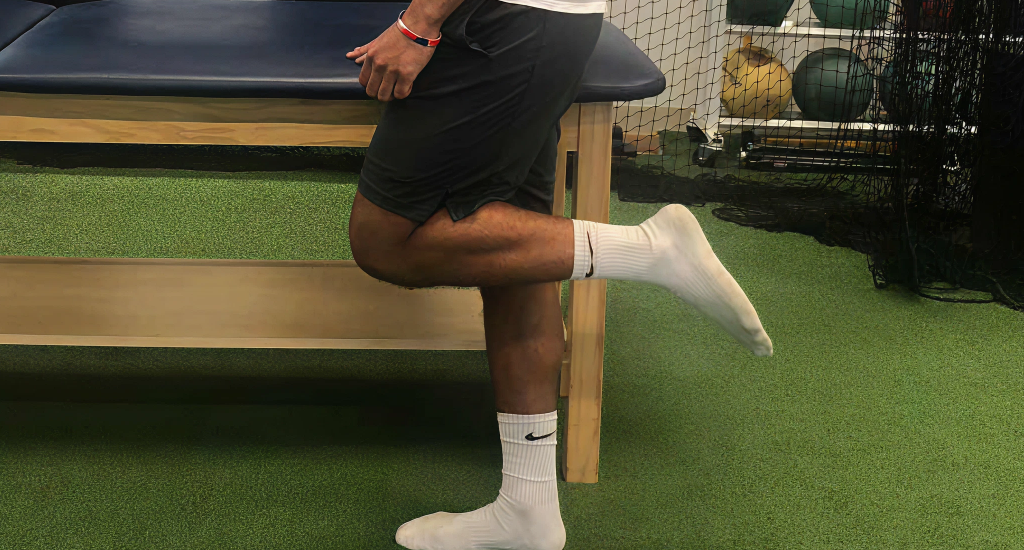
Standing Hamstring Curl
Hold a chair for balance and bend one knee, drawing your heel toward your buttock with control. Do 2 sets of 12 per leg, then add an ankle weight or band once it feels easy.
Clamshells and Side Steps
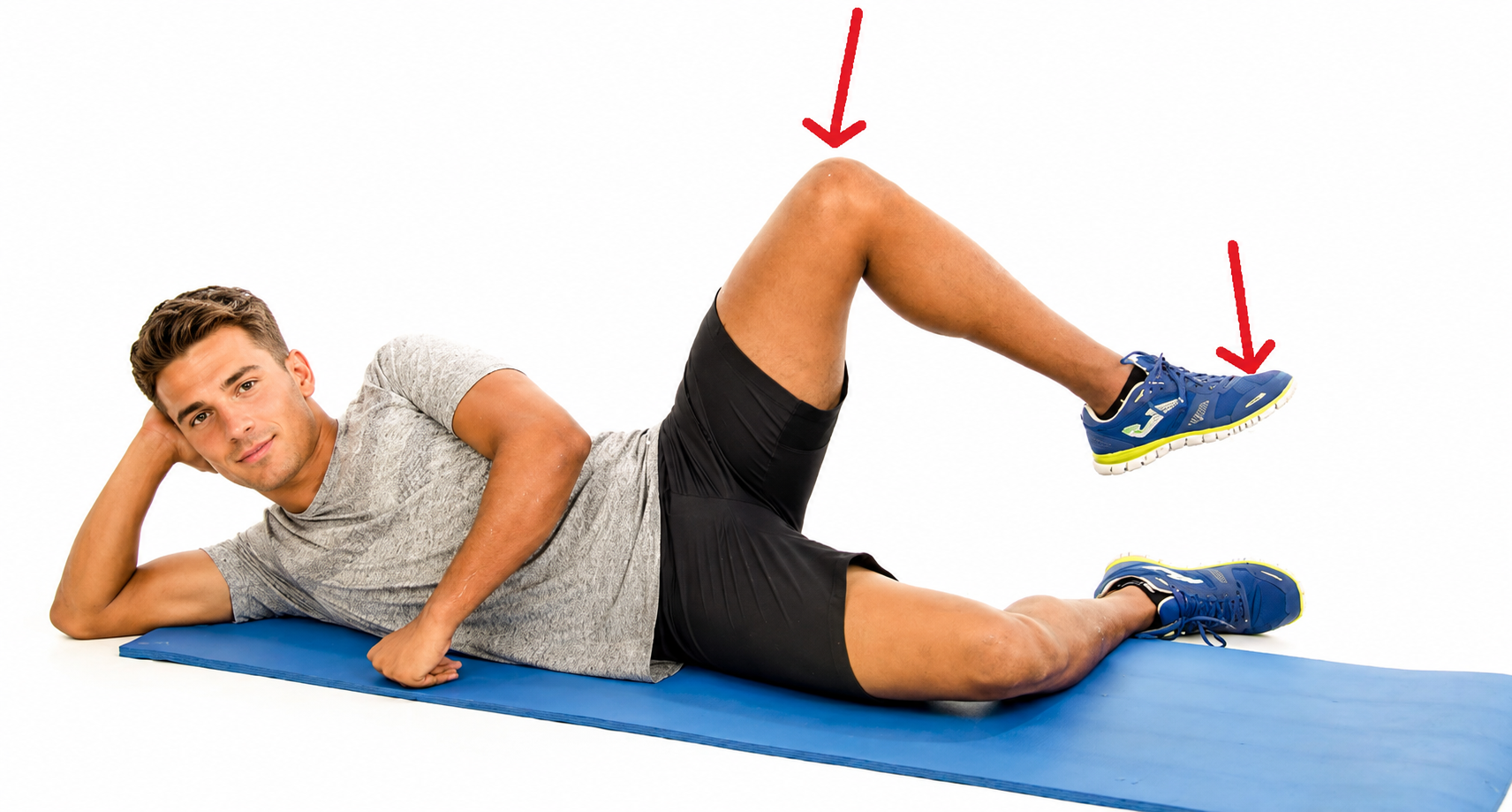
Lie on your side with knees bent and lift the top knee while keeping your feet together, 12 to 15 per side. Then loop a band around your ankles and step sideways, 10 to 15 steps each direction.
These matter more than people expect. Weak hip muscles let the thigh rotate inward, changing how the kneecap tracks, so a lot of stubborn knee pain is really a hip problem showing up further down the leg.
Calf Raises and Step Ups
Rise onto your toes slowly and lower with control, 2 to 3 sets of 12 to 20. Then step up onto a 6 to 8 inch step leading with the injured leg and step back down under control, 8 to 12 per side. Step ups matter because they rehearse the movement most people struggle with, which is stairs.
How Often to Do Phase 2 Work
Aim for 4 to 5 days a week, 15 to 20 minutes per session. Frequency beats intensity in knee rehabilitation workouts, because short sessions repeated often give tissue a consistent signal without overloading it.
Phase 3 Knee Injury Rehab Exercises: Balance, Control and Return to Sport
Balance and Proprioception
Proprioception is your sense of where the joint is in space, and it takes a real hit after any knee injury. Stand on the injured leg for 30 seconds with arms crossed, then close your eyes, then progress to a cushion or balance pad. Retro walking, meaning walking backwards, is another low cost way to challenge control.
Lunges, Step Downs and Single Leg Strength
Do forward and reverse lunges for 2 to 3 sets of 8 to 12 per leg, keeping the front knee stacked over the ankle. Add step downs from a low step, lowering slowly so the other heel just taps the floor. Single leg strength is what transfers to running, cutting and landing. Two legged exercises let the strong side quietly cover for the weak one, which is how people finish rehab still carrying a deficit.
Adding Impact and Plyometrics Safely
Begin with small hops in place, then progress to box jumps from a 6 to 12 inch height for 2 to 3 sets of 5 to 8. Judge every rep by the landing. A quiet, soft, controlled landing is the goal, and volume never comes before quality.
The Return to Sport Checklist
Before you go back to full training or competition, you should be able to tick every one of these:
- No pain and no swelling during or after activity
- Full bending and straightening that matches your other knee
- Equal calf stretch flexibility on both sides
- Single leg calf raises to the same height and the same number of repetitions on both legs
- Equal single leg balance time on both sides
- Equal hop distance on both legs
- A graded return, with light jogging and drills cleared before full competition
Timelines vary widely. A minor sprain may settle in a few weeks, most significant knee injuries need at least 6 to 8 weeks, and an ACL reconstruction typically takes 9 to 12 months before full sport clearance.
Which Knee Rehab Exercises Fit Your Specific Injury
Most articles give one generic list. In reality the emphasis shifts depending on what you injured.
| Injury | Emphasize | Be cautious with |
|---|---|---|
| Sprained or twisted knee, soft tissue | Early motion, quad sets, calf work | Deep squats and twisting in the first weeks |
| MCL or LCL sprain | Straight plane quad and hamstring strength | Side to side movement and cutting |
| ACL injury or reconstruction | Full extension, quad strength, single leg control | Early seated leg extension, pivoting |
| Meniscus tear | Pain free range, isometrics, glute strength | Deep knee bend under load, twisting |
| Patellofemoral pain or runner’s knee | Hip abductors, glutes, controlled step downs | High volume stairs and downhill running |
| Patellar tendinopathy | Heavy slow isometrics and steady tendon loading | Explosive jumping too early |
| Knee osteoarthritis | Consistent low impact strength, cycling | Long periods of complete inactivity |
Treat this as general direction rather than a prescription. A hands on assessment tells you how much load your knee can take now and how fast to progress it.
Common Mistakes That Slow Knee Recovery
- Resting too much. Complete rest lets the quadriceps shut down further. Gentle, early movement restores blood flow and protects strength.
- Only training the knee. Your hips and ankles control how force reaches the joint. Ignoring them caps how far knee rehab can take you.
- Loading seated leg extensions too early. Open chain movements place shear force across the knee. After a ligament injury or graft, closed chain work such as mini squats and step ups is the safer starting point.
- Chasing rep counts. Ten controlled repetitions with good alignment are worth more than thirty sloppy ones.
- Avoiding the leg out of fear. Never loading the knee keeps it weak and keeps you from trusting it. Confidence in the joint is part of the outcome, not a bonus.
- Mislabeling runner’s knee. Runner’s knee is usually patellofemoral pain rather than structural damage, and it generally responds well to progressive loading instead of rest.
A Knee Rehab Plan You Can Fit Into Under One Hour a Week
You do not need long sessions. Under one hour of knee injury workouts spread across the week drives real change, as long as it is consistent.
| Day | Time | Focus |
|---|---|---|
| Monday | 15 minutes | Phase appropriate strength work |
| Tuesday | 5 minutes | Range of motion and quad sets |
| Wednesday | 15 minutes | Strength plus balance |
| Thursday | 5 minutes | Range of motion and quad sets |
| Friday | 15 minutes | Strength plus step ups |
| Weekend | 5 minutes | Balance and an easy walk |
Warm up for 5 to 10 minutes before the longer sessions with walking or a stationary bike. Short, frequent blocks beat one heroic session, because tissue adapts to repeated signals rather than occasional extremes.
How to Keep Training While Your Knee Heals
A knee injury does not have to stop your training. Keep up upper body lifting, core work and any seated or lying exercise that leaves the injured joint quiet.
Train the uninjured leg too. Working one side helps preserve strength on the other, so single leg presses, step ups and calf raises on the healthy side are worth keeping.
For conditioning, a stationary bike on light resistance, pool walking or swimming with a pull buoy maintains fitness with minimal joint stress. Keep the intensity where your knee feels the same afterwards as it did before.
When to See a Physical Therapist for a Knee Injury
Book an assessment if pain has lasted more than two weeks, if swelling keeps returning, if the knee feels unstable, gives way or locks, if bearing weight is difficult, or if you have plateaued despite consistent effort.
At Rehabletics in Cherry Hill, New Jersey, Dr. Jaime Mor builds knee injury physical therapy exercises around your sport, your stage and your goals, with objective return to sport testing so you know you are ready. Book a free consultation to get a plan built for your knee.
The Bottom Line
Progress in knee rehab is earned by how your knee responds, not by how many weeks have passed. Follow the phases, respect the red flags, and get assessed if your knee stalls.