



When an injury sidelines you, the doctor you pick matters as much as the diagnosis. Learning how to choose a trusted sports physical therapist is the difference between a confident, safe return to your sport and a frustrating cycle of reinjury, slow progress, and wasted money. Not every clinic that advertises “rehab” is built for athletes, and not every physical therapist is trained to get you back to sprinting, jumping, or lifting at full speed. This guide walks you through a clear six-step framework, credentials, sport-specific experience, treatment approach, communication, reputation, and access, plus the red flags to avoid and the exact questions to ask before you commit.
Sports Physical Therapy vs. General Physical Therapy: Why the Difference Matters
Both general and sports physical therapy aim to reduce pain and restore movement, but they are built for different finish lines. General PT helps a broad population of kids, older adults, post-surgical, and chronic-pain patients return to everyday tasks like walking, climbing stairs, and getting out of a chair safely. Sports physical therapy is a specialized field for athletes and active adults whose goal is returning to high-speed, high-load activity at their pre-injury level or better.
The testing reflects that gap. General PT often relies on range-of-motion checks, basic strength tests, and simple function tasks. Sports PT adds sport-like testing, biomechanics and movement analysis, and objective return-to-play checkpoints before clearing you to compete.
| Feature | General Physical Therapy | Sports Physical Therapy |
| Primary goal | Restore daily function | Return to sport / improve performance |
| Patient population | All ages and activity levels | Athletes and active individuals |
| Treatment focus | Pain relief, mobility, independence | Sport-specific movement, agility, and power |
| Common conditions | Arthritis, post-op, chronic pain | ACL tears, rotator cuff, sprains, strains |
If your injury happened during activity, you want to return to a specific sport, or you need injury-prevention strategies, a sports physical therapist is the right call.
The 6 Steps to Choose a Trusted Sports Physical Therapist in South Jersey
Use this six-step framework to vet any provider with confidence. Each step builds on the last, from verifying credentials to confirming insurance and access, so you can rule out the wrong fits quickly and commit to the right one.
Step 1: Verify Credentials and Certifications

Trust starts with verified qualifications, so confirm these before anything else.
DPT, License, and the NPTE
Every legitimate physical therapist holds a Doctor of Physical Therapy (DPT) degree, has passed the National Physical Therapy Examination (NPTE), and carries an active license in your state. These are non-negotiable baselines, not bonuses.
Board Certification: SCS, OCS, and CSCS
The strongest trust signal in this field is the SCS (Sports Certified Specialist) credential, a board certification awarded through the American Board of Physical Therapy Specialties. It demonstrates advanced expertise in athletic injury prevention, assessment, and rehabilitation, and it is rare, with fewer than 2% of U.S. physical therapists holding it. An OCS (Orthopedic Certified Specialist) is also highly relevant for musculoskeletal injuries, and a CSCS (Certified Strength and Conditioning Specialist) signals added depth in performance training.
How to Verify
Don’t take a website’s word for it. Use the American Physical Therapy Association (APTA) “Find a PT” directory to confirm licensure and specialization, and check that any advertised certification is current.
Step 2: Look for Sport- and Injury-Specific Experience
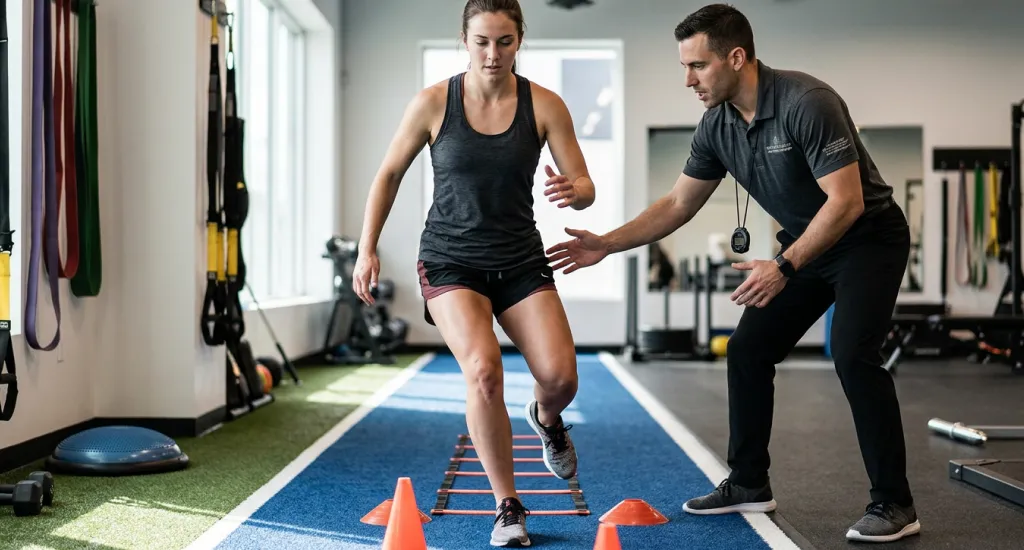
Credentials prove competence; experience proves fit. A therapist who treats runners every week understands shin splints, IT-band issues, and lower-extremity load patterns far better than a generalist. An overhead athlete with a shoulder problem needs someone fluent in rotator-cuff mechanics and throwing rehab.
A simple, revealing question to ask: what percentage of your patients would call themselves athletes? The higher that share, the more your therapist lives in the world of sport-specific rehab. Just as important, ask how they decide you are ready to compete again. A trusted sports PT uses objective, sport-like return-to-play testing rather than just asking whether the pain is gone. That distinction protects you from being cleared too early and re-injuring the same area.
Step 3: Evaluate Treatment Approach and Care Model
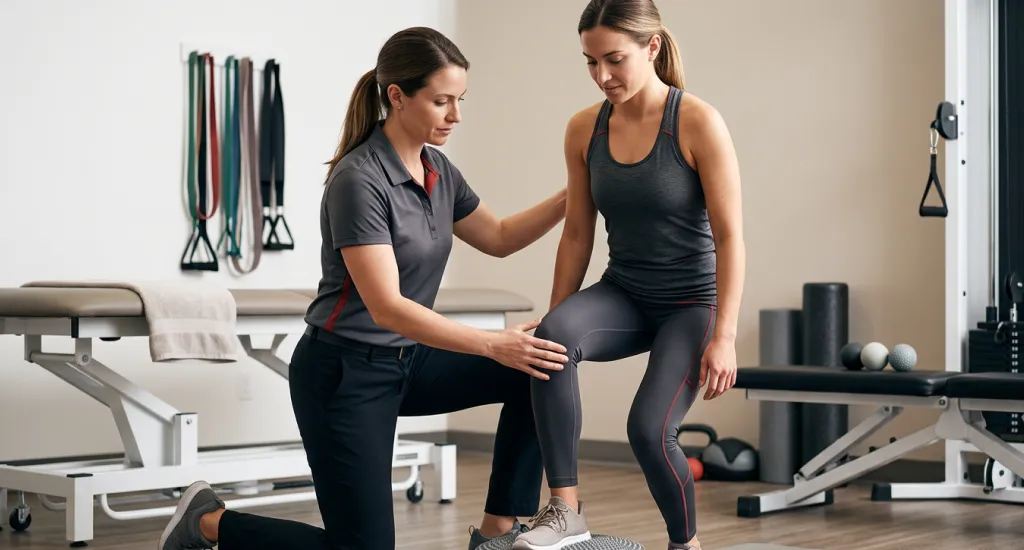
The best providers start with a comprehensive evaluation, not a cookie-cutter routine. On your first visit, expect a review of your medical history, the details of your injury, and your goals, followed by a movement, strength, and flexibility assessment used to build a personalized plan with measurable checkpoints.
Look for a blend of evidence-based methods: hands-on manual therapy, progressive therapeutic exercise, biomechanics and movement analysis, and a clear home exercise program that reinforces your gains between sessions. Ask who actually runs your appointments. A trusted clinic gives you meaningful one-on-one time with a licensed therapist. Be wary of high-volume “PT mill” settings where you are double-booked and handed off to aides for most of the session. Quality attention drives quality outcomes.
Step 4: Assess Communication and Patient Fit
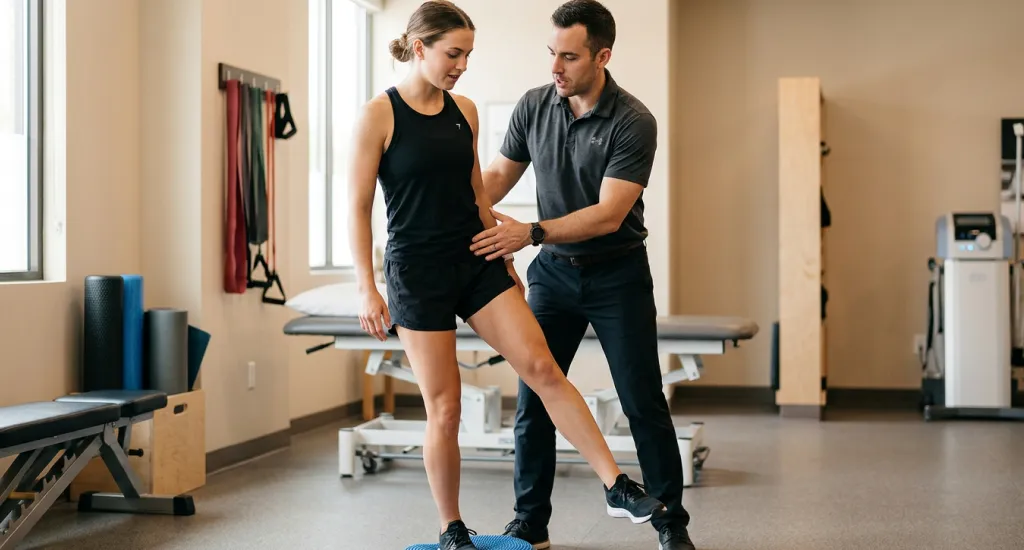
The right sports physical therapist listens before prescribing. Strong communication means they understand your goals, explain your condition and treatment plan in plain language, and adjust their approach based on your feedback and how your body responds. You should leave each session understanding what you did, why it matters, and what comes next. If you feel rushed, unheard, or confused about your own plan, that is a fit problem worth taking seriously, even when the credentials look impressive on paper.
Step 5: Check Reputation, Reviews, and Referrals

Reputation fills in what a profile page cannot. Word of mouth is powerful, so ask your physician, athletic trainer, or training partners who they trust. Then read verified online reviews on platforms that confirm real patient feedback, looking for consistent themes rather than a single glowing or angry outlier. Pay attention to comments about return-to-sport success, communication, and whether patients felt their care was personalized. The APTA directory and a clinic’s own provider bios can confirm that the reputation matches the credentials.
Step 6: Confirm Insurance, Cost, and Access

Even the perfect therapist isn’t the right choice if the logistics don’t work. Confirm the clinic is in-network with your plan, ask about copays, and check Medicare acceptance if relevant. Staying in-network is the easiest way to control out-of-pocket costs. Ask for cost transparency up front; reputable providers can supply a Good Faith Estimate. Also ask about direct access: in South Jersey and many other states, you can begin treatment with a licensed physical therapist without a physician referral, which saves time after an injury. Finally, weigh practical factors like location, scheduling, and appointment availability, since consistency is part of recovery.
Red Flags to Watch For
A few warning signs should make you reconsider a provider:
- No clear goals or plan. If you can’t tell where your rehab is headed, neither can your therapist.
- No measurable progress. Stagnation over several weeks, with no plan adjustment, is a problem.
- Aide-only sessions. Being handed off for most of your visit while the PT manages a crowded room.
- Ignoring your feedback. Dismissing pain or discomfort during exercises instead of adapting.
- Pressure and upselling. Pushing long prepaid packages or add-ons before understanding your needs.
Questions to Ask Before You Commit
Use this quick checklist on a call or first visit:
- Are you licensed, and do you hold a sports (SCS) or orthopedic (OCS) board certification?
- What share of your patients are athletes, and do you treat my sport and injury often?
- Who runs my sessions, and how much one-on-one time will I get?
- What does my treatment plan look like, and what is a realistic timeline for results?
- How do you decide I’m ready to return to play?
- Are you in-network with my insurance, and what will this cost?
Choosing a Sports Physical Therapist in South Jersey
The same framework applies locally; you just layer it over the South Jersey market across Cherry Hill, Voorhees, Haddonfield, Marlton, Moorestown, and Mount Laurel. Start with directories like Zocdoc, Yelp, and Thervo to build a shortlist of sports physical therapy clinics near you, then cross-check each provider against the APTA directory to verify licensure and any SCS or OCS certification. Confirm the clinic is in-network with your plan and take advantage of South Jersey’s direct-access rules so you can start treatment quickly. Before committing, call or book an evaluation to test communication and care model in person. Vetting for credentials, athlete-focused experience, and one-on-one care is what separates a trusted South Jersey sports physical therapy provider from a convenient one.
Conclusion
Choosing a sports physical therapist doesn’t have to be guesswork. Verify credentials and board certification, confirm sport- and injury-specific experience, evaluate the treatment approach and care model, judge communication and fit, check reputation, and lock down insurance and access. Watch for red flags, ask the right questions, and apply the same standards whether you’re searching nationally or for a clinic in South Jersey. Do that, and you’ll choose a trusted sports physical therapy provider who gets you back to your sport safely.
FAQ
What is an SCS sports physical therapist?
An SCS is a Sports Certified Specialist, a physical therapist board-certified through the American Board of Physical Therapy Specialties in sports rehabilitation. Fewer than 2% of U.S. PTs hold it, making it a strong trust signal for athletes.
Is sports physical therapy different from a personal trainer?
Yes. A sports PT is a licensed healthcare provider who can diagnose and treat injuries. A personal trainer builds fitness programs for healthy people and is not qualified to rehabilitate an injury.
Do I need a referral to see a sports PT in South Jersey?
Generally no. South Jersey offers direct access, so you can begin an evaluation with a licensed physical therapist without a physician referral, though your insurance may have its own requirements.
How long until I see results?
It varies with injury severity, your consistency with home exercises, and overall health. Your therapist should give you a realistic timeline and measurable checkpoints at the first visit.
Ready to Get Back in the Game? Train With Rehabletics
If you want a sports physical therapy team that already checks every box in this guide, Rehabletics Sports Physical Therapy in Cherry Hill, NJ is built for serious athletes across South Jersey, including Voorhees, Haddonfield, Marlton, Moorestown, and Mount Laurel, and is trusted enough to serve as a sports PT contractor for the Philadelphia Flyers and Philadelphia Eagles. You get one athlete, one PT, for a full hour, no techs, no shortcuts, no insurance-mill rush, plus same-week consultations and a 98% return-to-sport success rate.
Book your free consultation today, or call (609) 354-7987 (answered live, 7 days a week) and start your comeback with a plan built around your sport, your injury, and your goals.