


Yes, many people recover from a rotator cuff tear without surgery. Partial tears and full-thickness tears that develop from wear and tear often respond well to a structured rehab plan. In a large multicenter study (the MOON Shoulder Group), about 3 in 4 patients with full-thickness tears avoided surgery after physical therapy. If your shoulder aches when you reach overhead or wakes you at night, our shoulder pain treatment in Cherry Hill starts with finding out exactly what kind of tear you have. Below, you will learn who qualifies, what physical therapy does, the exercises that help, how long recovery takes, and when surgery makes more sense.
Can a Rotator Cuff Tear Heal Without Surgery?
For most people, yes: pain and function can recover fully, even when the tendon itself stays torn. The research backs this up. The American Academy of Orthopedic Surgeons reports that 80 to 85 percent of people improve without surgery. A Cochrane review also found that, for small tears caused by wear and tear, surgery offered little or no extra benefit over exercise at one year.
If you want to know how to heal a torn rotator cuff naturally, focus on what helps tendon tissue recover:
- Keep the shoulder moving within comfort instead of resting it completely
- Sleep well, because tissue repair peaks during deep sleep
- Eat enough protein to support muscle and tendon repair
- Stop smoking and keep blood sugar under control, since both slow healing
What Healing Really Means for a Torn Tendon
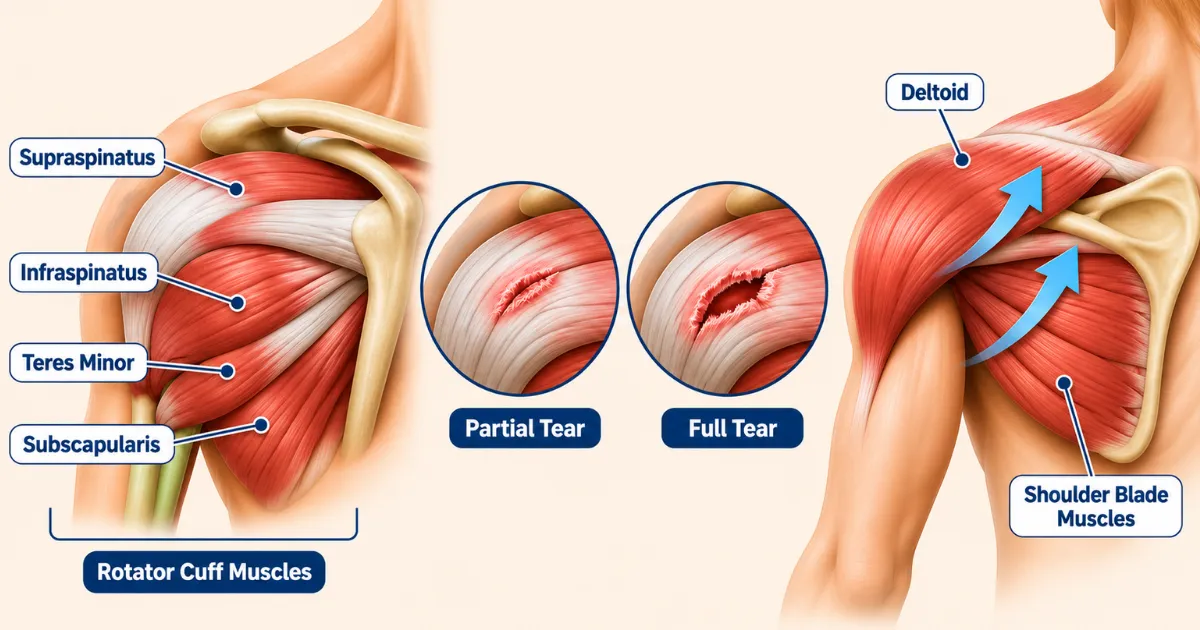
Healing a rotator cuff tear without surgery rarely means the tendon reattaches to the bone. Partial tears can settle down and become pain free. Full tears usually stay torn, yet the shoulder works well again because the remaining cuff muscles, the deltoid and the shoulder blade muscles, learn to share the load. So “repair without surgery” really means restoring strength and function, not regrowing the tendon.
Who Is a Good Candidate for Non-Surgical Treatment?
Your tear type, age and activity level matter more than the word “tear” on your MRI report.
|
Tear type |
Non-surgical outlook |
Notes |
| Partial-thickness tear | Excellent | First choice for most people |
| Full-thickness tear from wear and tear | Good | Most patients in the MOON study avoided surgery |
| Large tear in an older, less active adult | Often good | Goal is pain relief and daily function |
| Sudden tear from a fall or lift with major weakness | Limited | Early surgical opinion is usually advised, especially for younger athletes |
Other rotator cuff injuries, such as strains and rotator cuff tendinopathy, also respond very well to conservative care. A rotator cuff full tear without surgery is realistic for many people, as long as the tear is not a sudden, high-force injury.
Can You Live With a Torn Rotator Cuff Without Surgery?
Yes. About half of adults between 60 and 80 have a tear, and many never feel it. The key is to keep the shoulder strong and watch for change. A painful tear that you ignore can grow larger or pull back, which makes a later repair harder. Get rechecked if you notice new weakness or lose the ability to lift your arm.
Is It a Strain, Impingement or a Tear?
These three problems can feel similar, but they need different plans.
|
Condition |
What is happening | Typical feel |
Strength |
| Strain | Muscle or tendon is overstretched | Ache after activity | Mostly normal |
| Impingement | Tendon is pinched under the shoulder blade | Pinch when reaching overhead | Normal, limited by pain |
| Tear | Tendon fibers are partly or fully torn | Deep ache, night pain | Weak, especially lifting sideways |
If your pain mainly appears in an overhead arc, read our guide to shoulder impingement symptoms and treatment.
Simple Rotator Cuff Injury Tests and Why Imaging Matters
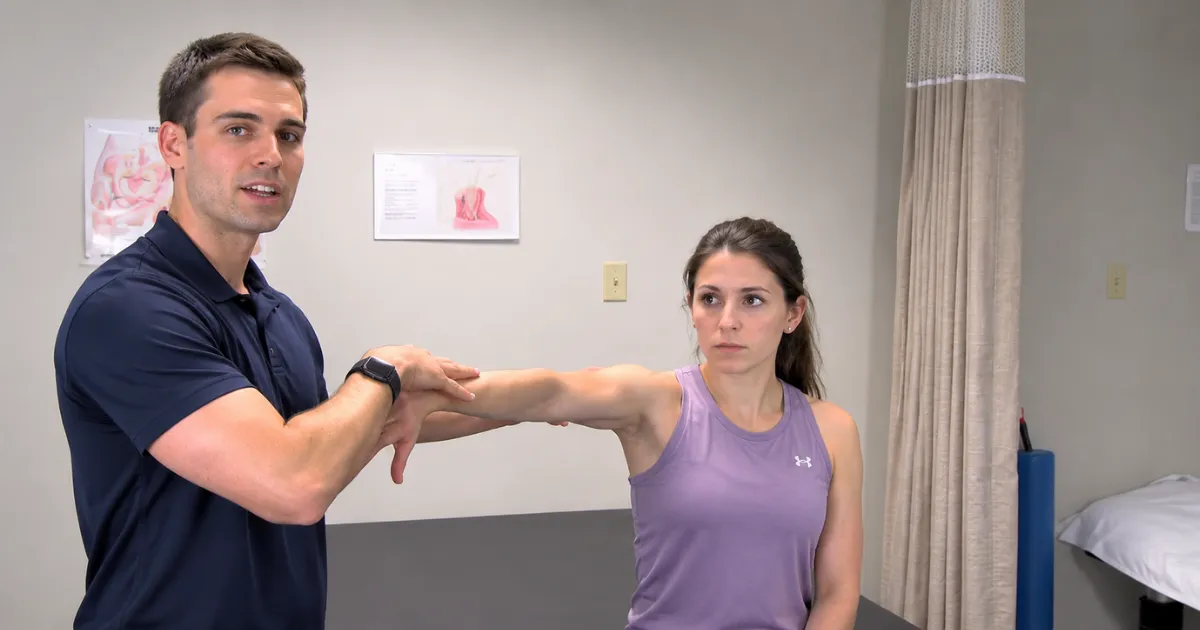
Clinicians use a few quick tests. The empty can test checks supraspinatus strength, the drop arm test looks for an arm that falls when lowered slowly, and the external rotation lag sign checks whether you can hold your arm rotated outward. A positive test suggests a tear, but an ultrasound or MRI confirms its size and type.
Rotator Cuff Tear Treatment Without Surgery: What Physical Therapy Can Do
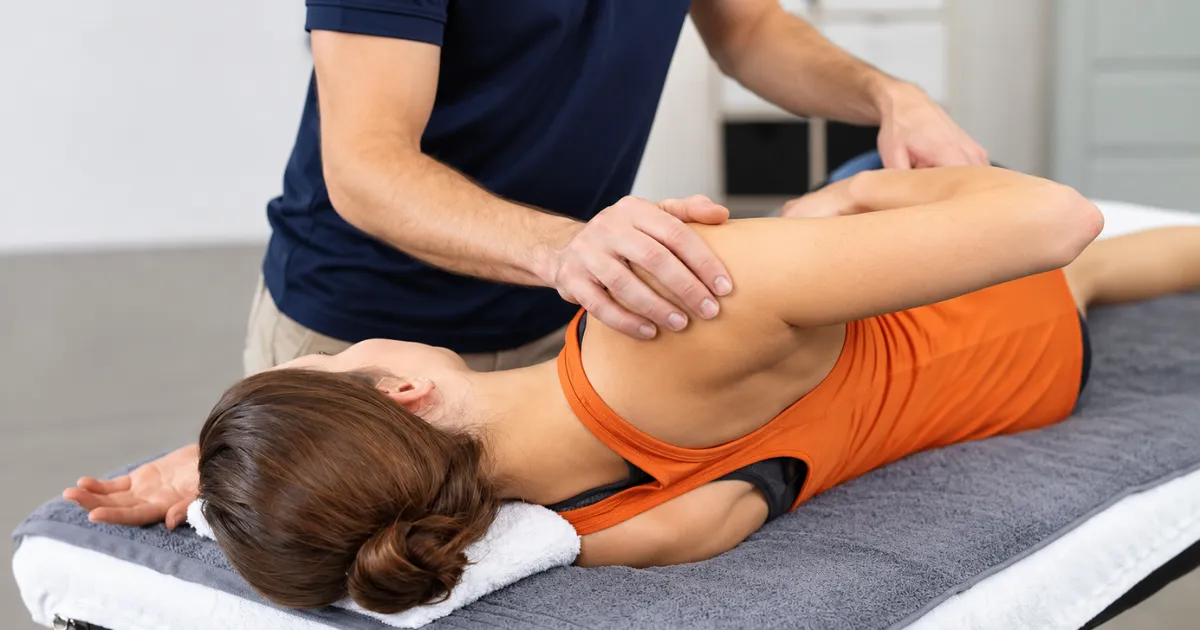
Physical therapy is the main rotator cuff tear treatment without surgery because it rebuilds the strength that the torn tendon can no longer provide. A good rehab plan includes:
- A full evaluation: strength, range of motion, shoulder blade control and the activities that flare your pain.
- Load management: adjusting lifting, training and work tasks so the tendon calms down without total rest.
- Hands-on care: hands-on manual therapy and joint mobilization to restore stiff motion, especially internal rotation.
- Muscle release: dry needling to ease guarding in the upper trap, infraspinatus and deltoid.
- Shoulder blade control: training the muscles that position the socket under the ball.
- Progressive strengthening: loading the cuff and deltoid gradually so they can handle daily and sport demands.
- Return testing: strength and motion checks before you go back to lifting, throwing or overhead work.
Other options support rehab but do not replace it. Anti-inflammatory medication, heat or ice, and a short period in a sling can ease a flare. A corticosteroid injection may help when pain blocks your exercises, but it is a window for rehab, not a fix by itself.
Rotator Cuff Tear Exercises Without Surgery
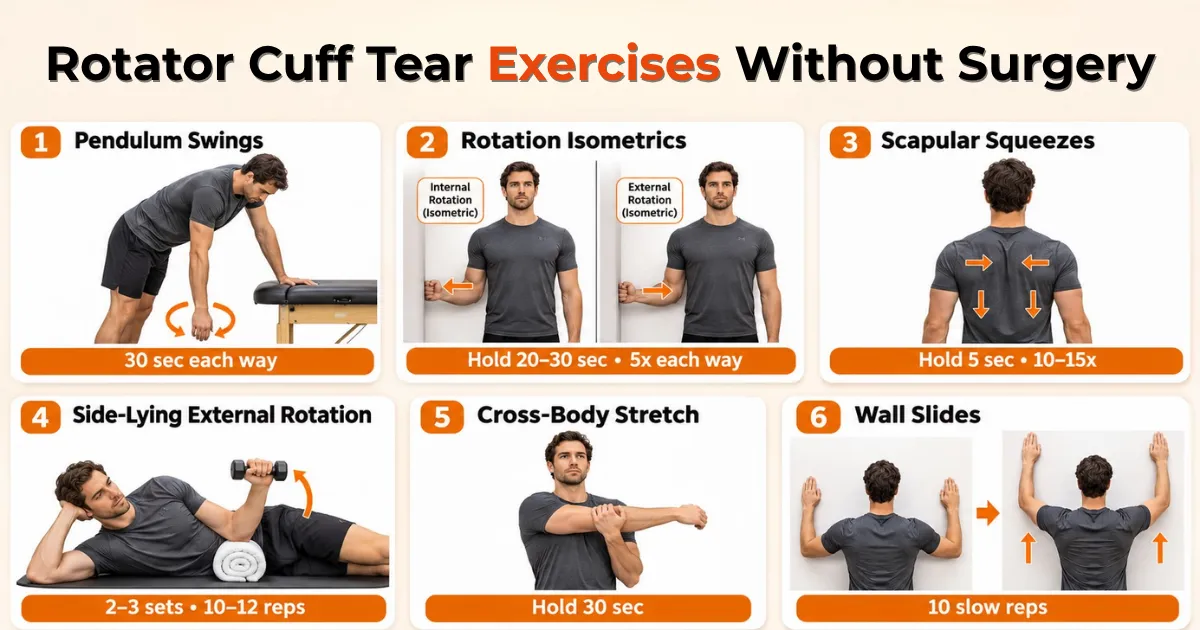
These exercises are common starting points. Stay in a pain range of 3 out of 10 or lower.
- Pendulum swings: Lean on a table and let the arm hang. Make small circles for 30 seconds each way.
- Internal and external rotation isometrics: Press your hand into a wall or doorframe without moving. Hold for 20 to 30 seconds, 5 times each direction.
- Scapular squeezes: Pull your shoulder blades back and down. Hold for 5 seconds, 10 to 15 times.
- Side-lying external rotation: Lie on your good side with a towel under the elbow and rotate a light weight upward. Do 2 to 3 sets of 10 to 12.
- Cross-body stretch: Pull the arm gently across the chest for 30 seconds to ease back-of-shoulder tightness.
- Wall slides: Slide your forearms up a wall as far as is comfortable. Do 10 slow repetitions.
For now, avoid painful overhead lifting, upright rows, heavy pressing and pushing through sharp pain. For more progressions, see our full shoulder pain PT program.
How Long Does It Take for a Torn Rotator Cuff to Heal Without Surgery?
Most people notice clear improvement within 6 to 12 weeks. Full recovery without surgery usually takes 3 to 6 months.
|
Phase |
Timeframe |
Focus |
| Calm the pain | Weeks 0 to 2 | Activity changes, gentle motion, better sleep |
| Restore motion | Weeks 2 to 6 | Stretching, manual therapy, isometrics |
| Build strength | Weeks 6 to 12 | Cuff, deltoid and shoulder blade loading |
| Return to full activity | Months 3 to 6 | Sport, lifting and overhead skills |
The 12-week mark is an important checkpoint. In the MOON study, patients who had not chosen surgery by then rarely needed it later. Diabetes, smoking, a larger tear and inconsistent exercise can all slow your progress.
How to Relieve Rotator Cuff Pain at Night
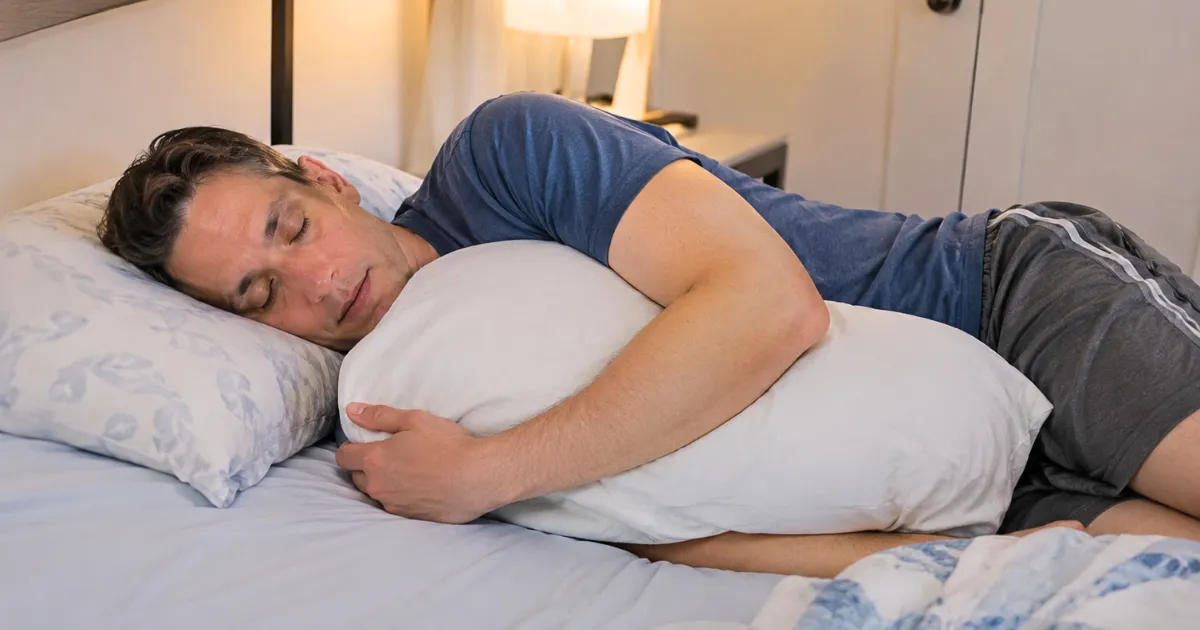
Night pain is often the first symptom to improve. These habits help:
- Sleep on the other side while hugging a pillow, or on your back with a pillow under the sore arm.
- Avoid sleeping with the arm overhead or tucked under your pillow.
- Do a minute of pendulum swings before bed.
- Use heat for stiffness or ice for 15 minutes after a flare.
- Ask your provider about timing pain medication for the evening.
When Surgery Becomes the Better Option
Non-surgical care is not right for everyone. Surgery deserves a closer look when:
- A fall or heavy lift causes a sudden, major loss of strength.
- You are a young or throwing athlete with a full-thickness tear.
- Imaging shows the tear is growing or pulling back.
- You have not made real progress after about 12 weeks of quality rehab.
If you do need an operation, starting prehab before surgery improves your starting point. Our rotator cuff repair recovery timeline shows what to expect afterward.
Non-Surgical Rotator Cuff Care in Cherry Hill, NJ
At Rehabletics NJ, Dr. Jaime Mor, PT, DPT, ATC, works one-on-one with active adults and athletes to rebuild shoulder strength and avoid surgery when it is safe to do so. Every plan includes objective strength testing, so you know when you are ready to lift, throw, or play again. New Jersey allows direct access, so you do not need a referral to start. If a torn rotator cuff is holding you back, book your shoulder evaluation at our Cherry Hill clinic and get a clear plan.