

Rotator cuff repair recovery usually takes 6 to 12 months. Most people wear a sling for 4 to 6 weeks, drive again at around 6 weeks, start light strengthening near the 3-month mark and return to sports somewhere between 6 and 12 months. Your surgeon fixes the tendon in one day. The months that follow decide how strong that shoulder becomes. A structured post-surgical rehabilitation program guides you through every stage, so you protect the repair early and rebuild real strength later. Here is what each phase looks like, what you can do in it and what to watch for.
How Long Does Rotator Cuff Repair Recovery Take?
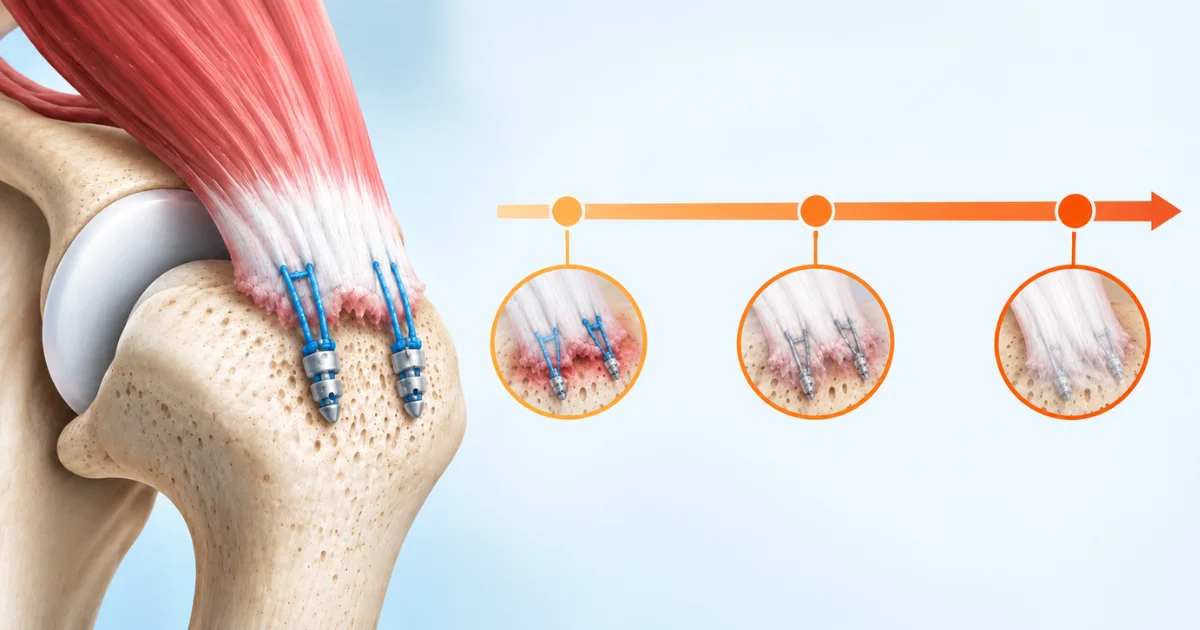
Full recovery takes 6 to 12 months for most people, and larger tears can take longer. The reason is biology. Your surgeon stitches the torn tendon back onto the bone, but the stitches only hold it in place. The tendon has to grow back onto the bone, which takes about 6 to 8 weeks for an early bond and several more months to reach real strength.
| Tear size | Typical time to full strength |
| Small tear | About 4 to 6 months |
| Medium or large tear | About 6 to 9 months |
| Massive tear | 9 to 12 months or longer |
What Affects Your Rotator Cuff Repair Recovery Period
Your timeline can move faster or slower depending on:
- Tear size: Bigger tears need more healing time.
- Tendon quality: Older or worn tendons heal more slowly.
- Age: People over 65 often progress more gradually.
- Smoking: Nicotine slows tendon healing.
- Diabetes: It raises the risk of stiffness.
- Consistency: Following your protocol is the factor you control most.
Rotator Cuff Surgery Recovery Timeline: The 4 Phases of PT
Most rotator cuff repair recovery protocols follow four phases. Your surgeon sets the exact dates, and your physical therapist moves you forward based on how your shoulder responds.
Phase 1: Protection (Weeks 0 to 6)
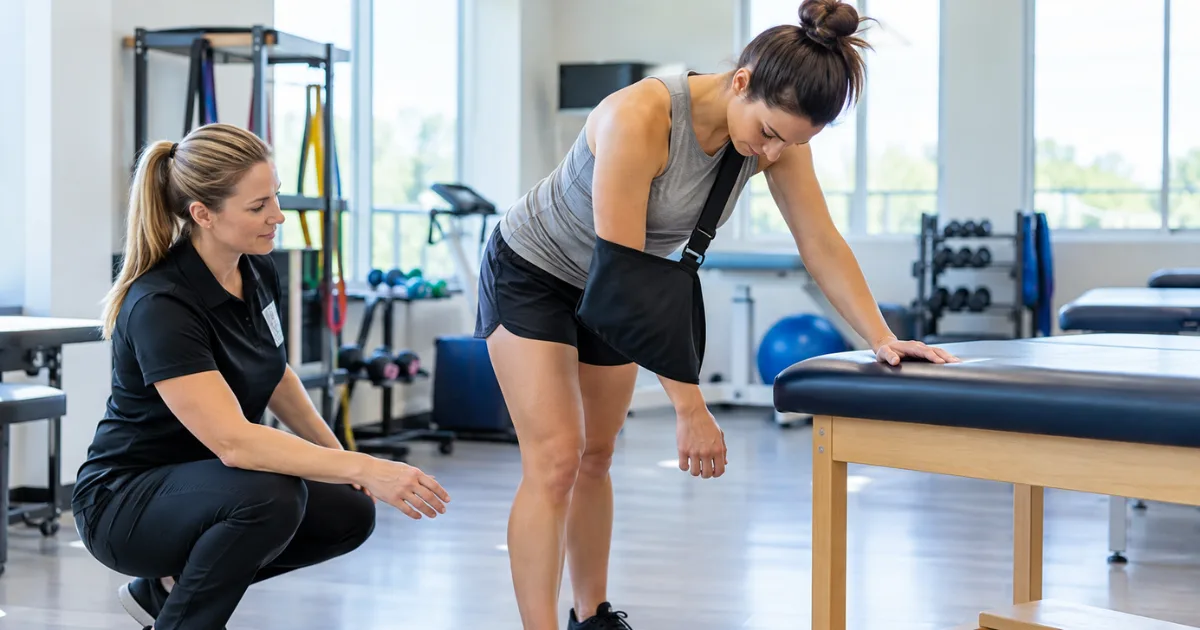
The goal is simple: protect the repair while stopping the shoulder from stiffening. You wear the sling day and night, including while you sleep. Your physical therapist moves the arm for you with passive range of motion, so the muscles stay relaxed while the joint moves. At home, you will likely do gentle pendulum swings plus elbow, wrist and hand exercises to keep blood moving and prevent stiffness down the arm. Ice for 15 to 20 minutes at a time to manage swelling. Daily walks help circulation and mood. Expect some elbow and neck soreness from wearing the sling, which gentle elbow bends and shoulder blade rolls usually ease. You should not lift, push, pull or reach with the operated arm during this phase.
Phase 2: Restoring Motion (Weeks 6 to 12)
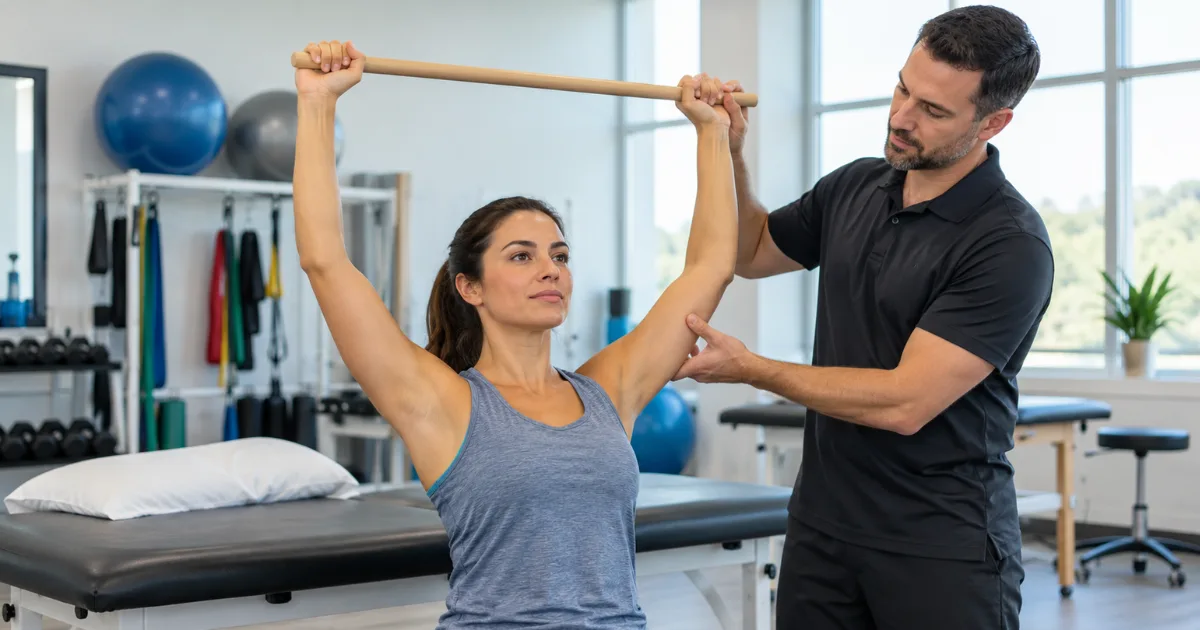
Once your surgeon clears you to wean off the sling, you start moving the arm yourself. Active-assisted exercises come first, using a pulley, a wand or your other hand to help lift the arm. Wall slides and shoulder blade squeezes follow. Full active motion usually returns somewhere between weeks 6 and 8. You can start using the arm for light daily tasks at waist level, such as eating and typing. Do not be surprised if the arm feels weak or shaky when you lift it. That weakness is normal after weeks of rest, and it improves steadily.
Phase 3: Early Strengthening (Months 3 to 4)
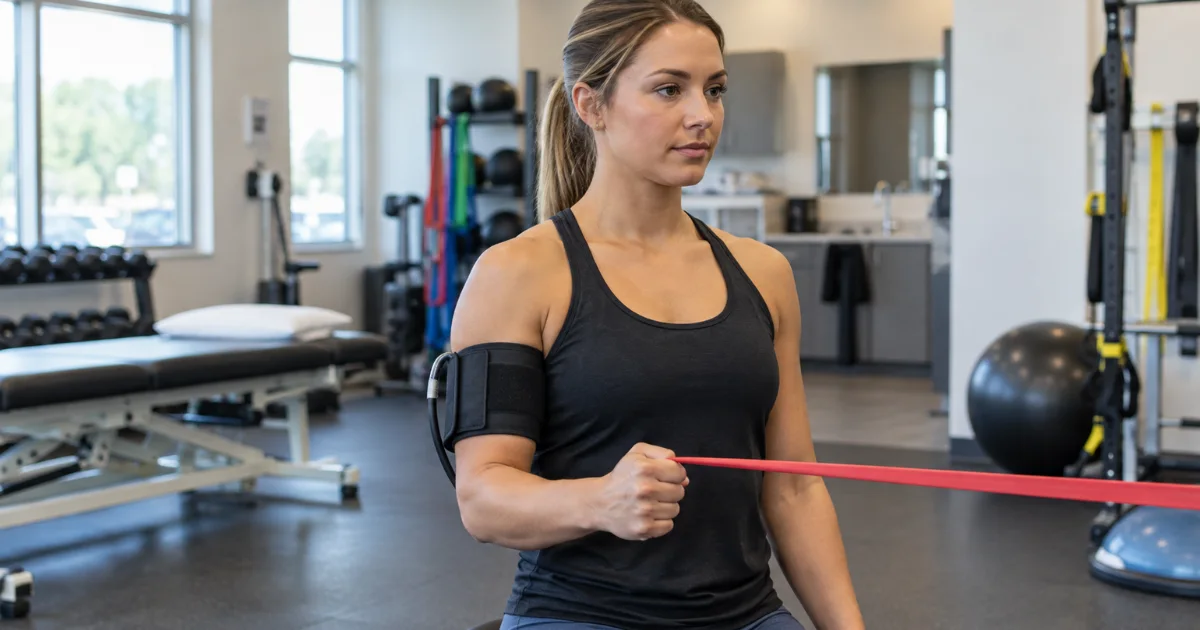
Now the work shifts to strength. Expect isometric holds, light resistance bands, prone rows and scaption raises, with most protocols capping loads at about 10 pounds.
Important: Months 3 to 5 are when re-tears are most likely. You feel much better than the tendon actually is, so this is not the time to test your shoulder with heavy lifting.
One way to build strength safely is blood flow restriction training, which helps muscles grow with very light weights while the tendon keeps healing.
Phase 4: Advanced Strength and Return to Sport (Months 4 to 12)
This phase rebuilds power, endurance and confidence. Loads increase gradually. Wall push-ups progress toward regular push-ups, and athletes add plyometric drills, interval throwing and sport-specific movements. Before you are cleared, your physical therapist should test your strength and range of motion against your healthy side. If you are aiming to get back on the field or court, guided sports injury rehab connects the final strength work to the demands of your sport.
Baseball players and other throwers need extra care here. Learning the habits behind protecting a throwing shoulder helps you stay healthy after you return.
When Can You Drive, Lift, Work and Play Again?
These are typical ranges. Your surgeon has the final say.
| Activity | Typical timing | What you need first |
| Sling off | 4 to 6 weeks | Surgeon clearance |
| Driving | About 6 weeks | Sling off and safe control of the wheel |
| Walking and stationary bike | 1 to 2 weeks | Sling on, no risk of falling |
| Running | About 4 to 6 weeks | Surgeon clearance, low fall risk |
| Light lifting | About 3 months | Pain-free active motion |
| Heavy lifting and gym pressing | 4 to 6 months | Good strength testing |
| Swimming | Gentle strokes at 6 to 8 weeks, freestyle after 12 weeks | Full motion |
| Golf | 4 to 6 months | Rotation without pain |
| Tennis | 6 to 9 months | Overhead strength |
| Overhead and contact sports | 6 to 12 months | Full sport clearance |
Rotator Cuff Surgery Recovery Time Off Work
Desk workers often return in 1 to 8 weeks, depending on pain, the commute and whether the repair is on your dominant arm. Physical jobs that involve lifting or overhead work usually need 3 to 6 months. Ask your employer about light duty to get back sooner.
Rotator Cuff Repair Recovery Pain: What Is Normal and What Is Not
Pain is usually strongest in the first 1 to 2 weeks, especially as the nerve block wears off. Start your pain medication before the block fades. Soreness after therapy that settles within a day is normal, and so is night aching for several weeks. Pain should trend down from week to week. If it climbs steadily instead, tell your surgeon or physical therapist so they can check the repair.
How to Sleep After Rotator Cuff Surgery

Many people sleep best in a recliner or propped up on pillows. Place a small pillow under your elbow, keep the sling on and avoid lying on the operated side for at least 6 weeks.
Warning Signs to Call Your Surgeon
- Fever or chills
- Redness, drainage or opening at the incision
- Numbness or color change in your hand
- A sudden pop followed by sharp pain or lost motion
Common Mistakes That Slow Your Recovery
Most setbacks come from doing too much too soon or stopping too early:
- Lifting or reaching overhead before you are cleared
- Skipping home exercises on busy days
- Stopping physical therapy once the pain fades
- Sleeping on the operated shoulder
- Ignoring shoulder blade and upper back strength
Stopping before strength is fully restored is one of the main reasons why injuries keep coming back, so finish the plan even when you feel good.
How Sports PT in Cherry Hill Supports Your Recovery
The best results often start before surgery. Prehab before shoulder surgery builds motion and strength so you begin recovery from a stronger place.
At Rehabletics, Dr. Jaime Mor, PT, DPT, ATC, and our team work one-on-one with every patient. The same sports expertise behind our work with the Philadelphia Flyers and Philadelphia Eagles shapes every return-to-sport plan. If you are new to this kind of care, here is what to expect at your first sports PT appointment.
You can also hear how other athletes got back to their sport in our patient testimonial videos.
Start Your Shoulder Recovery With a Clear Plan
Rotator cuff repair recovery takes patience, but every phase moves you closer to lifting, driving and playing again. Our team provides one-on-one shoulder pain treatment in Cherry Hill and post-surgical care that is built around your goals. Call 609-354-7987 or book your free consultation to get started.