



The most effective joint pain alternative treatment is a combination: movement-based care such as targeted strength work and physical therapy, supported by options like acupuncture, heat and cold, topical creams, and a few well-studied supplements. No single remedy fixes a painful joint on its own, but the right mix can calm pain, loosen stiffness, and get you back to the activities you love.
If you are tired of reaching for pills every time your knee, hip, or hands ache, you are not alone. This guide ranks the natural options by evidence, explains who each one suits, and shows you how to build a plan. If you want expert help along the way, our sports physical therapy for joint pain is built for active adults and athletes.
What Is an Alternative Treatment for Joint Pain?
An alternative treatment for joint pain is any approach outside standard medication and surgery. It usually falls into one of three groups:
- Complementary care is used alongside your regular medical care, such as massage during recovery.
- Alternative medicine for joint pain is used in place of conventional care, such as herbal remedies instead of prescription drugs.
- Integrative or holistic treatment for joint pain blends both, treating the whole person through movement, nutrition, stress, and sleep.
These approaches work best when they start from a clear diagnosis rather than guesswork. A remedy that soothes arthritis may do little for a strained tendon, so knowing the cause helps you spend your time and energy on what will actually help.
What Is Causing Your Joint Pain?
Common Causes in Active Adults and Athletes
Joint pain usually comes from one of a few sources. Osteoarthritis wears down cartilage over time, while rheumatoid arthritis is an autoimmune condition that inflames the joint lining. In active people, tendinopathy, overuse from repetitive training, and old injuries that never fully healed are common drivers. Nutrient gaps can also play a role; low vitamin D, for example, is linked to muscle and joint aches.
Why Hip Pain and Knee Pain Can Happen at the Same Time
If you are wondering what causes hip pain and knee pain at the same time, the answer is often the kinetic chain. Your hip, knee, and ankle work as one system. Weak glutes or tight hip muscles let the knee collapse inward, which stresses both joints. Hip arthritis can also refer pain down to the knee, so the sore spot is not always the source. Exploring hip pain treatment options early can relieve both problems at once.
Movement-Based Treatments With the Strongest Evidence
Physical Therapy and Targeted Strength Work
If you want to know how to fix joint pain at the root, start here. Exercise has the strongest research support of any natural option. Physical therapists often say “motion is lotion” because moving a joint circulates the fluid that nourishes cartilage.
Strengthening the muscles around a joint also takes load off it. Stronger quads and glutes absorb force that would otherwise hit the knee. A good program is progressive, specific to your sport or daily demands, and paced so you improve without flaring up. You can learn more about how sports physical therapy works and why it differs from generic exercise sheets.
Tai Chi, Yoga, and Low-Impact Cardio
Mind-body practices such as tai chi, yoga, and qigong have been shown to reduce joint pain and stiffness while improving balance and range of motion. Swimming, water aerobics, and cycling build fitness without pounding your joints. A practical target for most adults is 150 minutes of moderate activity per week plus two strength sessions, adjusted to your comfort level.
Weight Management and Joint Load
Every pound you lose removes about four pounds of pressure from your knees with each step. Even a modest weight loss can noticeably reduce knee and hip pain, and it lowers the inflammation that fat tissue produces.
Hands-On and Clinic-Based Alternative Therapies
Acupuncture and Dry Needling
Acupuncture places thin needles at traditional points to influence pain signaling, and studies suggest it can ease knee osteoarthritis pain for some people. Dry needling uses similar needles but targets tight, irritated trigger points in muscle. It is a modern, anatomy-based technique that releases tension pulling on a joint. If this sounds right for you, read about dry needling at our clinic.
Massage, Manual Therapy, and Cupping
Massage improves circulation, relaxes guarded muscles, and can restore range of motion. Manual therapy goes further, with a clinician mobilizing stiff joints and soft tissue. Cupping uses suction to lift tissue and increase blood flow. One tip: skip deep pressure during an active flare, when joints are especially tender.
Red Light, Shockwave, and PEMF Therapy
These energy-based therapies aim to support tissue healing rather than simply mask pain. Red light therapy uses specific wavelengths to boost cellular energy and calm inflammation, and many active adults use red light therapy sessions to recover between workouts.
Shockwave therapy sends acoustic waves into stubborn tendons to restart the repair process, while PEMF uses pulsed magnetic fields to support recovery. Results vary by condition, so it helps to understand how effective shockwave therapy is before you start.
TENS Units
A TENS unit sends mild electrical pulses through pads on your skin to interrupt pain signals. It offers short-term relief and is simple to use at home.
Home Treatment for Joint Pain and Natural Pain Relief
Heat and Cold Therapy
Heat relaxes stiff joints and muscles, so it is ideal in the morning or before activity. Try a warm shower, a heating pad, or a bath with Epsom or magnesium salts. Cold reduces swelling and dulls sharp pain after activity or during a flare. Limit either one to about 20 minutes, and always place a towel between ice and skin. These simple steps also work as bone pain home remedies for achy, sore areas.
Topical Relief: Capsaicin and Essential Oils
Capsaicin cream, made from chili peppers, blocks pain signals and can cut pain significantly with regular use over a few weeks. Pain relief with essential oils is another popular option. Lavender, eucalyptus, peppermint, and copaiba may ease discomfort through massage and relaxation, though research is limited. Always dilute oils in a carrier oil and patch test first.
What Is the Fastest Way to Relieve Hand Pain?
For quick relief, soak your hands in warm water or use a warm paraffin wax bath, then do gentle finger bends and fist openings. A compression glove or splint can support sore joints during the day, and a topical cream adds extra comfort.
Supplements and Natural Painkillers: What the Evidence Says
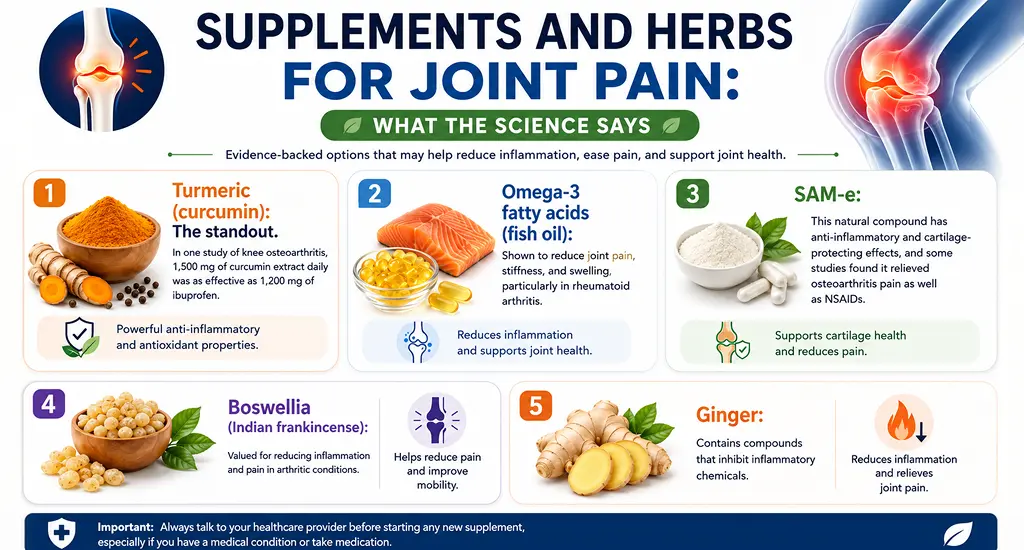
Supplements are not regulated like medicine, so quality and results vary. Here is how the popular options compare:
|
Supplement |
What it may help | Evidence strength |
Key caution |
| Turmeric (curcumin) | Inflammation and arthritis pain | Moderate | Take with black pepper and fat; avoid during pregnancy |
| Omega-3 fish oil | Joint swelling and tenderness | Moderate | May thin blood |
| Boswellia | Osteoarthritis pain and function | Moderate | Check interactions |
| Ginger | Mild pain relief | Limited | May thin blood |
| Glucosamine and chondroitin | Cartilage-related pain | Mixed | Shellfish allergy concerns |
| Collagen | Joint comfort | Mixed | Pair with vitamin C |
| Tart cherry extract | Inflammation | Limited | High sugar in juice form |
| CBD | Pain and sleep | Early | Unregulated; choose third-party tested |
What Is the Strongest Natural Pain Reliever?
No single natural painkiller is best. Curcumin, omega-3s, and topical capsaicin have the strongest research support, and regular exercise outperforms all of them over the long term. Most supplements need 8 to 12 weeks to show an effect. Talk to your doctor before starting any supplement, especially if you take blood thinners or other medication. For a no-nonsense breakdown, see our guide to the supplements athletes actually need.
Worst Foods for Arthritis and Joint Pain (and What to Eat Instead)
Some foods can fuel inflammation. The worst foods for arthritis and joint pain include:
- Added sugar and sugary drinks
- Refined carbs such as white bread and pastries
- Fried and ultra-processed foods
- Processed meats
- Excess alcohol
- Too much omega-6 oil, such as corn and soybean oil
Instead, build meals around fatty fish like salmon and sardines, leafy greens, berries, olive oil, and nuts. These foods supply antioxidants and omega-3s that support healthy joints.
Comparing Alternative Treatments for Joint Pain
|
Option |
Best for | Time to feel it | DIY or clinic |
Evidence |
| Exercise and physical therapy | Lasting relief | 4 to 8 weeks | Both | Strong |
| Weight loss | Knee and hip pain | Weeks to months | DIY | Strong |
| Acupuncture or dry needling | Muscle tension, knee pain | 1 to 4 sessions | Clinic | Moderate |
| Massage and manual therapy | Stiffness | Immediate, short-term | Clinic | Moderate |
| Heat and cold | Flares and stiffness | Minutes | DIY | Moderate |
| Topical creams | Hand and knee pain | Days to weeks | DIY | Moderate |
| Supplements | Mild inflammation | 8 to 12 weeks | DIY | Mixed |
| Red light or shockwave | Tendon and tissue recovery | Several sessions | Clinic | Growing |
How to Build a Holistic Plan That Fits Your Life
Your plan should match your goals. Athletes need load management that keeps them training, active adults need relief that supports daily life, and people with arthritis need a flare plan. In every case, pair a strength foundation with one or two supporting therapies, then adjust based on how you feel. Without that structure, pain tends to return, which is why injuries keep coming back for so many people.
When to See a Joint Pain Specialist
Natural care is a great start, but get your joint checked if you notice:
- Swelling with warmth, redness, or fever
- A joint that locks, catches, or gives way
- Pain after a fall or impact
- Pain that wakes you at night
- Pain lasting more than two to three weeks despite home care
In New Jersey, you do not need a referral to start treatment. Learn how direct access physical therapy in NJ lets you book an evaluation right away.
How Rehabletics Treats Joint Pain in Cherry Hill, NJ
At Rehabletics, Dr. Jaime Mor, PT, DPT, ATC, and our team start with a detailed evaluation. We look at when your pain started, what makes it better or worse, your activity level, and your goals. From there, we combine strength work with more than 20 treatment options, including dry needling, cupping, red light therapy, shockwave, PEMF, and blood flow restriction training. Our team also serves as a PT contractor for the Philadelphia Flyers and Philadelphia Eagles. Hear stories from our patients about getting back to the activities they love.
Take the Next Step Toward Pain-Free Movement
You do not have to choose between living with joint pain and relying on pills. The right plan, built around your body and your goals, can get you training, playing, and moving with confidence again. Visit us at 5 Esterbrook Lane in Cherry Hill and book your free consultation today.