


Somewhere around week eight, the long runs start to feel real. Mileage climbs, the legs get heavier, and a small ache in the knee or heel shows up and refuses to leave. That is how most marathon training injuries begin.
The short answer: most marathon training injuries are overuse injuries in the knee, shin, foot, and Achilles tendon. They happen when training load rises faster than your muscles, tendons, and bones can adapt. The good news is that most are predictable, and most are preventable.
This guide covers the most common injuries, why they happen, how to prevent them, and what to do if you get hurt mid-cycle. If something already hurts, our page on treatment for running injuries explains how we get runners back on the road.
How Common Are Marathon Training Injuries?
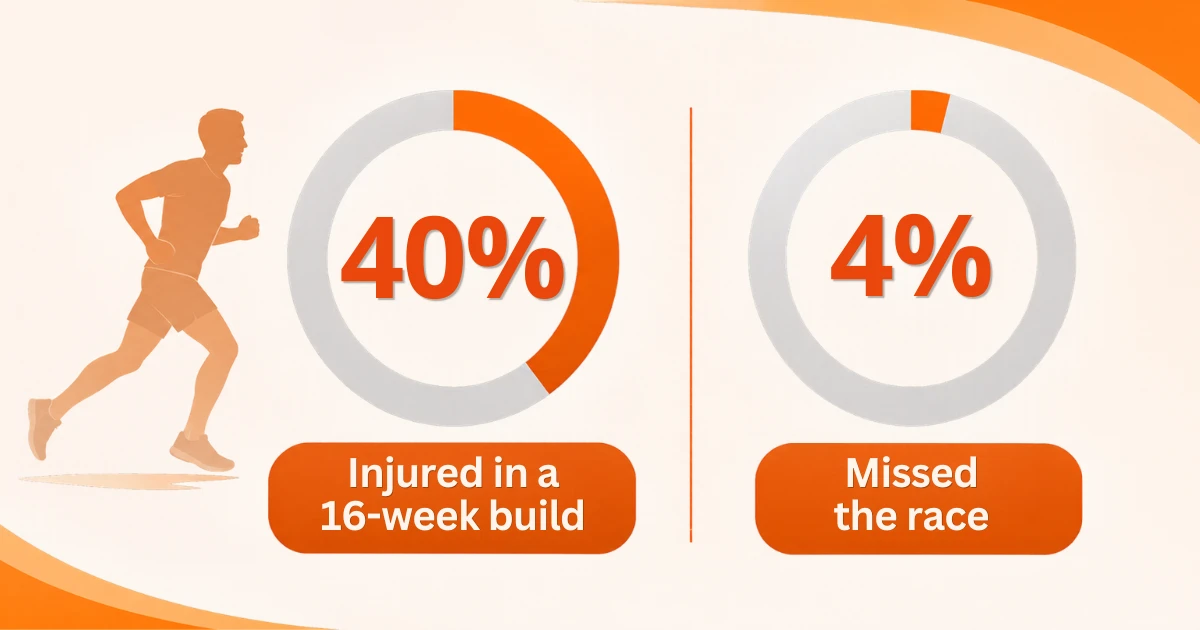
They are very common. In a study of 735 runners training for the New York City Marathon, about 40 percent were injured during a 16-week build, and about 4 percent were hurt badly enough to miss the race.
First-time marathoners and runners with a past injury carry more risk. The marathon is not unusually dangerous on its own. The issue is repetition: thousands of strides per run, long runs that stretch past two hours, and fatigue that builds week after week. A small weakness that never bothered you in a 5K becomes impossible to ignore at mile 18.
The upside is that injury risk responds to how you train, and that part is within your control.
The Most Common Marathon Training Injuries
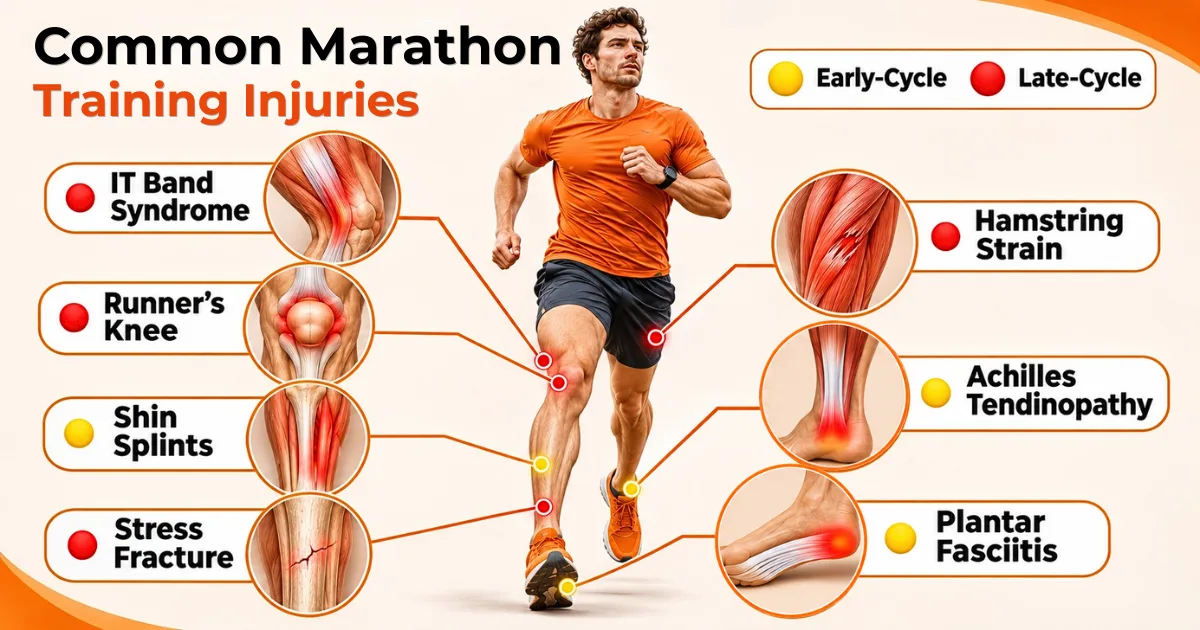
Knee pain is the most frequent complaint among marathon runners, followed by shin, foot, and Achilles problems.
|
Injury |
Where it hurts | Common trigger |
Can you keep running? |
| Runner’s knee | Around or behind the kneecap | Weak hips and quads, downhills | Often, with changes |
| IT band syndrome | Outside of the knee | Weak hip abductors, long runs | Often, with reduced mileage |
| Shin splints | Along the inner shin | Rapid mileage increase | Sometimes, if mild |
| Stress fracture | One tender spot on the bone | Repeated impact, under-fueling | No |
| Achilles tendinopathy | Back of the heel and calf | Hills and speed work | Often, with load changes |
| Plantar fasciitis | Bottom of the heel | Tight calves, worn shoes | Often, with changes |
| Hamstring strain | Back of the thigh or sit bone | Fast running when fatigued | Depends on the grade |
Timing matters too. Foot, shin, and Achilles problems tend to appear early in a cycle. Hip pain, IT band pain, and stress fractures tend to appear later, as long runs grow.
Runner’s Knee (Patellofemoral Pain)
Runner’s knee is a dull ache around or behind the kneecap. It usually gets worse on downhills, stairs, and after long periods of sitting. Weak glutes and quads let the knee drift inward with every stride, which adds stress to the joint. Strengthening the hips usually eases it. If it lingers, targeted knee pain treatment can find the cause.
IT Band Syndrome
IT band syndrome causes sharp pain on the outside of the knee, often starting at the same point in every run. Weak hip abductors, long runs, and cambered roads are common triggers. Cutting mileage briefly and building hip strength usually settles it.
Shin Splints and Stress Fractures
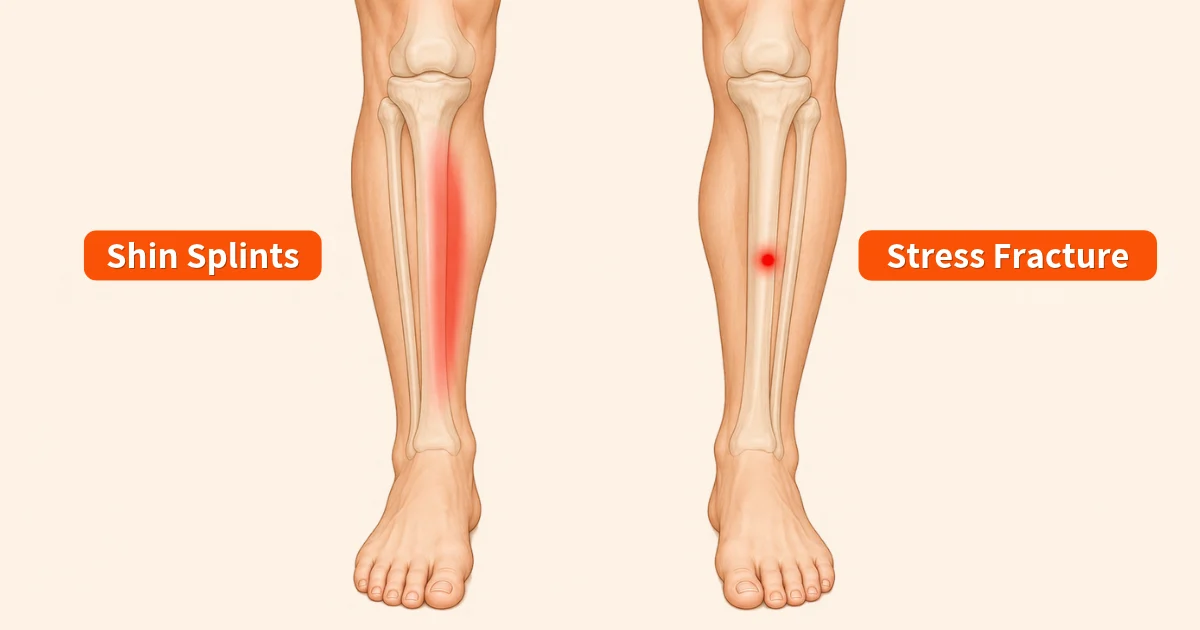
Shin splints cause diffuse soreness along the inner shin that often warms up and eases during a run. A stress fracture feels different: pain sits on one tender spot, hurts when you hop, and may ache at night. The tibia and the second metatarsal are common sites. Hip and femoral neck stress fractures are less common but more serious, so groin pain while running needs quick attention. Most bone stress injuries heal in 4 to 6 weeks, while hip and pelvis fractures can take 12 to 16 weeks.
Achilles Tendinopathy
Achilles tendinopathy shows up as stiffness and pain at the back of the heel, especially with the first steps of the morning. Sudden increases in hills or speed work are typical causes. Calf strength is the key fix, and structured tendinopathy care loads the tendon gradually so it recovers stronger.
Plantar Fasciitis
Plantar fasciitis causes sharp pain under the heel, worst with the first steps of the day. Tight calves, worn shoes, and a jump in mileage are the usual causes. Our plantar fasciitis treatment combines calf and foot strengthening with load changes.
Hamstring Strains and Hip Pain
Hamstring strains often happen during pace work late in a cycle, when fatigue is high. Some runners feel a deep ache at the sit bone instead. Hip flexor and glute pain also become more common as long runs pass 16 miles.
Why Marathon Training Leads to Injury
Every overuse injury has the same root cause: load outpaces adaptation. Tissue gets stressed faster than it can repair, and small damage piles up. Learning how overuse injuries develop helps you spot the warning signs early.
New research shows that a single run can matter more than the weekly total. A 2025 study of 5,205 runners in the British Journal of Sports Medicine found that one run 10 to 30 percent longer than your longest run in the past 30 days raised the injury rate by 64 percent. A run more than double that distance more than doubled the risk. Weekly mileage ratios showed no clear link.
Other common drivers include:
- Easy runs done at moderate or hard effort
- Long runs run too fast
- No cutback weeks
- Weak hips, glutes, and calves
- Form issues such as overstriding and hip drop
- Poor sleep and under-fueling, including low iron
- Shoes worn past 300 to 500 miles
- A previous injury that was never fully rehabbed
How to Train for a Marathon Without Getting Injured
The best marathon training injury prevention plan manages load, builds strength, and catches problems early. These seven steps cover most of it:
- Grow the long run carefully. Keep any single run within about 10 percent of your longest run from the past month.
- Keep easy runs easy. You should be able to hold a conversation.
- Take a cutback week every 3 to 4 weeks. Recovery is when your body adapts.
- Strength train twice a week. Focus on glutes, hip abductors, calves, quads, and core.
- Fuel and sleep well. Eat enough to match your mileage and aim for 7 to 9 hours of sleep.
- Rotate and replace your shoes. Mix in softer surfaces like trails and tracks.
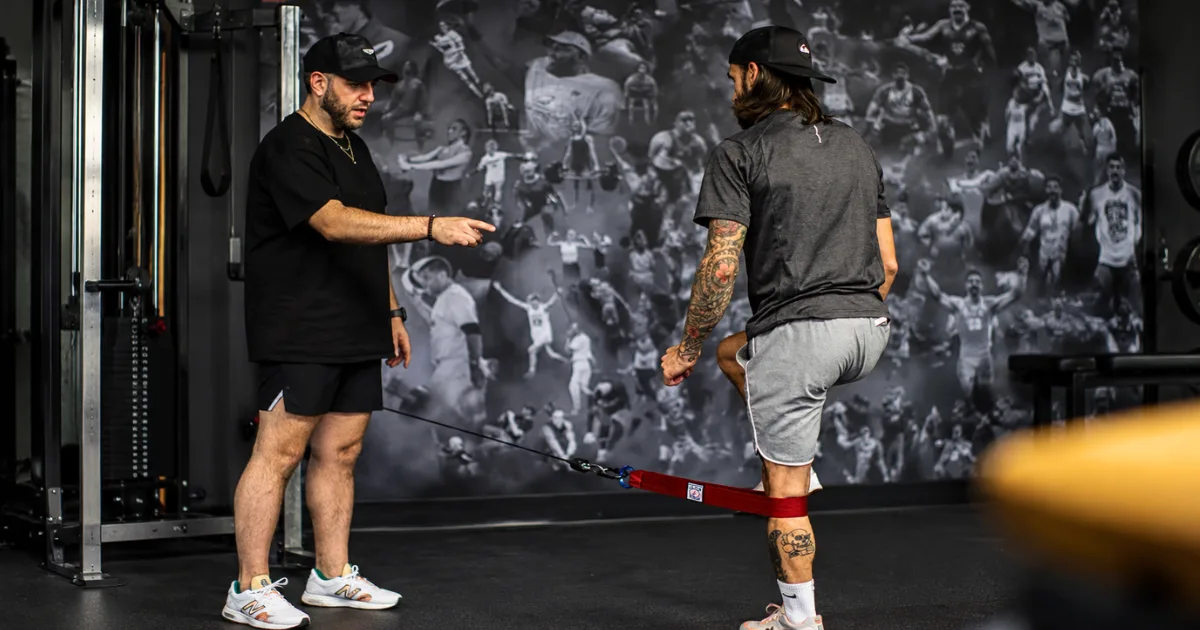
- Get screened before the build. A movement evaluation or force plate testing for athletes can reveal strength gaps and side-to-side differences before they cause pain.
Marathon Training for Injury-Prone Runners
If you get hurt every cycle, change the structure instead of hoping for better luck. Choose an 18 to 20 week plan so mileage can rise slowly. Run 3 or 4 days a week and cross-train on 2 more. Use run-walk intervals on long runs, and do daily prehab for your known weak spot. Most importantly, find out why the same injury keeps coming back before you start the next build.
Injured During Marathon Training? What to Do Next
Can You Run Through It?
Sometimes you can, but only when the pain is mild and stable. Use this guide:
|
Usually OK to keep running with changes |
Stop and get checked |
| Pain at or below 3 out of 10 | One pinpoint spot of bone pain |
| Pain stays steady or eases during the run | Limping or a changed stride |
| Normal running form | Sharp pain or pain that builds |
| Soreness settles within 24 hours | Swelling, night pain, or worse pain the next morning |
After a few days of rest, try a short, easy test run. If pain worsens within 48 hours, stop running. If home care shows no improvement after 1 to 2 weeks, see a sports physical therapist.
Cross Training for Marathon When Injured

Cross-training protects your fitness while the injury heals. Pool running is the closest match to running form, so swap run minutes for pool minutes. Cycling, the elliptical, swimming, and an anti-gravity treadmill like the AlterG are also good options.
Match the activity to the injury. Avoid all impact with a bone stress injury, and skip the bike if it hurts your knee or Achilles. Missing 10 to 12 days of running will not erase your fitness. To maintain leg strength with lighter weights, blood flow restriction training is a useful option during rehab.
What to Do in the Final Weeks Before Your Marathon
The final two to three weeks are for tapering, not cramming. Cut volume, keep a little intensity, and arrive fresh. Do not try anything new on race day, including shoes, gels, or insoles.
Many runners who lost training time ask whether they can skip the taper to catch up. The answer is no. A healthy start line beats a few extra miles, because missed fitness cannot be rebuilt in two weeks, but a new injury can happen in one long run.
If you are hurt close to race day, use this guide:
|
Injury |
Typical call |
| Mild tendinopathy or grade I strain | Run with an adjusted goal and a plan |
| Grade II or III strain within about 3 months of race day | Usually defer |
| Suspected stress fracture | Defer and get imaging |
If you do race, change your goal from a finishing time to simply finishing. If pain changes your stride, defer. There will be another marathon.
Getting Help for Marathon Training Injuries in South Jersey
South Jersey runners train through humid summers for fall races and through cold winters for spring races. Both seasons bring their own injury patterns. Our local guide to sports injury rehab covers the options in the area.
At Rehabletics in Cherry Hill, Dr. Jaime Mor, PT, DPT, ATC, and our team start with a full movement evaluation and a review of your training history. When it helps, we analyze your running gait and use Performance Lab testing to measure strength and asymmetry. Then we build a return-to-run plan that reintroduces mileage, speed, and hills step by step. Runners come to us from Haddonfield, Moorestown, Voorhees, and nearby towns.
You can start right away, because there is no referral needed in New Jersey. Ready to protect your race? Book a call with our team and get a plan built around your training.