

Most athletes need 1 to 2 weeks of relative rest after the last game of the fall season. An injured area needs its own timeline. That can be about a week for a mild strain or 3 months or more for a dislocated shoulder. The injury sets the clock, not the calendar. If pain, swelling, or weakness has not clearly improved after about 2 weeks, it is time to get it checked.
The season is over, but that ankle still aches on the stairs. Whether you are a high school athlete, a parent, or an adult rec player in South Jersey, the next few weeks matter. Most of the aches left over from a long season are nagging overuse injuries, and they respond best to a plan, not a guess.
Why the End of the Fall Season Is the Best Time to Heal
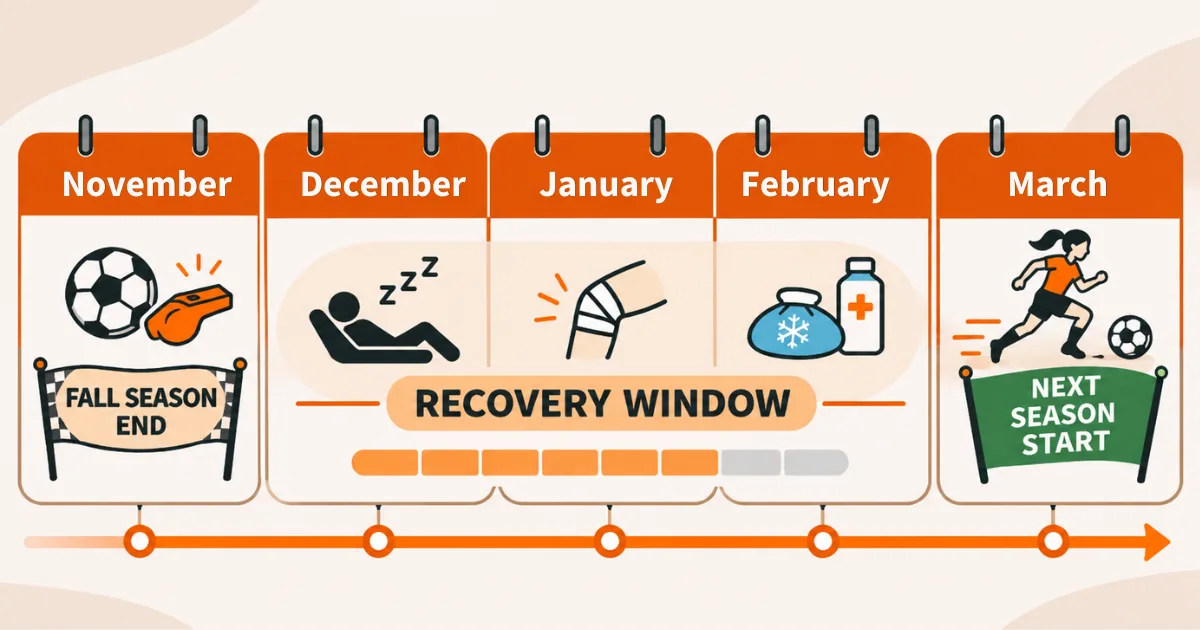
Fall seasons wrap up in November, leaving a short window before winter sports, spring tryouts, or club training. That window is your best chance to heal fully.
If you finished healthy, rest after the sports season can be simple. Take 1 to 2 weeks away from your sport, sleep more, and stay lightly active. If you finished hurt, off-season injury recovery should be active, not passive. Waiting for pain to fade without addressing why it started often turns a small November problem into a preseason setback in March.
Relative Rest vs Complete Rest: Which One Heals Faster?
For most sports injuries, relative rest heals faster than complete rest. Relative rest means you protect the injured area while keeping the rest of your body moving. Complete rest means stopping almost all activity.
Complete rest sounds safe, but it often backfires. Within a couple of weeks, muscles weaken, joints stiffen, and tendons lose their tolerance for load. When you return, the injured tissue meets demands it is no longer ready for.
|
Relative Rest |
Complete Rest |
|
| What it means | Unload the injured area and keep training everything else | Stop nearly all activity |
| Best for | Strains, sprains, tendon pain, shin splints | Fresh fractures, a recent dislocation, the first days after a concussion, early post-surgery protection |
| Risk if overused | Flare-ups if you push into sharp pain | Weakness, stiffness, and higher re-injury risk |
| Example | A soccer player with a sore knee swims and lifts upper body | A football player in a sling after a dislocation |
A simple guide: activity that stays at about 3 out of 10 pain or lower, and settles by the next morning, is usually fine during relative rest.
How Long to Rest a Sports Injury: Timelines by Injury
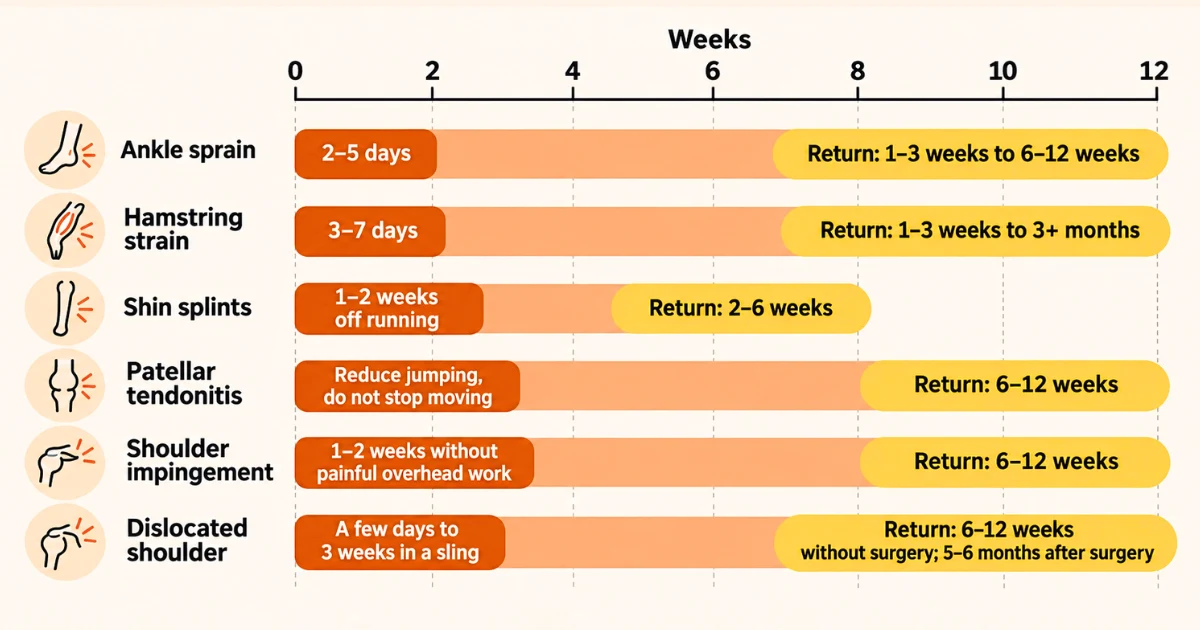
Different tissues heal at different speeds. Muscle has a rich blood supply and heals fastest. Ligaments take longer, and tendons are slowest to adapt. Use the ranges below as a guide for how long it takes to recover from each injury and get back to playing. Severity, age, and rehab quality shift your exact timeline.
|
Injury |
Protected Rest Phase | Typical Return to Sport |
What Decides It |
| Ankle sprain | 2 to 5 days | 1 to 3 weeks (mild) to 6 to 12 weeks (severe) | Sprain grade, balance, hopping without pain |
| Hamstring strain | 3 to 7 days | 1 to 3 weeks (mild) to 3 months or more (tear) | Strain grade, sprinting strength |
| Shin splints | 1 to 2 weeks off running | 2 to 6 weeks | Pain-free hopping and running |
| Patellar tendonitis | Reduce jumping, do not stop moving | 6 to 12 weeks of progressive loading | Tendon load tolerance |
| Shoulder impingement | 1 to 2 weeks without painful overhead work | 6 to 12 weeks | Pain-free overhead strength |
| Dislocated shoulder | A few days to 3 weeks in a sling | 6 to 12 weeks without surgery; 5 to 6 months after surgery | Stability, strength, no apprehension |
Ankle Sprain
A mild ankle sprain usually needs only a few days of protection, then gentle walking and balance work. Most athletes return in 1 to 3 weeks. Moderate sprains take 3 to 6 weeks, and severe sprains can take up to 3 months. Re-sprains are common when balance is skipped, so targeted ankle pain treatment is worth the time.
Hamstring Strain
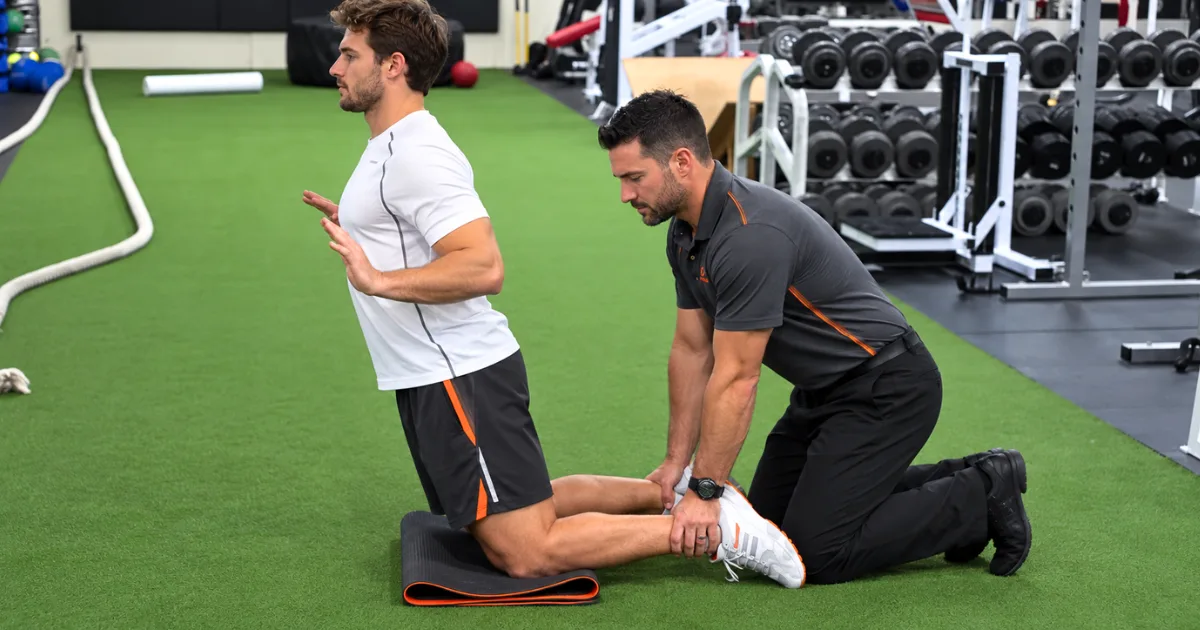
If you are wondering how long to rest a pulled hamstring, it depends on the grade. A mild strain often returns in 1 to 3 weeks, a moderate strain in 4 to 8 weeks, and a complete tear can take 3 months or more. Rest from sprinting, not from all movement. Structured hamstring injury rehab builds the eccentric strength that keeps it from popping again.
Shin Splints
Shin splints usually calm down with 1 to 2 weeks off running and 2 to 6 weeks of gradual return. Cross-train on a bike or in the pool meanwhile. Pain in one sharp spot, or pain that lingers at rest, can signal a stress fracture, which needs 6 to 8 weeks or more and a proper evaluation.
Patellar Tendonitis (Jumper’s Knee)
Tendons do not heal well with complete rest. Cut back on jumping for a few weeks, then rebuild with progressive loading over 6 to 12 weeks. Long-standing cases can take 3 months or more. Our approach to tendon pain and tendinopathy focuses on loading the tendon, not just resting it.
Shoulder Impingement
Most athletes with shoulder impingement need 1 to 2 weeks away from painful overhead movements, then 6 to 12 weeks of rotator cuff and shoulder blade strengthening. Learn more about shoulder impingement treatment and exercises.
Dislocated Shoulder
After a dislocation, the arm usually rests in a sling for a few days up to 3 weeks. Non-surgical rehab often allows a return in 6 to 12 weeks, and full recovery takes 12 to 16 weeks. Young contact athletes have a high risk of the shoulder slipping out again, so some need surgery, which means about 5 to 6 months before returning to play.
Should You Rest or See a Physical Therapist?
Rest alone is fine for mild soreness that improves day by day. If pain, swelling, or weakness has not clearly improved after about 2 weeks, see a physical therapist. Waiting longer usually means a longer comeback.
See someone sooner if you notice:
- Inability to put full weight on the leg
- A pop at the time of injury followed by fast swelling
- A joint that feels loose or gives way
- Numbness, tingling, or weakness down the arm or leg
- Pain at night or while resting
- Pain that returns every time you play
You can review more signs it is time to see a sports physical therapist before deciding. New Jersey allows direct access, so you do not need a referral to book an evaluation with a licensed physical therapist.
Return to Sport After Injury: Signs You Are Ready
Return to sport after injury should be based on milestones, not a date on the calendar. You are likely ready when you can check every box below:
- Full, pain-free range of motion
- Strength within about 90 percent of your uninjured side
- Hopping, cutting, and sprinting without pain or hesitation
- Full-speed sport drills with no flare-up the next day
- Confidence that the injured area will hold up
Objective tools such as force plate testing measure power and side-to-side differences, so the decision rests on numbers instead of guesswork.
Off-Season Rehab for Athletes: A Simple 3-Phase Plan
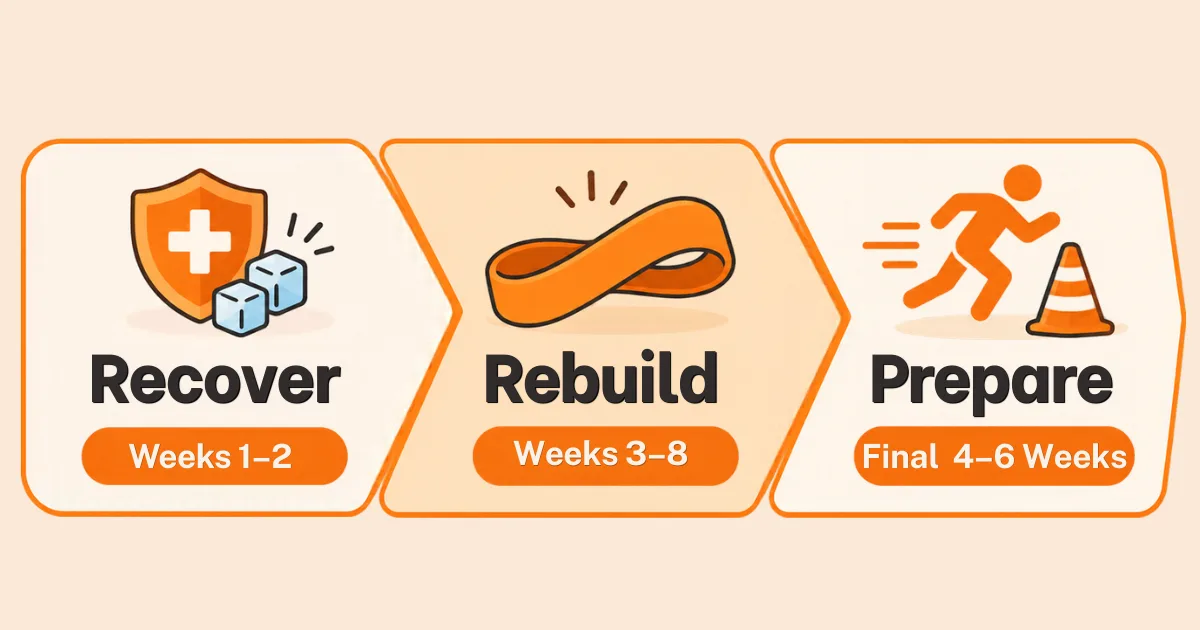
Smart off-season rehab for athletes turns downtime into a head start.
- Recover (weeks 1 to 2): Use relative rest, sleep 8 or more hours, and keep up low-impact cardio such as cycling or swimming.
- Rebuild (weeks 3 to 8): Restore strength and mobility, and fix the weak link that caused the injury, whether that is hip strength, ankle stability, or landing mechanics.
- Prepare (the final 4 to 6 weeks before your next season): Add sport-specific speed, cutting, jumping, and conditioning.
Phase 3 lines up naturally with preparing for preseason, so you show up ready instead of catching up.
Get a Clear Recovery Timeline at Rehabletics in Cherry Hill
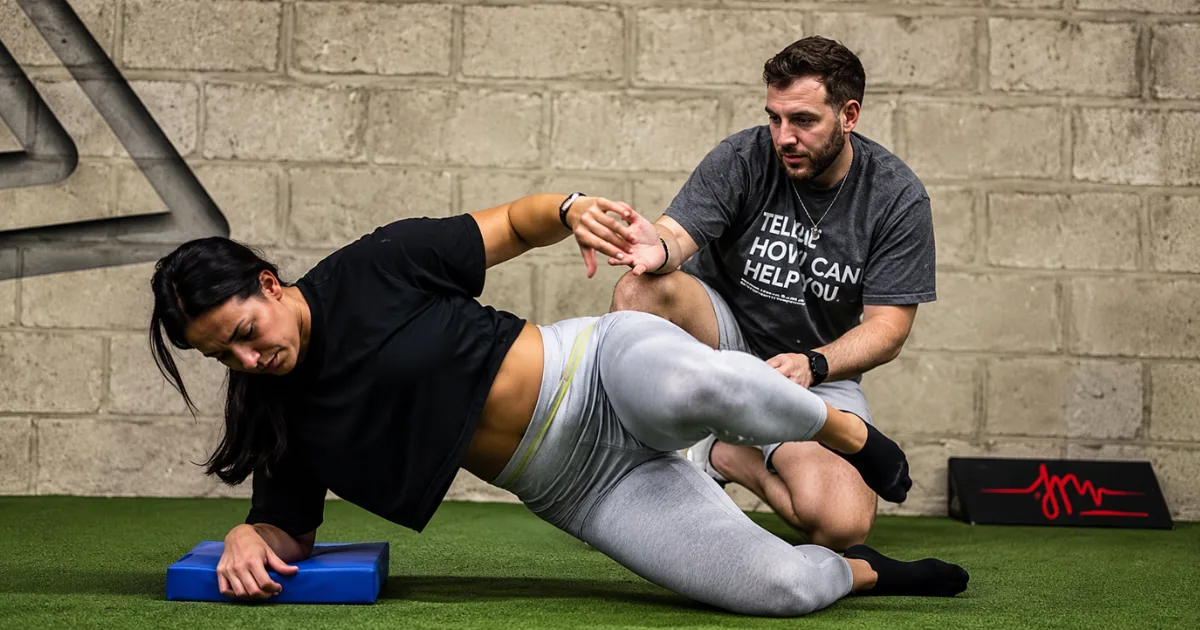
You do not have to guess how long to rest. At Rehabletics Sports Physical Therapy, Dr. Jaime Mor, PT, DPT, ATC, a sports physical therapist and certified athletic trainer, builds a recovery plan around your injury, your sport, and your next season. Explore our sports injury rehab at Rehabletics, visit us at 5 Esterbrook Lane in Cherry Hill, or book a free consultation to start your comeback today.