


The most effective patellar tendonitis treatment is not rest. It is a gradual plan that calms the tendon, rebuilds its strength under load and then retrains it for running and jumping. Rest can quiet the pain for a while, but the tendon stays weak, which is why the pain often returns the moment you go back to your sport. At Rehabletics in Cherry Hill, Dr. Jaime Mor and our team use this loading approach as the core of our sports physical therapy for knee pain. Here is how the plan works, how long it takes and what to avoid along the way.
What Is Patellar Tendonitis?
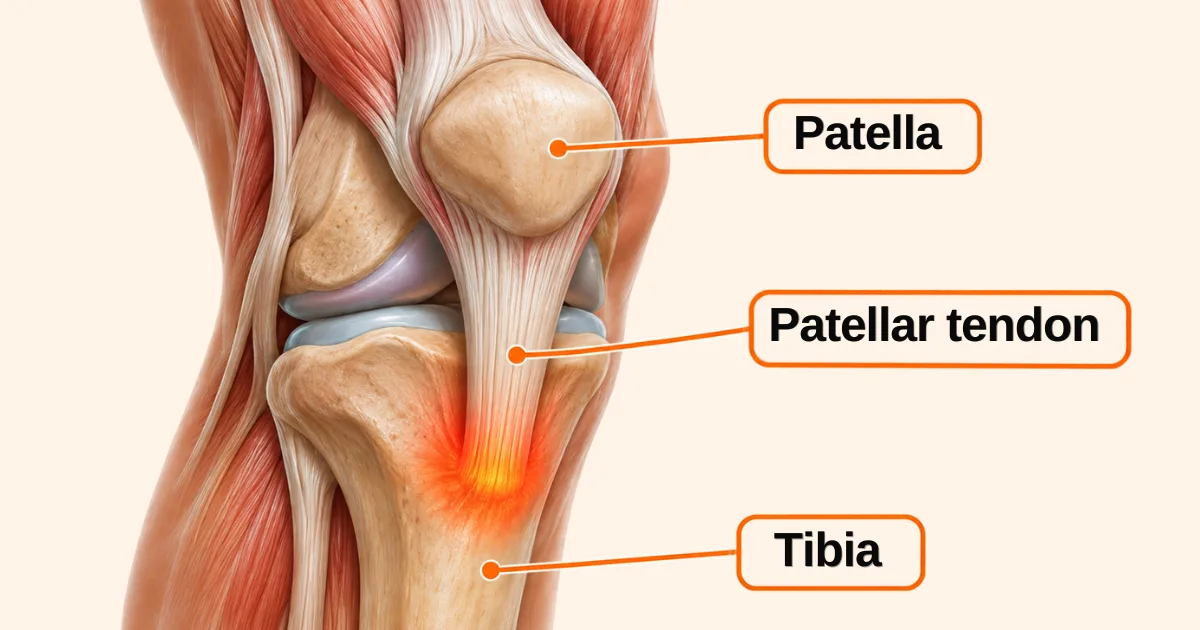
Patellar tendonitis, also called jumper’s knee, is irritation of the tendon that connects your kneecap to your shinbone. It is an overuse injury: the tendon takes more load from jumping, running or squatting than it can recover from between sessions.
Most long-lasting cases are better described as tendinopathy, meaning the tendon’s structure has changed more than it is inflamed. That is why rest and anti-inflammatories rarely fix it alone, while progressive strengthening does. You can learn more about our approach to tendinopathy care at Rehabletics.
Patellar Tendonitis Symptoms and Common Causes
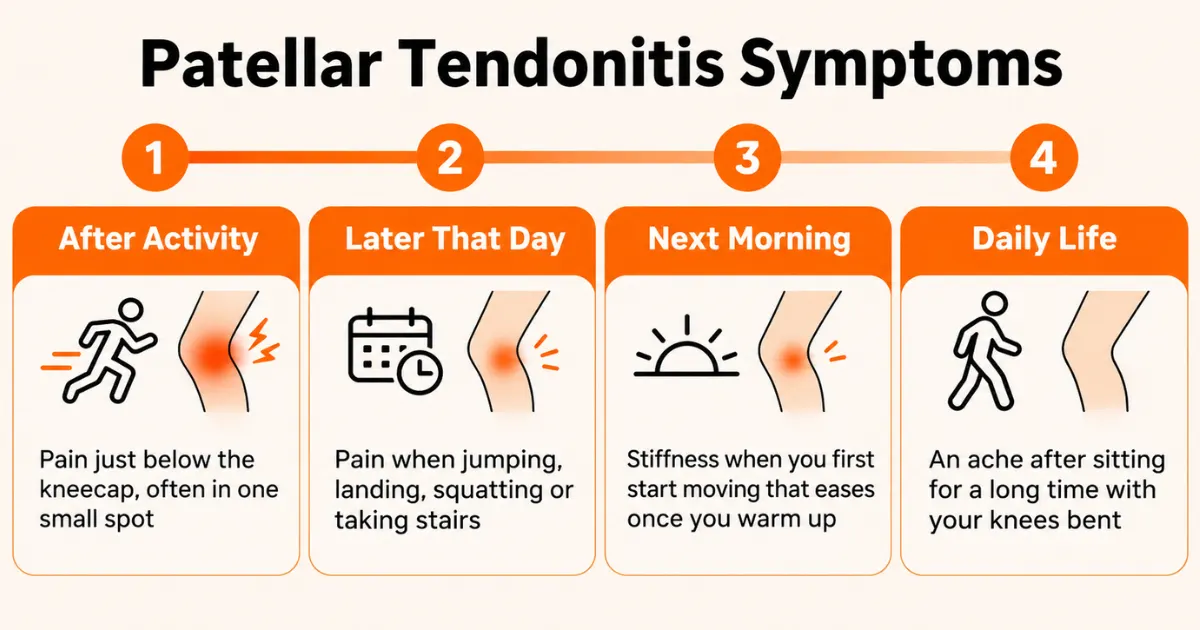
Patellar tendonitis symptoms usually include:
- Pain just below the kneecap, often in one small spot
- Pain when jumping, landing, squatting or taking stairs
- Stiffness when you first start moving that eases once you warm up
- An ache after sitting for a long time with your knees bent
Symptoms tend to progress in stages: pain only after activity, then pain during activity, then pain that limits performance and finally pain with daily tasks. Common triggers include a sudden jump in training volume, weak quads or hips, stiff ankles and stiff, upright landings. Front-of-knee pain can also come from the kneecap joint or the fat pad, so it helps to know the other common knee injuries in athletes.
Can Kneeling Cause Patellar Tendonitis?
Kneeling is rarely the root cause. It can, however, press directly on a tendon that is already sensitive and make it flare. Long hours of kneeling are more often linked to bursitis, which is a swollen fluid sac in front of the kneecap. If your job or sport involves kneeling, use a thick pad and take regular breaks while the tendon recovers.
How to Treat Patellar Tendonitis: A 3-Phase Treatment Plan
Treatment follows a simple pain rule. Mild pain of about 3 out of 10 during exercise is acceptable if it settles by the next morning. If the knee is worse the next day, reduce the load.
| Phase | Goal | Sample exercises | Typical timing |
| 1. Calm the tendon | Reduce pain, keep the tendon loaded | Spanish squat holds, wall sits, leg extension holds | Weeks 0 to 4 |
| 2. Rebuild strength | Build tendon capacity | Leg press, squats, split squats, decline squats | Weeks 3 to 12 |
| 3. Restore spring | Return to running and jumping | Skipping, hops, jumps, sport drills | Week 8 onward |
Phase 1: Calm the Tendon
Start by cutting back on whatever hurts most, usually jumping and sprinting. Replace it with cycling or swimming so you keep your fitness. The key patellar tendonitis treatment exercises in this phase are isometrics, which are holds without movement. Try a Spanish squat with a band behind your knees, a wall sit or a leg extension hold at a comfortable angle. Aim for 5 holds of 30 to 45 seconds. Many athletes notice less pain right after a session.
Phase 2: Rebuild Tendon Strength
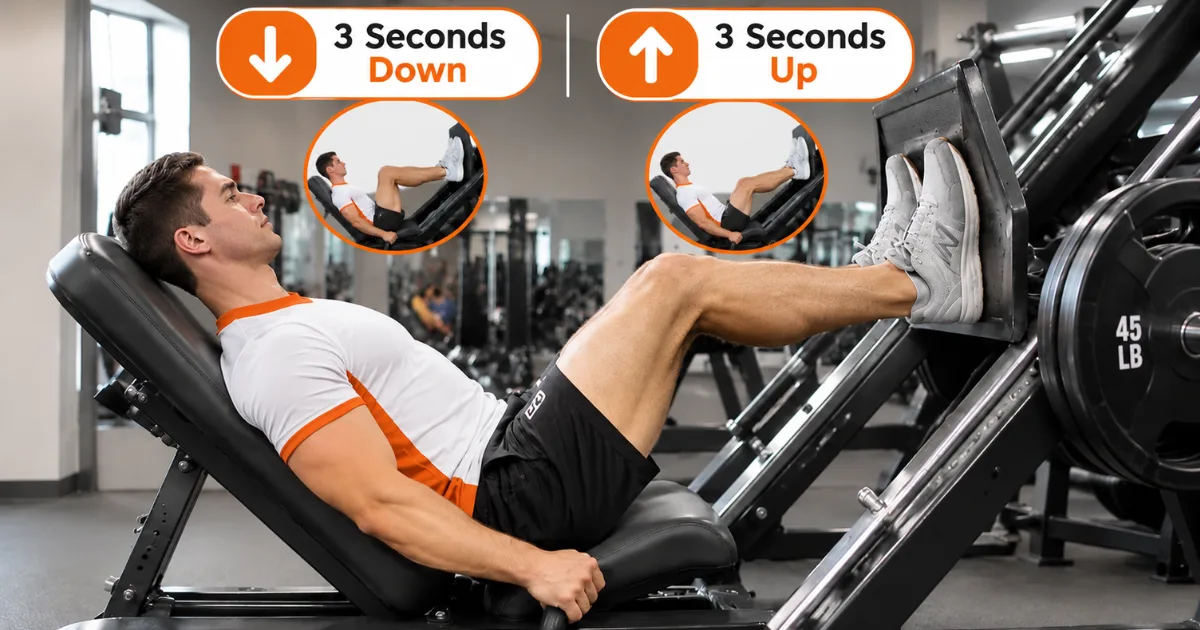
This is the phase that changes the tendon. Heavy slow resistance means lifting a challenging weight slowly, about 3 seconds down and 3 seconds up, two to three times a week. The leg press is one of the best exercises for patellar tendonitis because you can control the depth and the load precisely. Add squats, split squats and decline squats on a slant board as tolerated, plus calf and hip strength work. You can find more knee strengthening exercises in our rehab guide. If heavy lifting still hurts, blood flow restriction training can build strength with much lighter weights.
Phase 3: Restore Spring and Return to Sport
A strong tendon still needs to store and release energy. Progress from skipping and small hops to bounds, jumps and finally sport drills such as cutting or approach jumps. You are ready for full sport when you can hop, jump and land on the painful leg as well as the other one, with little or no pain the next day.
Ice or Heat for Patellar Tendonitis?
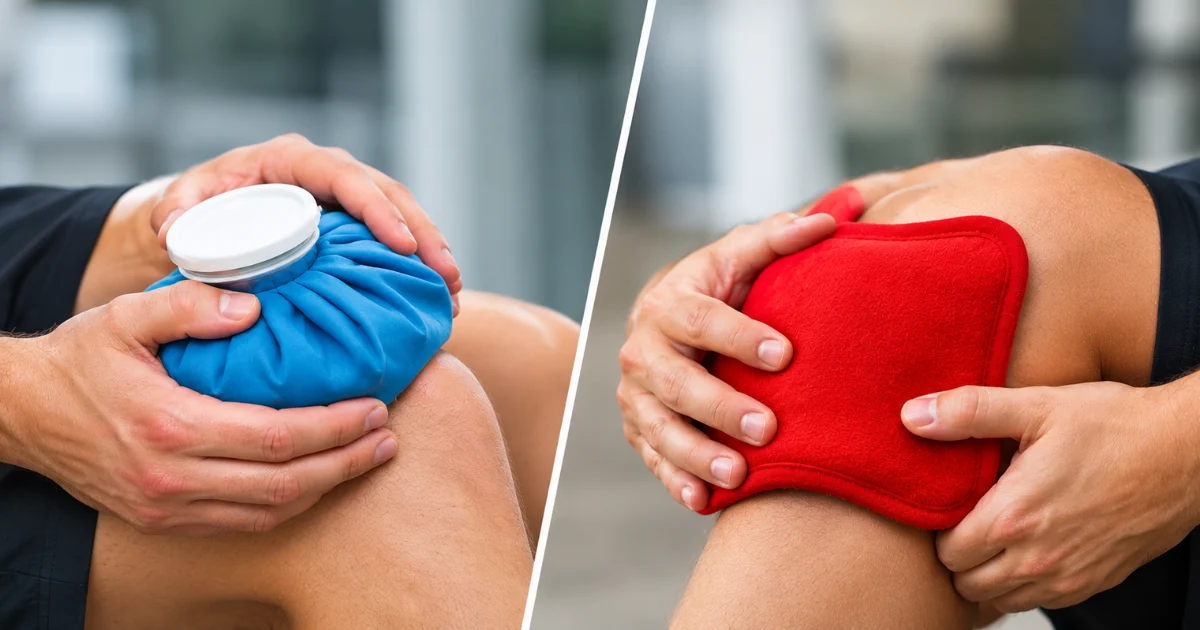
Use both, at different times. Ice works best after activity or during a flare-up: apply it for about 15 minutes, wrapped in a thin towel, to ease pain. Heat or a good warm-up works best before activity, because it loosens morning stiffness. Neither one heals the tendon, so treat them as pain relief that supports your loading program, not as the treatment itself.
Patellar Tendonitis Exercises to Avoid
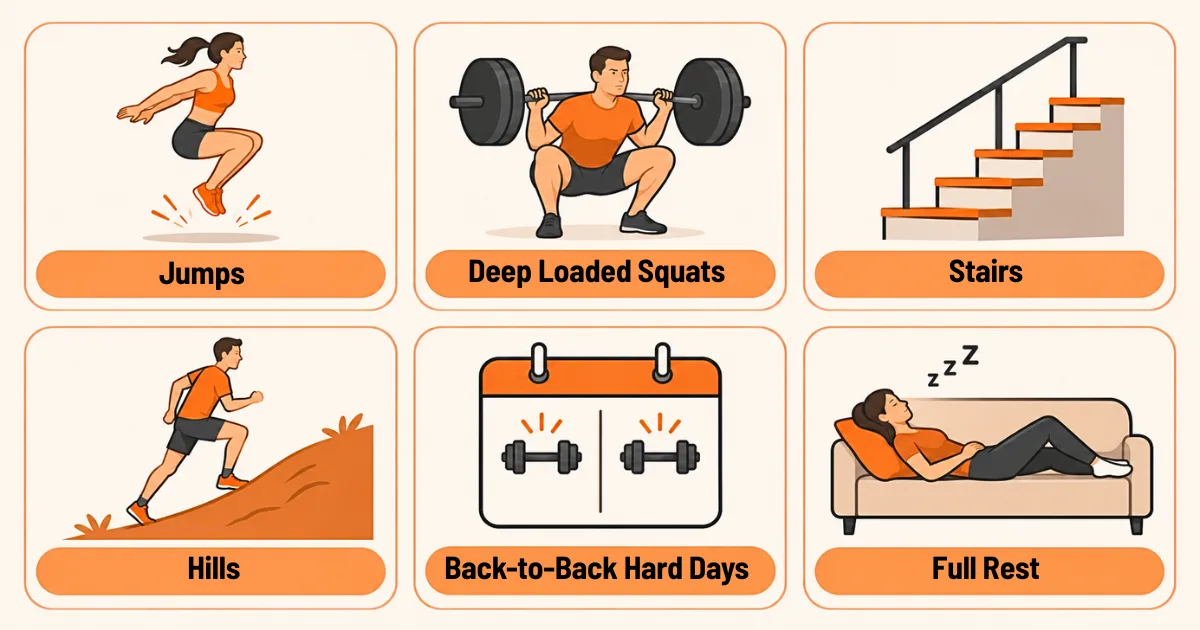
While the tendon is irritated, limit or avoid:
- Jumping, bounding and plyometrics until Phase 3
- Deep, heavily loaded squats and lunges during a flare-up
- Running stairs, steep hills or downhill routes
- Hard training sessions on back-to-back days
- Aggressive quad stretching that reproduces sharp pain
- Complete rest, which weakens the tendon further
Avoiding these does not mean stopping exercise. It means choosing loads that keep pain within the 3 out of 10 rule.
Can I Run With Patellar Tendonitis?
Often, yes. Running loads the patellar tendon far less than jumping, so many runners can keep training with a few changes. Stick to flat routes, shorten your runs, drop speed work and hills, and leave a rest day between runs. Follow the same pain rule: mild pain that settles by the next morning is fine, but limping or worsening pain means you should cut back. Stride and cadence often play a role too, so read about why runners get knee pain.
Clinic Treatments That Speed Up Rehab
Clinic treatments work best alongside exercise, not instead of it. For stubborn cases, shockwave therapy can reduce pain and help the tendon respond to loading. A patellar strap or taping can also ease pain short-term, though neither fixes the cause.
Does Red Light Therapy Help Patellar Tendonitis?
Red light therapy may help with short-term pain and recovery between sessions, although research on this specific tendon is still limited. We use it as a support tool, never as a stand-alone fix. You can read more about red light therapy for tendon pain.
Injections and Surgery: When Are They Needed?
Steroid injections give short-term relief but can weaken the tendon, so most specialists avoid them. Platelet-rich plasma (PRP) may be considered after a full rehab program fails. Surgery for patellar tendonitis is rare and is usually reserved for cases that have not improved after 6 months or more of good conservative care. Return to sport after surgery often takes 6 to 12 months.
How Long Does Patellar Tendonitis Take to Heal?
Most cases improve within 6 to 12 weeks of consistent rehab. Recovery time depends on how long you have had symptoms and how early you change your training.
| Severity | Typical recovery time |
| Mild (pain only after activity) | 2 to 6 weeks |
| Moderate (pain during activity) | 6 to 12 weeks |
| Long-standing (pain limits sport) | 3 to 6 months or more |
| After surgery | 6 to 12 months |
A typical treatment course with a physical therapist runs about 12 weeks, with visits becoming less frequent as you take over your home program. The biggest delay is waiting too long to start.
Patellar Tendonitis in Volleyball Players: Treatment and Landing Fixes
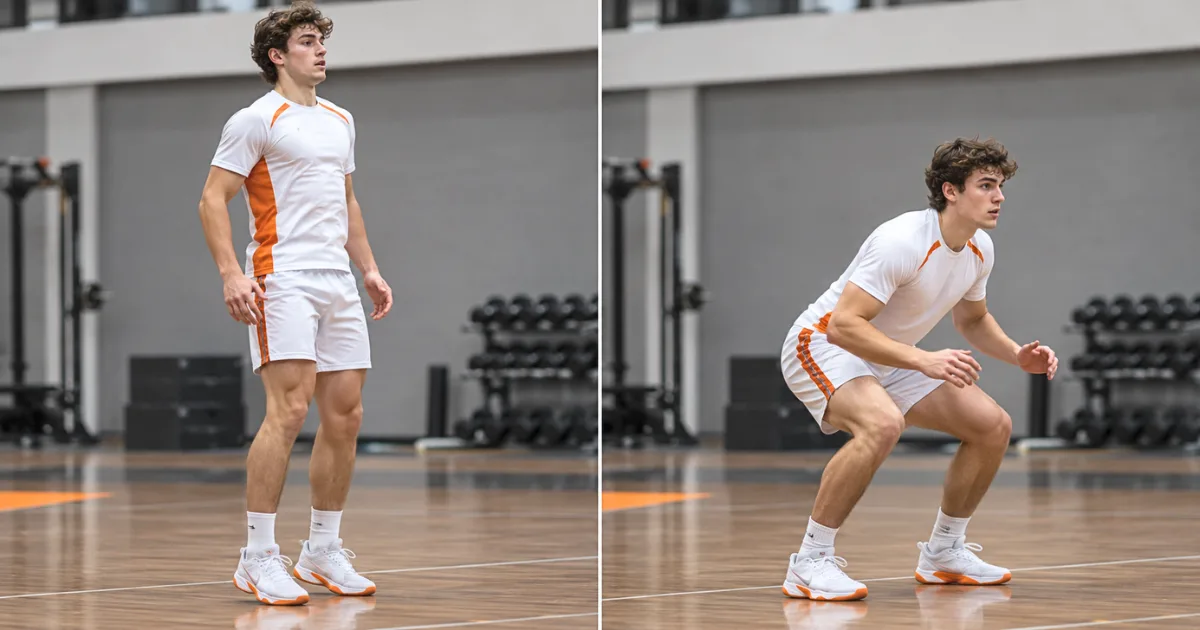
Volleyball players face high risk because every approach jump, block and landing loads the tendon. Treatment follows the same three phases, with careful tracking of jump counts. These landing fixes reduce tendon stress:
- Land softly with your hips back and knees bent, not stiff and upright.
- Land on both feet whenever the play allows.
- Keep your knees in line with your toes.
- Count jumps in practice and cut volume during flare-ups.
Get a Patellar Tendonitis Treatment Plan in Cherry Hill
If knee pain is holding back your running, jumping or season, you do not need to guess your way through rehab. Dr. Jaime Mor and the Rehabletics team build every plan around your sport, your body and your goals, as part of our sports injury treatment for athletes across South Jersey. In New Jersey, you can start physical therapy without a referral. Book a call with our team to get your evaluation scheduled and start moving forward.