



Red light therapy can reduce tendon pain and may modestly speed early healing, but the evidence is strongest when it is used alongside progressive loading exercise, not instead of it. It is an adjunct, not a cure.
If you are reading this, there is a good chance you have already worked through the list. Rest, ice, anti-inflammatories, physical therapy. Maybe ultrasound, a cortisone shot, or months of stretching that changed nothing. Tendon pain is uniquely stubborn, and red light therapy tends to be the thing people reach for after everything else has disappointed them.
That context matters, because most articles on this topic are published by companies selling light panels. This one is written to answer the question you are actually asking: does red light therapy for tendonitis do anything real, and if it does, what exactly do you have to do to get that effect? You will find the honest evidence, the specific wavelengths and doses used in successful trials, guidance for your particular tendon, and a clear rule for deciding when it is not working.
What Is Red Light Therapy?
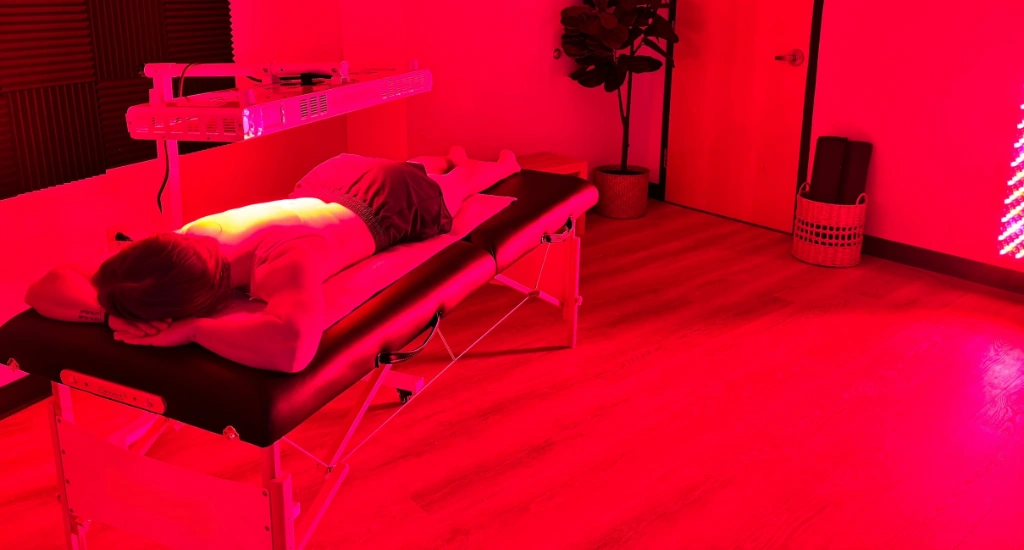
Red light therapy, known in the research world as photo biomodulation (PBM), involves using specific wavelengths of red and near-infrared light to stimulate cells and tissues. Instead of heating or cutting tissue, it delivers light energy that triggers a biological response inside your cells, which is why it is described as non-invasive and drug-free.
There are three types of devices grouped under this label, and the differences matter. Low-level laser therapy (LLLT) uses focused, coherent laser light that penetrates deeply and has the longest research history. LED devices, such as panels, pads, belts, and wraps, emit non-coherent light, can treat larger areas, and now match or exceed the performance of lasers in many clinical trials. Infrared heat lamps are the odd one out. Despite being marketed as red light therapy, they primarily emit heat rather than the targeted wavelengths required for cellular effects, so they are not true photo biomodulation devices.
Red Light vs Near-Infrared: Why Wavelength Matters
Not all of this light reaches the same depth. Red light, roughly 630 to 680 nm, is visible and best for surface tissues such as skin and shallow tendons like those in the hand. Near-infrared light, roughly 780 to 860 nm, is invisible to the eye and penetrates deeper, making it more effective for thicker or deeper tendons and the surrounding muscle. Because many tendons sit at an awkward depth, many modern devices emit dual wavelengths, often 660 nm and 850 nm, to cover both bases at once.
Does Red Light Therapy Work for Tendonitis? The Short Answer
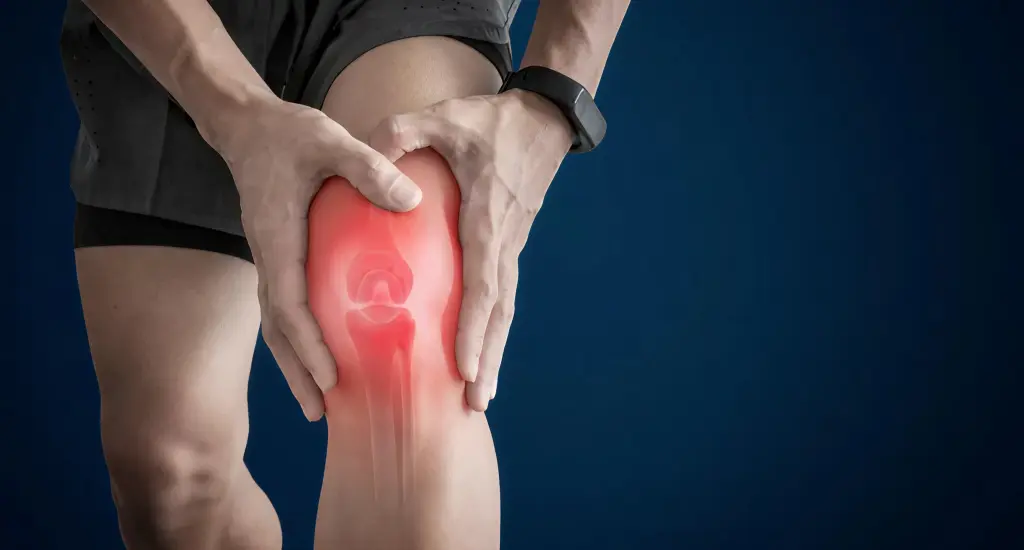
Does red light therapy help with tendonitis? Photobiomodulation, to use its proper name, has moderate evidence for reducing tendon pain and improving function, and the most consistent results come from studies that combined light with exercise.
What the strongest studies found
A 2008 randomized trial by Stergioulas and colleagues in The American Journal of Sports Medicine gave recreational athletes with chronic Achilles tendinopathy an eccentric exercise program plus either real low-level laser therapy or a placebo light. At 12 weeks, the real-light group reported less pain and better function than the placebo group doing identical exercises.
A separate 2008 meta-analysis by Bjordal pooled 730 patients with lateral epicondylitis and found that low-level laser therapy reduced pain compared with placebo. A 2021 systematic review and meta-analysis by Tripodi and colleagues concluded that photobiomodulation shows utility for tendinopathy both as a standalone and as an adjunctive therapy, with the strongest effects when it was paired with exercise.
What the skeptical reviews found
A 2020 systematic review by Martimbianco focused specifically on Achilles tendinopathy and reached a more cautious conclusion: results across trials were inconsistent, overall evidence quality was low, and short-term differences between light and placebo largely evened out by three to twelve months.
For tendon tears, the picture is weaker still. A 2022 randomized controlled trial by Oliveira added photobiomodulation to standard non-surgical care for acute Achilles ruptures. There was no significant difference in functional scores, strength, or range of motion. The light group reported slightly less pain while walking at 12 and 16 weeks, and nothing more.
The honest verdict
Pain reduction is the most reliable effect. Structural healing is plausible but far less proven. That is not a dismissal, because in tendon rehabilitation, pain relief has real leverage: less pain means you can tolerate the loading exercises that rebuild tendon capacity.
| Condition | Evidence level | What to realistically expect |
| Tennis elbow / golfer’s elbow | Moderate | Meaningful short-term pain reduction |
| Achilles tendinopathy | Mixed to moderate | Faster early pain relief with eccentrics |
| Patellar tendinopathy | Limited | Pain modulation; pair with heavy loading |
| Rotator cuff tendinopathy | Limited to moderate | Pain relief; depth is a limiting factor |
| Gluteal tendinopathy | Limited | Mostly symptom relief |
| Tendon tears and ruptures | Weak | Minor pain benefit only |
Understanding Your Tendon Problem First
Before choosing a dose, you need to know what stage your tendon is in, because red light therapy is not equally relevant at every stage.
Why the “inflammation” label is usually wrong
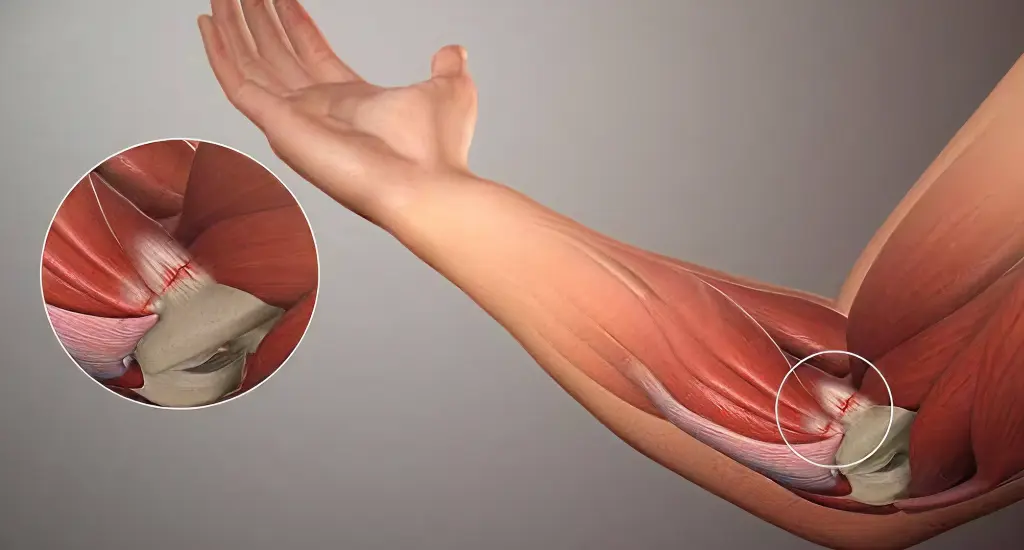
Tendonitis technically means tendon inflammation, and in the first days after an acute overload that is accurate. But most persistent tendon pain is not inflammatory. In chronic cases the tissue shows collagen disorganization, abnormal cell activity, and disrupted structure without much classic inflammation. Clinicians call this tendinosis, and the umbrella term for the whole spectrum is tendinopathy. In everyday use the words are interchangeable, but the distinction matters: if your problem is degenerative rather than inflammatory, an anti-inflammatory effect alone will not fix it.
Why tendons heal so slowly
Tendons have poor blood supply compared with muscle. Their resident cells, tenocytes, are metabolically quiet and turn collagen over slowly. That is why a calf strain resolves in weeks while Achilles pain drags on for a year. Any treatment that claims fast tendon healing is working against that biology.
Symptoms that tell you which stage you are in
| Feature | Reactive / early | Chronic / degenerative |
| Onset | Days after a load spike | Months of grumbling |
| Morning stiffness | Mild | Pronounced, needs warming up |
| Warm-up effect | Little change | Pain fades during activity, returns after |
| Next-day rebound | Uncommon | Characteristic |
| What helps most | Load reduction, relative rest | Progressive loading over months |
How Red Light Therapy Works on Tendon Tissue
Photobiomodulation delivers red or near-infrared light into tissue at doses low enough that nothing heats up. The effects are biochemical, not thermal.
Mitochondria, cytochrome c oxidase, and ATP
Red and near-infrared photons are absorbed by cytochrome c oxidase in the mitochondrial electron transport chain. That absorption increases ATP production, which gives cells more energy for repair work. In tendon tissue, where cellular activity is low to begin with, this is the proposed reason light might nudge a stalled repair process forward.
Modulating inflammation without shutting it down
Studies report reductions in pro-inflammatory signaling, including TNF-alpha, IL-6, IL-1 beta, and prostaglandin E2. The important nuance is that the goal is balance, not suppression. Early inflammation is part of normal healing. What causes trouble is prolonged, low-grade inflammatory signaling, and that is what photobiomodulation appears to calm.
Blood flow and collagen remodeling
Light exposure is associated with improved local microcirculation and increased fibroblast and tenocyte activity, which supports collagen synthesis and the gradual reorganization of collagen fibers. This is the pathway that most claims about red light therapy for tendon repair rest on, and it is slow work. Tendon strength depends on how collagen is rebuilt over months, not days.
Pain relief: the underrated mechanism
Photobiomodulation appears to alter peripheral nerve activity and may trigger endorphin release. This is usually listed last, but it may matter most. One person treating hand tendon pain described it well: the light reduced pain enough that they could hold their therapy stretches longer, which is what actually moved their recovery forward. Light that lets you complete your loading program is doing useful work even if it never touches a collagen fiber directly.
Red Light Therapy by Tendon: What to Expect for Your Injury
Tendon depth determines wavelength choice and realistic expectations. Superficial tendons are easy targets. Deep ones are not.
Achilles tendonitis
This is the best-studied site. The tendon sits directly under the skin at the back of the ankle, so both red and near-infrared light reach it. Red light therapy for Achilles tendonitis performs best when it is combined with eccentric heel drops. That combination is what produced the 12-week advantage in the Stergioulas trial. Treat the tendon from both sides, not just the back.
Gluteal tendinopathy
Red light therapy for gluteal tendinopathy is the hardest case in this list. The gluteus medius and minimus tendons attach deep at the greater trochanter, often under a layer of fat and muscle, which is why this presents clinically as greater trochanteric pain syndrome. Near-infrared in the 810 to 850 nm range is essential, because red light alone will not get there. Expect pain modulation rather than structural change, and pair it with hip abductor isometrics and load management. The best red light therapy for gluteal tendinopathy is whichever device makes firm skin contact and publishes a real irradiance figure. Panels used at a distance lose too much power before reaching the tendon.
Posterior tibial tendonitis
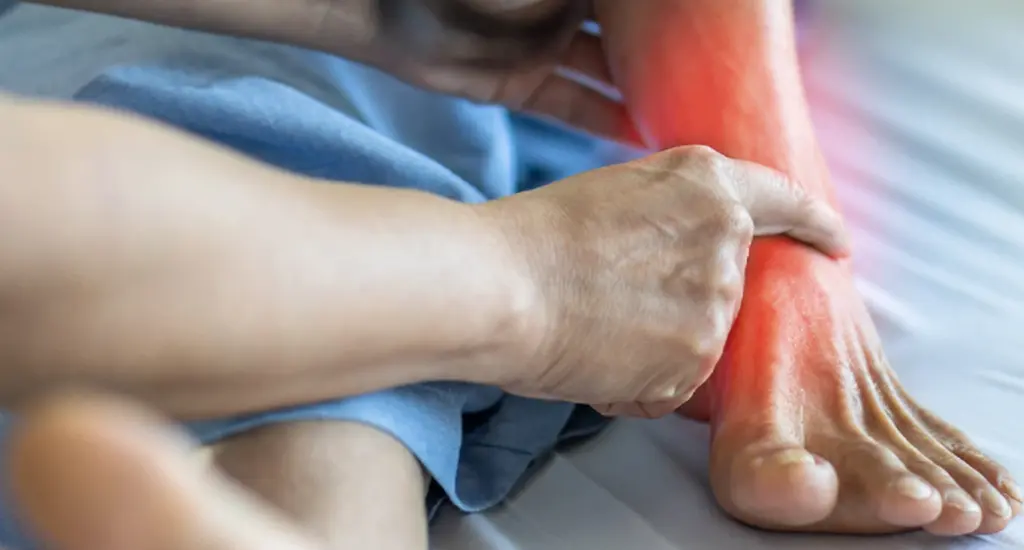
Red light therapy for posterior tibial tendonitis targets the medial ankle just behind the inner ankle bone, where the tendon is superficial and easy to reach. Combine treatment with arch support and calf strengthening, because this tendon mostly fails under arch-collapse loads.
Peroneal tendonitis
Red light therapy for peroneal tendonitis works on the lateral ankle, where the tendons run just behind and below the outer ankle bone. It is superficial, accessible, and responsive to targeted contact treatment. Address ankle stability alongside it.
Tennis elbow and golfer’s elbow
This is where the pooled evidence is strongest. Does red light therapy help tennis elbow? Bjordal’s meta-analysis of 730 patients found measurable pain reduction for lateral epicondylitis. The tendon origins on both sides of the elbow are shallow, so red wavelengths penetrate adequately. Pair treatment with a wrist extensor or flexor strengthening program.
Patellar tendonitis, rotator cuff, and other sites
Patellar tendinopathy responds best when light supports a heavy slow resistance program. Rotator cuff tendons sit deeper under the deltoid, so near-infrared and skin contact matter. Wrist, biceps, and plantar fascia are all superficial and practical targets.
| Tendon | Depth | Wavelength priority | Evidence | Pair with |
| Achilles | Superficial | 660 + 850 nm | Mixed to moderate | Eccentric heel drops |
| Tennis/golfer’s elbow | Superficial | 660 nm | Moderate | Forearm strengthening |
| Posterior tibial | Superficial | 660 + 850 nm | Limited | Arch support, calf work |
| Peroneal | Superficial | 660 + 850 nm | Limited | Ankle stability work |
| Patellar | Moderate | 850 nm | Limited | Heavy slow resistance |
| Rotator cuff | Deep | 810 to 850 nm | Limited to moderate | Scapular and cuff loading |
| Gluteal | Deep | 810 to 850 nm | Limited | Hip abductor isometrics |
Learn More: Red light therapy for back pain
How to Use Red Light Therapy for Tendonitis (Settings and Protocol)
This is where most articles turn vague. Here are the numbers that appear in the trials that worked.
Best wavelength for tendons
Use red light around 630 to 680 nm for superficial tendons and near-infrared around 780 to 860 nm for deeper tissue. Many devices emit both, commonly 660 nm plus 850 nm, which covers most situations. For gluteal, rotator cuff, or high hamstring tendons, prioritize 810 to 850 nm.
Dose and irradiance: the numbers that matter
Aim for roughly 10 to 30 mW/cm² of irradiance at the skin, and avoid going much above 50 mW/cm². More power is not better here. Target 4 to 10 J/cm² per session, and 5 to 8 J/cm² is the range that most successful tendon studies landed in. Bjordal’s Achilles trial used approximately 5.4 joules per treatment point.
How to calculate your own dose
Dose equals irradiance multiplied by time. Convert milliwatts to watts first: 20 mW/cm² is 0.02 W/cm². Multiply that by 300 seconds of exposure and you get 6 J/cm², which sits right in the therapeutic window. If your device does not publish its irradiance at a stated distance, you cannot do this calculation, and you are guessing.
Session length, frequency, and total course
| Parameter | Recommended for tendons |
| Wavelength | 660 nm (superficial) and/or 810 to 850 nm (deep) |
| Irradiance | 10 to 30 mW/cm² (avoid above 50) |
| Energy dose | 4 to 10 J/cm² per session (5 to 8 typical) |
| Session length | 10 to 20 minutes per treatment area |
| Frequency | 2 to 3 sessions per week, non-consecutive days |
| Total course | 10 to 15 sessions over 4 to 6 weeks |
| Reassess at | 6 weeks |
Why vendors say five times a week and research says three
Clinical protocols that produced positive tendon results generally used two to three sessions per week with a rest day in between. Device marketing frequently suggests daily or near-daily use, which conveniently increases perceived value.
The reason to favor the research figure is the biphasic dose response. Photobiomodulation follows an inverted-U curve, where too little light does nothing and too much can suppress the biological response you were trying to stimulate. With light, more is not better; it can be worse. Consistency over six weeks beats intensity over two.
Positioning, distance, skin prep, and timing
Treat clean, dry skin with no lotion or oil, and remove clothing over the area. Direct or near-contact placement is best for deep tendons, while a few inches is acceptable for superficial ones. Palpate along the tendon to find the most tender point and treat there, then treat the same tendon from a second angle. Include the surrounding muscle, because weak or tight muscle upstream keeps overloading the tendon. Schedule sessions after your rehab exercises or after activity, when the tissue is already in repair mode.
How Long Until You See Results, and When to Stop
Realistic timeline
Most people who respond notice a change in pain within two to four weeks of consistent, correctly dosed treatment. Acute cases can shift faster. Structural improvement, if it happens, takes six to twelve weeks or longer. Chronic tendinopathy of several years’ standing may need a full course plus a sustained loading program before anything meaningful changes.
Progress markers that beat a pain score
Pain on a given day is noisy. Track these instead:
- Morning stiffness: how many minutes before the tendon loosens
- Warm-up time: how long into activity before pain settles
- Post-activity soreness: intensity in the hours afterward
- Next-day rebound: how you feel 24 hours later
These markers usually improve before peak pain does.
Your stop-loss rule
Here is the rule that almost nobody gives you. If you complete 12 to 15 properly dosed sessions across six weeks, using the correct wavelength, verified irradiance, 4 to 10 J/cm², and non-consecutive days, and none of the four markers above has moved, then red light therapy is not working for your tendon. Stop spending money on it. Go back and confirm the diagnosis, and audit whether your loading program is actually progressing.
Why Red Light Therapy Didn’t Work for You
If you have already tried it without result, one of these is usually the reason.
You used it too often
The most common failure pattern is a home device used daily for three weeks and then abandoned. The successes that patients report tend to be clinic-administered courses at two to three sessions per week sustained over six weeks or more, which is exactly the research protocol. Daily use runs straight into the biphasic dose response.
Your device doesn’t publish its irradiance
Many marketplace sellers never state mW/cm² at a given distance. Without it, you cannot calculate dose, which means you cannot know whether you delivered 1 J/cm² or 40. A missing irradiance figure is a legitimate reason to skip a device.
The tendon is too deep for your device
Hip, gluteal, rotator cuff, and high hamstring tendons sit under significant tissue. A red-only panel used from two feet away is not delivering a therapeutic dose to those structures.
You used a heat lamp, not photobiomodulation
Infrared heat lamps are frequently marketed as red light therapy. They warm the skin without delivering the specific wavelengths and irradiance that drive photobiomodulation. If your device feels hot, that is a warning sign, and it also explains the common suspicion that the relief is “just the heat.” A proper session should feel like almost nothing.
You skipped the loading program
This is the big one. Progressive loading, including eccentrics, isometrics, and heavy slow resistance, is the intervention with the strongest evidence base for tendinopathy. Light layered on top of a real loading program has a chance. Light used instead of one rarely resolves anything.
Red Light Therapy vs Other Tendonitis Treatments
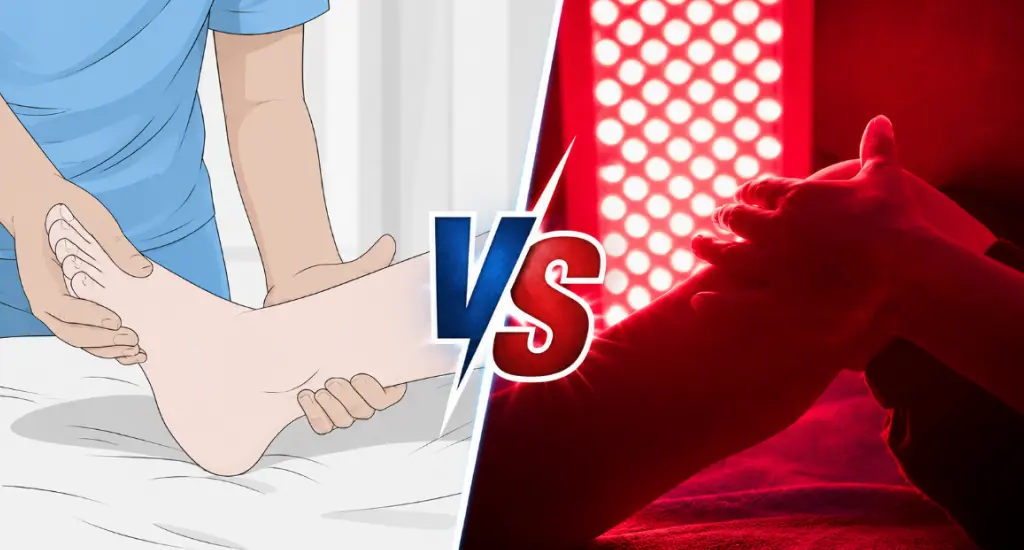
| Treatment | What it does | Invasiveness | Best thought of as |
| Progressive loading | Rebuilds tendon load capacity | None | The foundation |
| Red light therapy | Reduces pain, may support early healing | None | A complement to rehab |
| NSAIDs | Short-term pain and inflammation control | Low | Temporary symptom relief |
| Ice | Numbs pain, reduces acute swelling | None | Acute-phase comfort |
| Shockwave (ESWT) | Mechanical stimulus to stalled tissue | Moderate | An option for stubborn cases |
| Cortisone injection | Rapid pain relief | Moderate | Short-term relief with trade-offs |
| PRP injection | Concentrated platelets to stimulate repair | High | Aggressive option, clinic only |
Versus loading exercise: eccentric and heavy slow resistance programs remain the evidence-based core of tendinopathy management. Red light therapy is the assistant.
Versus PRP and shockwave: both are more aggressive, more expensive, and clinic-delivered. Red light therapy is a reasonable thing to trial before escalating to either.
Versus cortisone: injections often produce fast relief but carry trade-offs for tendon tissue, and the pain relief can encourage a return to load before the tendon is ready.
Versus NSAIDs and ice: these manage symptoms without changing tendon structure. Red light therapy at least targets the cellular environment.
Choosing a Red Light Therapy Device for Tendons
Is a clinic cold laser the same as a home LED panel?
No, and this is the most common point of confusion. Clinic low-level laser therapy uses coherent, focused laser light at higher power densities over a small area, dosed by a clinician. Class IV lasers are higher-powered still and produce noticeable heat. Home LED panels emit non-coherent light over a wide area at lower power density. Newer research suggests that LEDs can produce comparable tendon benefits, but they generally require longer sessions and closer placement to deliver an equivalent dose. When a study says “laser,” do not assume your panel matches it.
Panel vs wrap vs handheld
Panels suit large or multiple areas but lose intensity rapidly with distance. Wraps and belts are the practical choice for the Achilles, elbow, knee, and wrist because they maintain skin contact. Targeted contact devices are the sensible option for deep tendons like the glutes and rotator cuff.
The specs that actually matter
Wavelength, irradiance stated at a specific distance, and treatment area size. Everything else, including LED count and total wattage, is marketing until those three are disclosed.
What “FDA cleared” really means
FDA 510(k) clearance means a device was found substantially equivalent to an existing legally marketed device, usually for general pain relief or circulation. It is a safety and equivalence pathway, not proof that the device treats your tendinopathy. Treat it as a baseline, not as evidence.
Cost, HSA/FSA, and clinic vs home
Quality home devices run several hundred dollars, and clinic laser courses cost more and are often not covered by insurance. Many devices qualify for HSA or FSA spending. If you have a single superficial tendon problem, a wrap or contact device is usually better value than a full-body panel.
Is Red Light Therapy Safe?
Red light therapy is considered low-risk when it is used correctly. It is non-ionizing and non-thermal at therapeutic doses, and serious side effects are rarely reported.
What a session should feel like: essentially nothing. No pain and no significant heat. Discomfort means the intensity is too high or the device is a heat lamp.
Who should check with a clinician first: anyone with active cancer, anyone taking photosensitizing medications, people who are pregnant, and anyone considering treatment over the thyroid, an active infection, an open wound, or an undiagnosed lump.
Eye protection: these devices are bright, and near-infrared is invisible. Do not look directly into the emitters, and use goggles with high-powered panels.
Suspected rupture: if you felt a sudden pop, lost strength sharply, or cannot bear weight, this is a medical situation. Seek assessment and imaging. Do not treat a suspected rupture with light.
A note for athletes: there is some evidence that heavy daily photobiomodulation over many weeks may blunt training adaptations. If you are in a strength block, alternate days and consider a week off every few weeks.
The Bottom Line
Red light therapy for tendonitis offers modest, reasonably well-supported pain relief and plausible support for early tissue healing. It is not a cure, and it will not rescue a tendon that is not being progressively loaded.
The practical path looks like this. Get a proper diagnosis so you know which tendon and which stage you are dealing with. Start or continue a progressive loading program, because that is the treatment doing the heavy lifting. Add light at 4 to 10 J/cm², two to three times a week on non-consecutive days, using a device that publishes its irradiance. Track morning stiffness, warm-up time, post-activity soreness, and next-day rebound. Reassess at six weeks and be willing to stop if nothing has moved.
This article is for general information and is not medical advice. Speak with a qualified clinician about your specific injury.