


You felt the hit, heard the pop, and now the inside of your knee aches with every step. The first question is always the same: how long until you are back? MCL sprain recovery time depends on the grade. Most mild sprains heal in 1 to 3 weeks, moderate sprains take 3 to 6 weeks, and complete tears take 6 to 12 weeks without surgery.
Some people call it a medial collateral ligament sprain, and others search for an “MCL strain.” The injury and the timeline are the same. What changes your return date most is how your knee performs, not just the calendar.
At Rehabletics, Dr. Jaime Mor and our team help athletes return from this injury through knee pain treatment in Cherry Hill built around testing, not guesswork. This guide breaks down each grade, each phase of rehab, and exactly when you can run, play, and work again. Keep reading.
MCL Sprain Recovery Time at a Glance
MCL sprain recovery time ranges from about 1 week for a mild stretch to 3 months for a complete tear. Use this table to find your grade and the typical milestones.
| Grade | What happened to the ligament | Walking normally | Light jogging | Full sport | Brace |
|---|---|---|---|---|---|
| Grade 1 (mild) | Fibers stretched, knee stays stable | 2 to 5 days | 1 to 2 weeks | 2 to 3 weeks | Optional, for comfort |
| Grade 2 (moderate) | Partial tear, some looseness | 1 to 3 weeks | 3 to 4 weeks | 4 to 8 weeks | Hinged brace, about 3 to 6 weeks |
| Grade 3 (severe) | Complete tear, knee feels unstable | 3 to 6 weeks | 6 to 8 weeks | 8 to 12 weeks | Hinged brace, about 6 weeks |
| After surgery | Ligament repaired or reconstructed | 6 to 8 weeks | 3 to 4 months | 6 months or more | Brace and crutches early on |
These ranges assume an isolated MCL injury. If the ACL or meniscus is also damaged, recovery takes longer. Age, sport, and how early rehab starts can also move your timeline in either direction.
What Is an MCL Sprain?
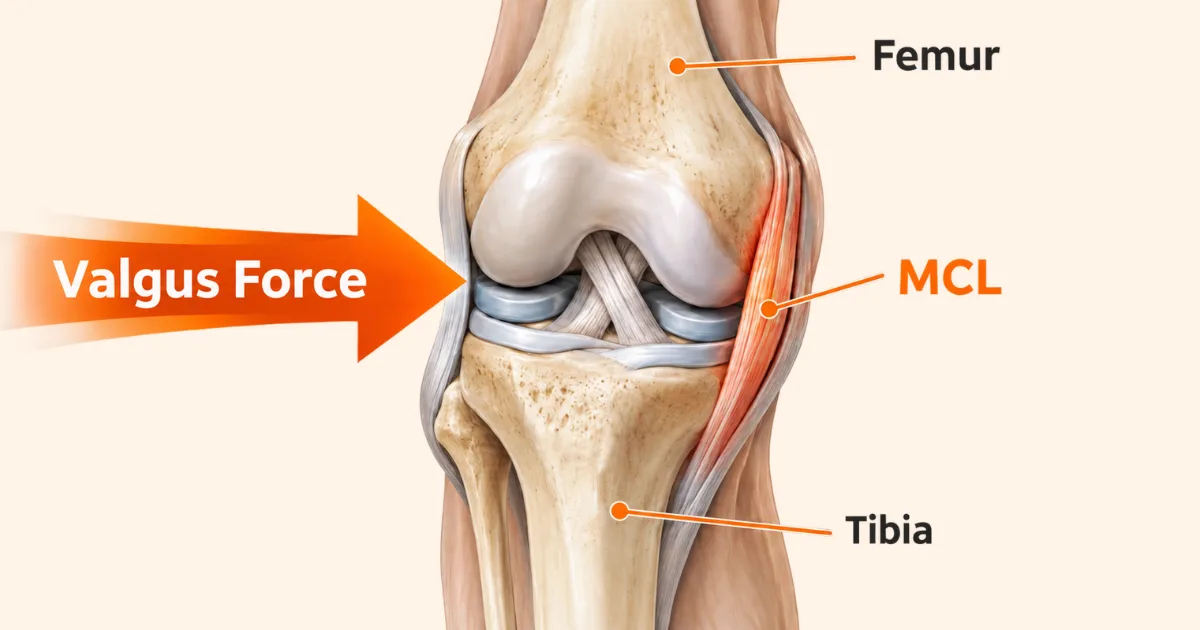
An MCL sprain is an injury to the medial collateral ligament on the inner side of the knee. The ligament can be stretched, partly torn, or fully torn.
How the MCL Gets Injured
The MCL connects your thigh bone (femur) to your shin bone (tibia). Its job is to stop the knee from caving inward. Most injuries happen when a force pushes the knee in that direction, called a valgus force.
Common causes include a hit to the outside of the knee, a planted foot during a cut, a ski catching an edge, or an awkward landing. That is why football, soccer, basketball, hockey, lacrosse, and wrestling players see this injury so often.
MCL Sprain vs Tear: What Is the Difference?
A sprain is any injury to a ligament, and a tear is simply a higher-grade sprain. So every MCL tear is a sprain, but not every sprain is a tear.
- Grade 1: The ligament is stretched with tiny fiber damage, but it holds.
- Grade 2: Part of the ligament is torn, so the knee has some looseness.
- Grade 3: The ligament is torn all the way through.
You may also see the term “MCL strain.” Technically, a strain describes a muscle or tendon injury, while ligaments get sprained. Either way, the recovery advice in this guide applies.
Sprained MCL Symptoms and How Your Grade Is Diagnosed
Sprained MCL symptoms center on pain along the inner knee. The most common signs are:
- Pain and tenderness along the inside of the knee
- Swelling on the inner knee
- Stiffness when you bend or straighten the leg
- Bruising that shows up a day or two later
- A pop at the moment of injury
- A feeling that the knee might give way
Your symptoms offer clues about the grade. Pain without looseness usually points to Grade 1. Pain plus some wobble on testing suggests Grade 2. A knee that feels unstable when you walk often signals Grade 3.
A sports physical therapist or physician confirms the grade with a valgus stress test. The knee is bent to 30 degrees while gentle inward pressure checks for gapping. An MRI helps when instability is present or another injury is suspected. Teens often need an X-ray to rule out a growth plate injury.
Watch for red flags. Large swelling inside the joint, locking, catching, or a knee that buckled during a pivot can mean the ACL or meniscus is hurt too. If that sounds familiar, learn what changes when the ACL and meniscus are torn too.
MCL Sprain Recovery Time by Grade
Each grade follows a different timeline. Here is what to expect for yours.
Grade 1 (Mild) MCL Sprain Recovery Time: 1 to 3 Weeks
A Grade 1 MCL sprain usually heals in 1 to 3 weeks. The fibers are stretched, but the knee stays stable. Most people walk normally within a few days, and a brace is optional.
Light jogging often returns within 1 to 2 weeks. Most athletes get back to practice in 2 to 3 weeks once strength and single-leg tests feel normal. Mild does not mean minor, though. Rushing back at week one is the most common reason a Grade 1 lingers.
Grade 2 MCL Sprain Recovery Time: 3 to 6 Weeks
A Grade 2 MCL sprain typically takes 3 to 6 weeks to heal. Roughly half of the ligament fibers can be damaged, so the knee feels loose on testing. A hinged knee brace protects the ligament while it rebuilds.
Daily activities usually feel comfortable in 2 to 3 weeks. Straight-line running often starts around weeks 3 to 4. Cutting and contact sports usually return between 4 and 8 weeks.
You may see different numbers online, from 2 to 4 weeks to 2 to 3 months. Those ranges differ for good reasons: the amount of fiber damage, where the tear sits, your age, and your sport all matter. A lineman needs more from his knee than a recreational jogger. That is why testing, not a fixed date, should clear you.
Grade 3 MCL Tear Recovery Time Without Surgery: 6 to 12 Weeks
A Grade 3 MCL tear usually heals in 6 to 12 weeks without surgery. The ligament is fully torn, and the knee may feel unstable when you walk. Even so, most isolated Grade 3 tears heal well with bracing and rehab.
Expect crutches for about 2 weeks and a hinged brace for around 6 weeks. Full sport often returns in 2 to 3 months. Searches for a grade 3 knee sprain can mean other ligaments, though. A Grade 3 ACL tear follows a much longer path, so read about ACL injury rehab if your knee shifts or buckles.
MCL Surgery Recovery Time for Athletes
MCL surgery is rare and is usually reserved for three situations: the ligament tears off the shin bone, the knee stays unstable after bracing, or several ligaments are injured. Surgeons either repair the MCL or reconstruct it with a graft.
Athletes should plan on at least 6 months before vigorous sport. Recovery runs longer when the ACL is reconstructed at the same time. Guided post-surgical rehabilitation protects the repair and rebuilds strength in the right order.
MCL Sprain Timeline: What Recovery Looks Like Week by Week
An MCL sprain timeline moves through four phases. You advance by meeting goals, not by waiting out the clock.
- Protect and calm it down (weeks 0 to 2). The goal is less pain and swelling. Use ice, compression, elevation, and a brace if prescribed. Gentle motion and quad activation start right away. Move on when swelling settles and you can lift your leg straight.
- Restore motion and normal walking (weeks 1 to 4). The goal is full bending and straightening without a limp. Stationary biking, heel slides, and light strength work begin here. Move on when walking looks normal and stairs feel easy.
- Rebuild strength and control (weeks 3 to 8). The goal is a strong, stable leg. Squats, lunges, hip work, and balance drills build capacity. Move on when your single-leg squat looks clean and strength nears the other side.
- Run, cut, and return to sport (weeks 4 to 12, by grade). The goal is game readiness. You progress from jogging to sprinting, then lateral moves, cutting, and contact. You return when sport-specific tests are passed.
So how long is physical therapy for an MCL sprain? Grade 1 often needs 2 to 4 weeks, Grade 2 about 4 to 8 weeks, and Grade 3 can take 8 to 12 weeks or more. Visits are more frequent early and taper as you take on more of the work at home. For a closer look at phase-based plans, see our guide to structured knee injury rehab programs.
MCL Sprain Treatment and How to Heal Faster
MCL sprain treatment is usually non-surgical. Bracing, early movement, and progressive physical therapy form the core of care.
Do MCL Sprains Heal on Their Own?
Yes, most MCL sprains heal on their own. The MCL sits outside the joint and has a good blood supply, which gives it a strong natural healing ability.
Healing on its own does not mean recovering fully, though. Without rehab, many people return with a weak quad, poor hip control, and lingering instability. Those gaps raise the risk of a repeat sprain.
How to Speed Up MCL Healing
You can speed up MCL healing by protecting the ligament early and loading it smartly. These steps make the biggest difference:
- Control swelling early: Use rest, ice, compression, and elevation for the first few days. Short-term anti-inflammatory medicine can help if your doctor approves it.
- Wear the brace as directed: A hinged brace blocks inward stress while still allowing your knee to bend.
- Start physical therapy early: Rehab that begins within 1 to 2 weeks restores motion and strength sooner.
- Build strength with lighter loads: Blood flow restriction training helps your quads and hips get stronger while the ligament is still protected.
- Add support for activity: Kinesiology taping can add feedback and comfort as you return to movement.
- Stay fit safely: Biking and upper-body work keep your conditioning up.
- Recover well: Sleep and enough protein support tissue repair.
The fastest athletes are rarely the ones who skip steps. They are the ones who never fall back to square one.
Exercises for a Sprained MCL by Recovery Phase
Exercises for a sprained MCL should match your phase. Keep pain at or below about 3 out of 10, and avoid sideways stress on the knee early on.
- Early phase: Quad sets, heel slides, straight leg raises, and easy stationary biking restore motion and wake up the thigh muscles.
- Middle phase: Side-lying hip abduction, wall slides or mini squats, hamstring curls, calf raises, and single-leg balance build strength and control.
- Late phase: Lateral band walks, step-downs, lateral lunges, jump and land drills, and cutting progressions prepare the knee for sport.
Hip strength deserves extra attention. Weak hip muscles let the knee collapse inward, which is the same motion that sprains the MCL. For step-by-step demos, explore more knee injury rehab exercises from our team.
Returning to Running, Sports, and Work
Your return depends on what you are returning to. Running, contact sports, and physical jobs each place different demands on the knee.
When Can I Start Running Again After an MCL Sprain?
You can usually start running again 1 to 2 weeks after a Grade 1 sprain, 3 to 4 weeks after a Grade 2, and 6 to 8 weeks after a Grade 3. Criteria matter more than dates. Before your first run, you should have:
- Full knee motion
- No limp when walking
- A pain-free single-leg squat
- Pain-free hopping in place
Start with short, straight-line jogs on flat ground. Hills, sprints, and direction changes come later. Runners who want a guided plan can lean on running injury physical therapy to rebuild mileage safely.
Can You Play on a Sprained or Torn MCL?
You can sometimes play on a mild Grade 1 sprain with a brace, but playing on a Grade 2 or 3 tear is risky. A loose knee absorbs force poorly, so a partial tear can become a full tear. It can also expose the ACL and meniscus to damage.
How long you are out depends on the grade. Expect about 1 to 3 weeks for Grade 1, 3 to 8 weeks for Grade 2, and 2 to 3 months for Grade 3. Coming back early often costs more games in the end.
MCL Sprain Recovery Time for Athletes and NFL Players
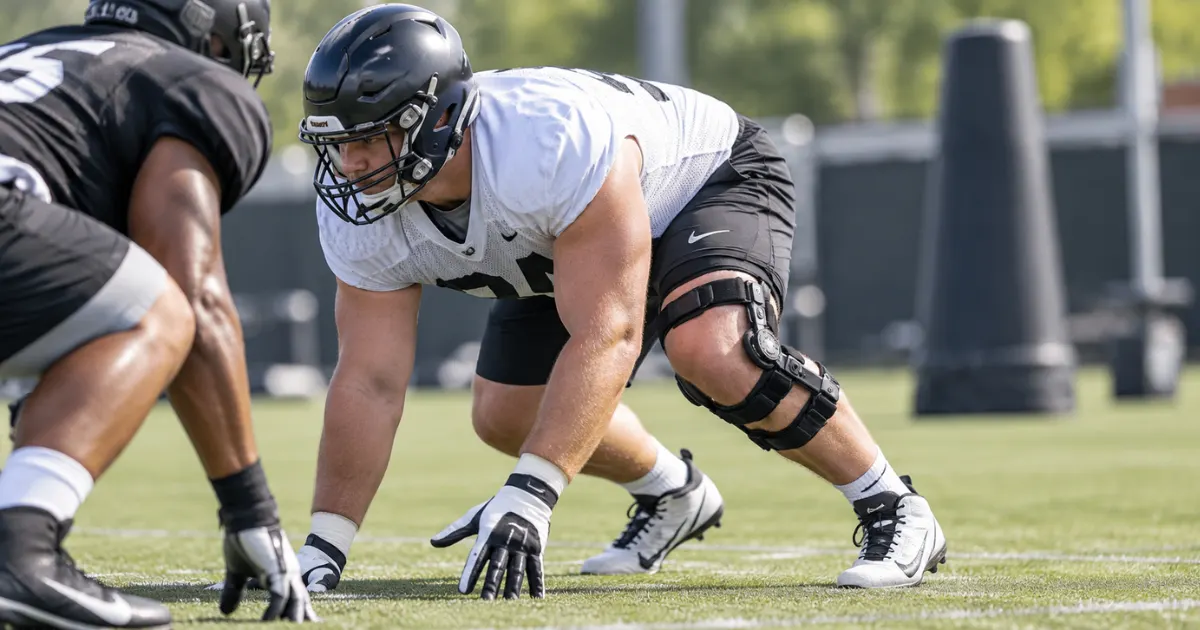
MCL sprain recovery time for athletes usually runs 2 to 8 weeks, depending on the grade and the sport. An analysis of NFL injury reports from 2007 to 2015, presented at the New England Symposium on Statistics in Sports, found MCL sprains had the slowest return of the injuries studied. More than half of players needed three weeks or more.
A study of NCAA Division I football found linemen missed about 15 days on average, versus about 4.5 days for other positions. Pros also have daily treatment and custom braces, so their timelines are not a template for everyone.
Is an MCL injury season ending? Usually not. Isolated sprains rarely end a season unless surgery or a combined injury is involved. Force plate testing gives objective strength and landing data to confirm you are ready. Our sports injury rehab for athletes uses that data to time each return.
How Long Will I Be Off Work With a Sprained MCL?
Time off work depends on your job and your grade. Desk workers often return within a few days with a brace and the leg elevated. Jobs that involve standing and walking may need 1 to 3 weeks. Physical labor, climbing, or kneeling work can require 4 to 8 weeks or more.
How Long Does MCL Pain Last?
MCL pain can last weeks to a few months, even after the ligament is stable. Mild tenderness along the inner knee is common, and you may feel a twinge if your foot slips.
Pain or giving way that lasts beyond about 3 months deserves a re-check. Ongoing symptoms often trace back to weak hips or a knee that caves inward. Fixing that root cause is the key to understanding why sports injuries keep coming back.
Get Back on the Field Faster With MCL Rehab in Cherry Hill
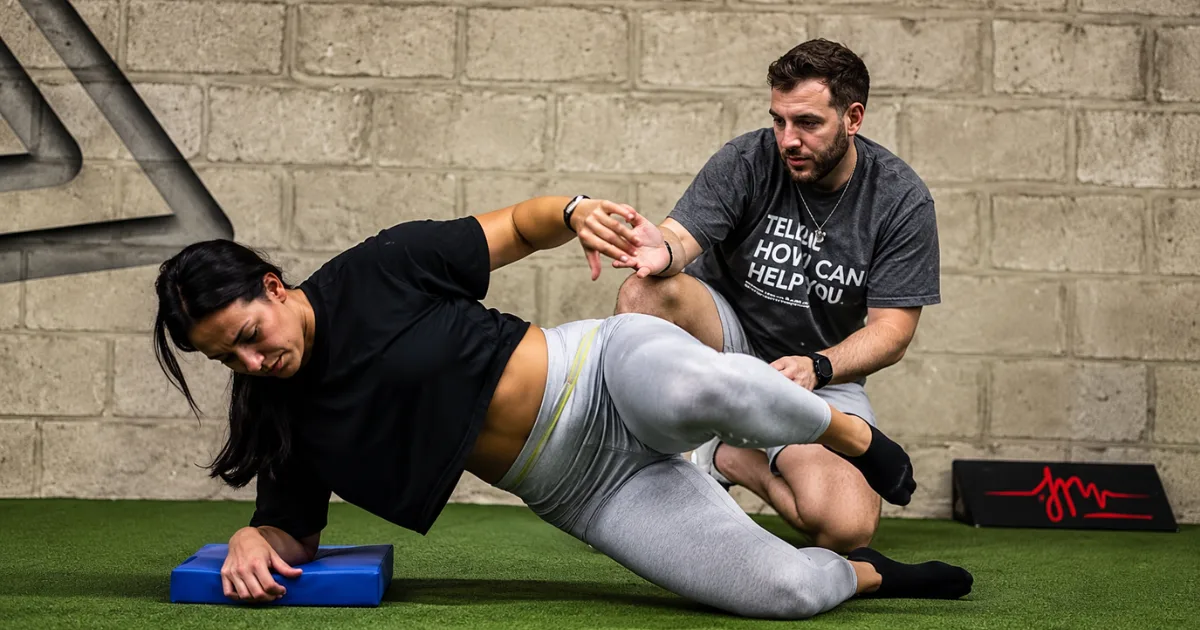
The right plan turns a frustrating knee injury into a confident return. At Rehabletics, Dr. Jaime Mor, PT, DPT, ATC, works one-on-one with athletes from high school through the pros, including work as a sports PT contractor for the Philadelphia Flyers and Philadelphia Eagles.
Every plan is built on testing, from your first evaluation to your final force plate check. New Jersey offers direct access physical therapy, so you do not need a referral to start. If you are in Cherry Hill or anywhere in South Jersey, book your evaluation and get a clear plan for your knee.