



Personalized physical therapy builds your rehab around your body, your sport, and your goals instead of a printed protocol. For athletes, that means fewer setbacks, a safer return to play, and a body that performs better than it did before the injury.
That matters because sport gives you a lot: stronger muscles and bones, a healthier heart, better sleep, and confidence that carries into the rest of your life. An injury puts all of that on hold, and the wrong rehab can keep it there.
Many athletes have lived the alternative. One therapist splits attention between three or four patients, the exercise sheet looks the same as everyone else’s, and discharge arrives before you feel ready. If you are weighing your options for sports injury care, or trying to stop a nagging problem from returning, here is what changes when the plan is built around you.
What Is Personalized Physical Therapy for Athletes?
Personalized physical therapy is rehab designed around one athlete’s injury, sport, position, history, and goals, then adjusted as that athlete progresses. Nothing is assigned simply because it is what the clinic does for every knee or shoulder.
A personalized plan starts with questions a generic program never asks. Are you a pitcher or a sprinter? Are you in season or off season? Is this your first hamstring strain or your third? Do you want to finish this season, or are you planning for next year? The answers shape every exercise, every progression, and the day you return.
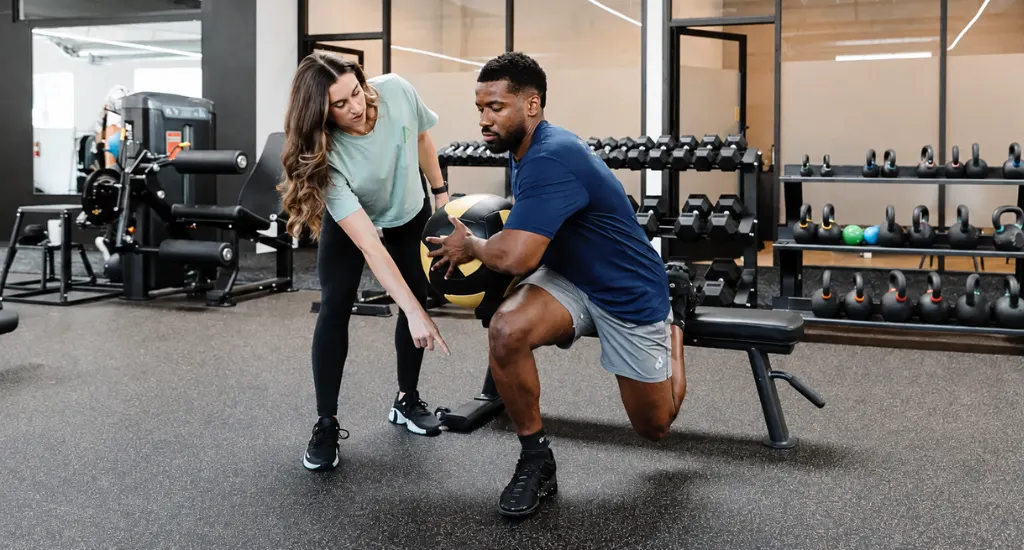
You may also see the term personalised physiotherapy treatments, which is the British spelling for the same idea. Whatever the name, the principle is identical: assess first, then treat what the assessment finds. Sports physical therapists build this into their whole approach, and it is a big part of how sports physical therapy differs from general PT.
Personalized PT Versus a Generic Protocol
Customized treatment plans for athletes differ from standard protocols in several clear ways:
|
Generic protocol |
Personalized plan |
|
| Starting point | The diagnosis on the referral | A full evaluation of you and your sport |
| Exercise choice | A standard sheet for the body part | Selected for your deficits and sport demands |
| Progression | Set by week number | Set by measurable criteria |
| Time with the PT | Often shared with other patients or aides | One-on-one |
| Testing | Pain and range of motion | Strength, force, movement, and readiness tests |
| End point | The approved visits run out | You pass return-to-sport criteria |
8 Benefits of Personalized Physical Therapy for Athletes
The benefits of physical therapy for athletes multiply when the plan is personalized. You treat the true cause, cut your re-injury risk, recover on a smarter timeline, train for your sport, measure progress objectively, keep training, rebuild confidence, and perform better afterward.
1. It Treats the Root Cause, Not Just the Sore Spot
Pain shows up where tissue is overloaded, but the reason is often somewhere else. A runner’s knee pain can trace back to weak hips. A pitcher’s elbow can be paying for a stiff upper back. A personalized evaluation looks at the whole chain, so it catches the compensation patterns that explain why sports injuries keep coming back. Treatment then targets those findings, pairing corrective exercise with hands-on manual therapy to restore motion and calm pain.
2. It Lowers Your Risk of Re-Injury
This is the strongest argument for personalization, and research supports it. In a 2017 study of soccer players with hamstring injuries, athletes who followed an individualized, criteria-based program had one re-injury in the six months after returning, compared with six in the group that followed a general protocol. In the Delaware-Oslo ACL cohort, 5.6 percent of athletes who passed return-to-sport criteria were re-injured, compared with 38.2 percent of those who did not pass. The same study found that more symmetrical quadriceps strength before returning was linked to fewer knee re-injuries, which is exactly the kind of individual gap a personalized plan measures and closes.
3. It Makes Your Recovery Timeline Smarter
How does tailored rehabilitation impact recovery time for athletes? The honest answer is that it does not always shorten the calendar. In the hamstring study above, both groups returned in roughly three and a half weeks. The difference was what happened next, because far fewer athletes in the individualized group ended up back on the sidelines. A tailored plan moves you forward the day you meet a milestone, holds you back when you have not, and prevents the setback that turns a three-week injury into a lost season.
4. It Builds Strength for Your Sport, Not Someone Else’s
A soccer player needs to decelerate, cut, and sprint. A swimmer needs shoulder endurance overhead. A distance runner needs calf and hip capacity that holds up over thousands of strides. Personalized rehab trains the qualities your sport demands, at the speeds and angles you actually use. Athletes going through running injury rehab, for example, progress toward impact tolerance, cadence, and weekly mileage, not just leg presses.
5. It Uses Objective Data to Find Hidden Asymmetries
Feeling ready and being ready are not the same thing, and objective testing shows the gap. Force plate testing in sports rehab measures how much force each leg produces when you jump and land, so a 20 percent difference shows up as a number rather than a hunch. Individual strength testing and running gait analysis add more detail. Those numbers decide your next progression and give you real proof that you are improving.
6. It Keeps You Training While You Heal
What sports injury rehabilitation is worth it for daily training? The kind that keeps you moving. A personalized plan identifies what you can safely load, so you protect the injured area while holding on to your conditioning, strength, and routine. When heavy lifting is off the table, blood flow restriction training lets you build strength with light loads. You return fitter, and the mental lift of still training counts too.
7. It Rebuilds Confidence, Not Just Tissue
Fear of re-injury is one of the most common reasons athletes hesitate after rehab, even when the tissue has healed. Personalized care treats confidence as part of recovery. Clear milestones, visible test results, and gradual exposure to sport movements show you that your body is ready. Psychological readiness can also be measured with short questionnaires, so it becomes part of the clearance decision instead of an afterthought.
8. It Improves Performance After Rehab Ends
The best rehab leaves you better than you were before the injury. Because a personalized program already knows your weak links, it carries naturally into injury prevention: a warm-up built for your sport, strength work for your vulnerable areas, and a plan for next preseason. Over time, that means more seasons played and a longer athletic career.
How a Personalized Therapy Plan Is Built, Step by Step
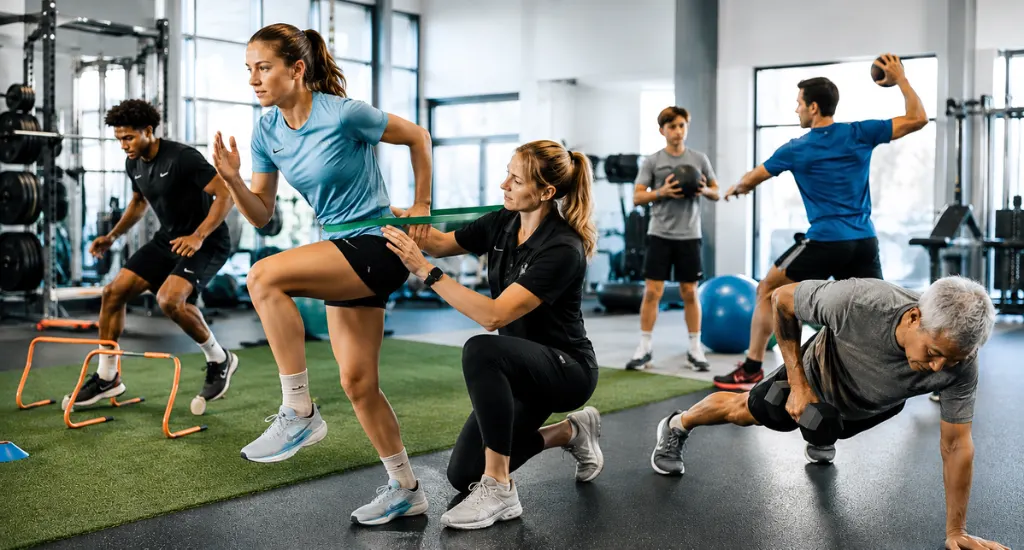
Personalized therapy plans for athletes follow a clear process:
- Full evaluation: Your therapist reviews your history, examines the injured area, and assesses movement, strength, and the demands of your sport.
- Goals and priorities: You agree on what success looks like, whether that is a game date, a race, or pain-free training.
- Plan design: Exercises, hands-on care, and recovery tools are chosen for your specific findings.
- Phased progression: You move through rehab stages based on criteria, not week numbers.
- Regular reassessment: Retesting shows what is working, and the plan changes when progress stalls.
- Return-to-sport testing: Objective tests confirm you are ready before you play.
If you have never been through this process, it helps to know what happens at your first sports physical therapy visit.
Phases of Post-Injury Personalized Rehab Exercises
Post-injury personalized rehab exercises progress through four broad phases. The exercises below are examples only, since yours depend on your injury and sport.
|
Phase |
Main goal | Example exercises |
Move on when |
| 1. Protect and calm | Settle pain and swelling | Isometrics, gentle range of motion | Pain is controlled at rest |
| 2. Restore | Regain motion and control | Bridges, balance work, band exercises | Motion is full and walking is normal |
| 3. Strengthen | Build capacity | Split squats, deadlifts, step-downs | The strength gap is closing toward 90 percent |
| 4. Return to sport | Train speed and power | Hops, sprints, cutting drills | Return-to-sport tests are passed |
What a Personalized Return-to-Sport Plan With One-on-One PT Looks Like
A personalized return-to-sport plan with one-on-one PT clears you by criteria, not by the calendar. Common markers include strength and hop test results within about 90 percent of the uninjured side, little or no symptom flare after hard sessions, and measured psychological readiness.
Return usually happens in stages. You go back to participation in modified drills, then back to full sport, and then back to your previous performance level. Each stage has its own tests.
One-on-one time matters here. Testing, coaching your landing mechanics, and adjusting drills on the spot are hard to do while a therapist supervises several people at once. Return-to-sport criteria are most researched after knee surgery, which is why they are a core part of ACL injury rehab, but the same logic applies to ankles, shoulders, and hamstrings.
Which Personalized Therapy Plan Is Best for Injury Recovery?
The best plan is the one built around your situation, not a one-size package. If you are wondering which personalized therapy plan to buy for an athlete, start by matching the plan focus to the problem:
|
Situation |
Plan focus |
Typical priorities |
| New injury, such as a sprain or strain | Early care and return to play | Calm pain, restore motion, load progressively |
| After surgery | A protected, staged rebuild | Surgeon’s guidelines, strength symmetry, testing |
| Recurring or overuse injury | Root cause correction | Movement analysis, load management, weak links |
| Preseason or performance | Prevention and performance | Screening, sport-specific strength, power |
If you are recovering from an operation, look for a therapist experienced in post-surgical rehabilitation for your specific procedure.
Before you pay for any plan, check for these qualities:
- One-on-one sessions with a licensed physical therapist
- Doctor of Physical Therapy and sports medicine credentials
- Objective testing at the start and before return
- Progressions specific to your sport
- Clear communication with you, your doctor, and your coach
Our guide to choosing a trusted sports physical therapist covers each of these in more detail.
Can You Get Personalized Athlete Therapy Without a Referral?
Yes. New Jersey allows direct access, so you can usually see a physical therapist without a prescription from a doctor. Our page on direct access physical therapy in NJ explains how it works.
At Rehabletics, care is out-of-network by design. Every session is a full 60 minutes, one-on-one with a Doctor of Physical Therapy, and your progress decides how many visits you need rather than an insurance cap. We provide superbills for out-of-network reimbursement and accept HSA and FSA.
Who Benefits Most From Personalized Sports Physical Therapy?
Personalized care helps any athlete, but it is especially valuable for:
- Youth and high school athletes who are still growing
- Weekend warriors and active adults balancing sport with work
- Runners and throwing athletes with repetitive load demands
- Athletes recovering from surgery
- Athletes stuck in a plateau or a recurring injury
If you see yourself in this list, a personalized evaluation is the fastest way to learn what your body actually needs.
Personalized Sports Physical Therapy in Cherry Hill, NJ
Rehabletics is led by Dr. Jaime Mor, PT, DPT, ATC, a performance physical therapist and certified athletic trainer who has worked with athletes since 2013. He also serves as a sports physical therapy contractor for the Philadelphia Flyers and Philadelphia Eagles. From our sports injury clinic in Cherry Hill at 5 Esterbrook Lane, we work with athletes across South Jersey, from high school players to professionals.
Ready for a plan built around you? Book your Free Comeback Consult and talk with our team about your injury and your goals.



One Response
I have read so many posts regarding the blogger l᧐verѕ except this article is genuinelү
a nice piece of writing, keep it up.