



You have probably done physical therapy before. You got a photocopied sheet of exercises, did three sets of clamshells while a tech watched four other patients, and got cleared at week six because the calendar said so. Then you went back to your sport and something still felt off.
Personalized physical therapy is built the other way around. The plan starts from your sport, your injury, your measured deficits, and your season timeline, and it does not clear you until objective testing says you are ready. That difference is not marketing language. It shows up in re-injury rates and in how you actually move when you get back on the field.
What Is Personalized Physical Therapy for Athletes?
Personalized physical therapy for athletes is a rehabilitation and performance program tailored to an athlete’s sport, position, injury history, measured movement deficits, and competitive calendar, rather than a standard protocol applied to everyone with the same diagnosis.
The diagnosis is only the starting point. Two athletes with identical ACL reconstructions need different programs if one is a 17-year-old volleyball middle blocker and the other is a 34-year-old marathon runner. The graft heals on a similar biological timeline, but the demands they return to do not resemble each other at all.
How personalized sports PT differs from standard physical therapy
| Personalized sports PT | Standard PT | |
| Goal | Return to competition and improve performance | Restore basic function and reduce pain |
| Assessment | Movement screen plus objective strength, power, and symmetry testing | Visual observation and basic range of motion |
| Program | Built from your test results and sport demands | Protocol tied to the diagnosis |
| Clearance | Criteria-based, meaning you pass tests | Time-based, meaning weeks on a calendar |
| Format | Mostly one-on-one with a clinician | Often shared supervision |
Credentials signal capability here. Look for a Doctor of Physical Therapy (DPT) who also holds a board-certified Sports Clinical Specialist (SCS) credential, a CSCS in strength and conditioning, or both.
Why Generic Rehab Programs Fall Short for Athletes
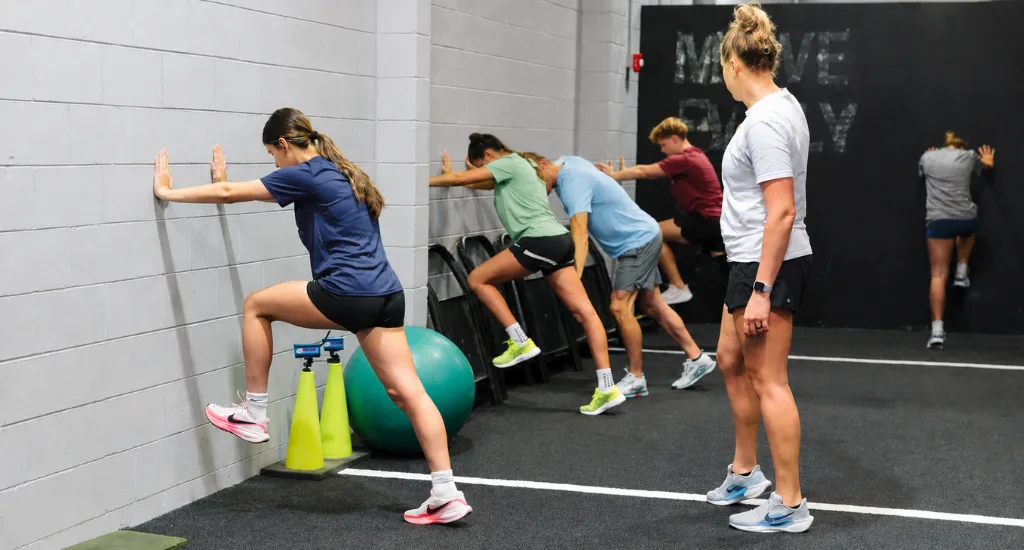
A generic program treats the injured tissue. An athlete needs the whole kinetic chain addressed, because the tissue rarely failed on its own.
The exercise-sheet problem
Handout programs prescribe the same movements to every patient with the same diagnosis, which means they cannot target the specific weakness that caused the injury. Worse, unsupervised generic exercise can reinforce the faulty mechanics that got you hurt. The most common complaint in patient forums is not that physical therapy is hard. It is that nobody explained why a given exercise was prescribed, or measured whether it worked. As one patient put it, a good therapist “picks me up when I fall and teaches me how to not fall,” while a poor one has no idea why the falling happens.
Time-based clearance is not a plan
Clearing an athlete at a fixed number of weeks assumes that everyone heals and rebuilds capacity at the same rate. Nobody does. Tissue healing and athletic readiness are two distinct timelines, and only one can be measured.
8 Key Benefits of Personalized Physical Therapy for Athletes
1. A faster, safer return to your sport
A personalized plan removes wasted weeks. Because the program targets your measured deficits rather than covering every possibility, training time goes to the specific strength, mobility, or control gap that stands between you and competition. You also stop guessing about readiness, because progression is triggered by hitting benchmarks rather than by waiting out a protocol. The result is a return that is both quicker and better defended.
2. Substantially lower re-injury risk
This is the strongest evidence in the field. In the Delaware-Oslo ACL Cohort study, applying simple objective decision rules before clearing athletes reduced the risk of reinjury by 84 percent. Athletes who passed a full return-to-sport test battery suffered re-injury at a rate of 5.6 percent, compared with 38.2 percent among those who returned without passing. For context, overall ACL re-injury rates are near 15 percent and rise to roughly 23 percent in athletes under 25. Personalization is what makes those criteria enforceable.
3. Sport-specific and position-specific movement restoration
Rehab that ends at “walks without pain” leaves an athlete far short of competition. A personalized program rebuilds the exact patterns your sport demands, such as decelerating out of a cut, absorbing a landing, driving off the blocks, or holding form in the final mile. Late-stage sessions look like practice, because the nervous system needs to rehearse the real thing under speed and fatigue before game day.
4. Root-cause correction of asymmetries and imbalances
Most non-contact injuries trace back upstream. A hamstring strain may originate in poor hip extension, and runner’s knee often starts at the foot or the glute. Individualized assessment maps the whole chain and treats the driver rather than the site of pain. That is why the other nagging issue often clears up too: the same asymmetry was feeding both.
5. Measurable performance gains
Personalized physical therapy is not only restorative. Once deficits are identified, the same programming that fixes them also builds output: eccentric strength for deceleration, plyometrics for rate of force development, and mobility work that unlocks a longer stride or a deeper squat. Athletes routinely finish rehab stronger and more symmetrical than they were before the injury, simply because nobody had ever measured those gaps before.
6. Drug-free, targeted pain management
Manual therapy, soft tissue mobilization, dry needling, cupping, instrument-assisted work, and taping are all useful tools, but the value lies in matching the right tool to the right presentation. A personalized plan uses them to open a loading window, then fills that window with exercises. That sequencing lets athletes manage pain without medication, rather than relying on passive treatment that offers only short-lived relief.
7. Fewer surgeries and better post-operative outcomes
For many overuse injuries, a well-designed loading program resolves the problem without surgery. When surgery is necessary, personalized pre-habilitation improves the starting point, because athletes who enter surgery with better strength and range of motion consistently recover faster afterward. Post-operatively, individualized progression keeps you from either under-loading the graft or overloading it too early.
8. Psychological readiness and restored confidence
Physical clearance and mental clearance are separate milestones. Athletes with equivalent knee function differ sharply in whether they actually return to sport, and the difference comes down to psychological readiness and fear of re-injury. Good sports clinics measure this directly using scales such as the ACL-RSI and the Tampa Scale of Kinesiophobia, then build graded exposure into the plan. Hesitating for a fraction of a second on a cut is both a performance problem and an injury risk.
What Actually Goes Into a Personalized Athlete PT Plan
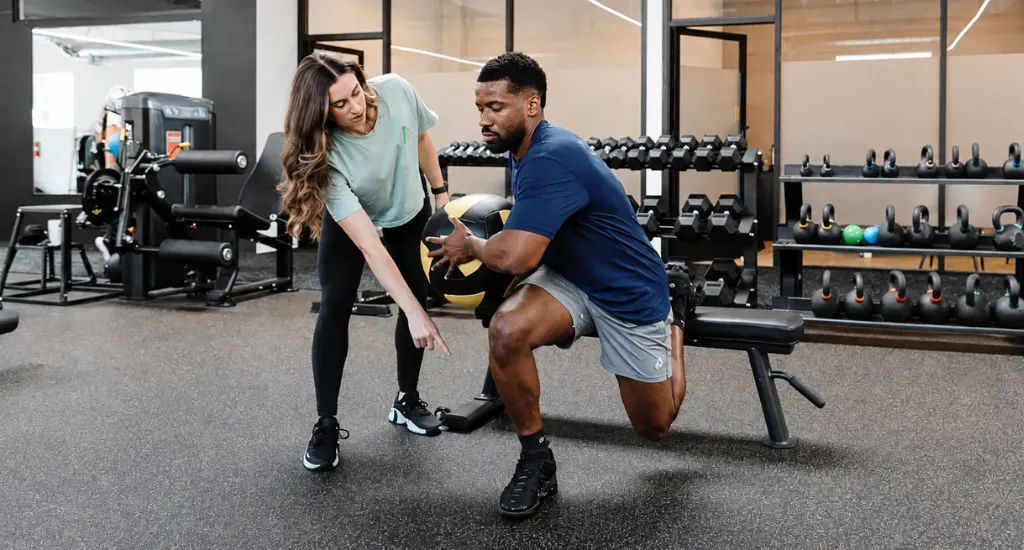
A genuine personalized program follows six steps:
- Intake and goal setting. Your sport, position, training volume, injury history, season timeline, and what “back to normal” specifically means to you.
- Movement screen and biomechanical assessment. Gait, posture, joint stability and mobility, and how you actually perform your sport’s key patterns.
- Objective baseline testing. Strength, power, and symmetry numbers recorded so progress is measurable rather than estimated.
- Individualized program design. Exercise selection, dosage, frequency, and how rehab fits alongside team practice and lifting.
- Progressive loading with scheduled reassessment. The plan changes as your numbers change. Retesting every two to four weeks is the norm.
- Criteria-based return-to-play clearance. A defined test battery you must pass, written down at the start.
If any of these steps is missing, the plan is not truly individualized, no matter what the clinic’s website says.
The Testing and Technology That Make Personalization Objective
Personalization is only real if it is measured. These tools produce the numbers:
| Test or tool | What it measures | Benchmark |
| Isokinetic strength testing | Quadriceps and hamstring symmetry | 90% or higher limb symmetry index |
| Hop test battery (single, triple, crossover, timed) | Power and control symmetry | 85% to 90% LSI |
| Force plate analysis | Landing and push-off asymmetry | Detects differences as small as 5% |
| Y-Balance test | Dynamic stability and reach control | Compared against your own baseline |
| Gait, video, or 3D motion analysis | Movement quality under speed | Sport-specific mechanics |
| ACL-RSI and Tampa Scale of Kinesiophobia | Psychological readiness | Scored before clearance |
Blood flow restriction (BFR) training, anti-gravity treadmills, and pneumatic resistance allow clinicians to load tissue safely when normal loading is not yet tolerated.
One caveat: the limb symmetry index, on its own, is a weak predictor of injury. It works within a full test battery, not as a single gate, and a clinic that treats a single number as clearance is still cutting corners.
How Personalization Changes by Sport and Athlete Type
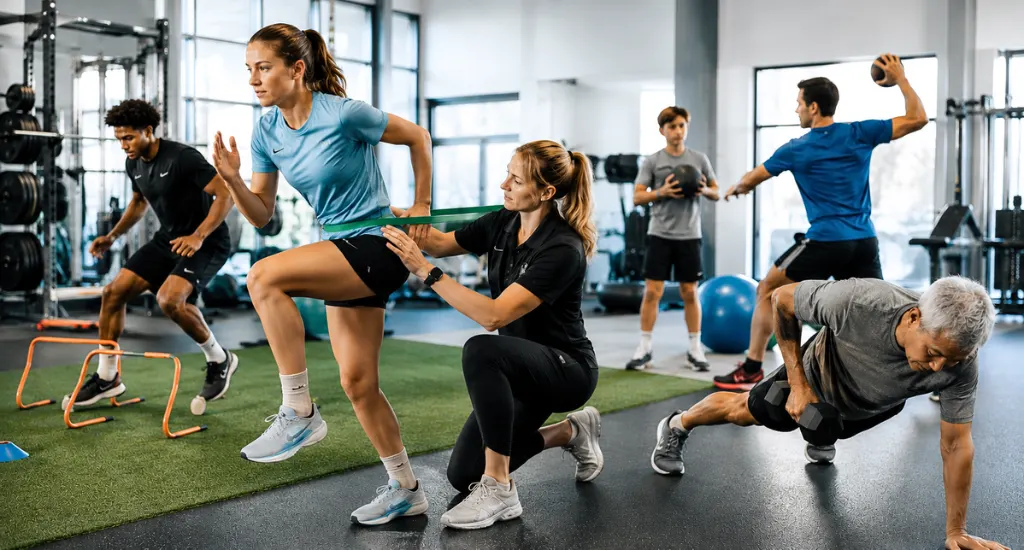
Runners and endurance athletes
Programming centers on gait mechanics, cadence, single-leg load tolerance, and weekly mileage progression. Rehab volume and training volume must be managed as a single number, not two.
Court and field athletes
Cutting, deceleration, and reactive change of direction dominate late-stage work. Drills add cognitive load by asking the athlete to react to a signal rather than follow a cone pattern, which is how injuries actually happen.
Overhead athletes
Throwers, swimmers, and tennis players need scapular control, rotator cuff endurance, and thoracic mobility. The shoulder is usually the symptom, while the hips and trunk are often the cause.
Youth and high school athletes
Growth plates, rapid size changes, and year-round single-sport specialization change the risk picture entirely. Load management and honest conversations about season pressure matter as much as the exercises do.
Masters athletes and weekend warriors
Recovery capacity is lower, and life demands are higher. The winning plan fits into a real week: fewer but better-chosen exercises at a realistic frequency.
Personalized vs Generic Physical Therapy: Side by Side
| Personalized | Generic | |
| Assessment | Objective testing with recorded numbers | Visual check, symptom-driven |
| Program | Built from your results and sport | Standard protocol by diagnosis |
| Sessions | Mostly one-on-one clinician time | Shared supervision, tech-led |
| Progression | Triggered by retest results | Fixed weekly template |
| Clearance | Pass a defined test battery | Calendar date or “feels fine” |
| Best for | Any athlete returning to sport | Basic post-acute function |
What Personalized Sports Physical Therapy Costs
Expect $100 to $250 per session without insurance in the US, with initial evaluations running $150 to $300 because they include the testing battery. With insurance, most athletes pay a $20 to $75 copay or 10 to 30 percent coinsurance after meeting a deductible.
Typical courses of care run 6 to 10 sessions for mild issues, 8 to 16 for moderate injuries, and 20 or more after surgery. Sports-specific programs often need a few more visits, because they carry rehab through to competition-level testing.
Cost drivers include one-on-one versus group supervision, geography, and advanced testing or BFR. For access, many private plans allow direct access without a physician referral, although Medicare requires one.
How to Choose a Sports PT Who Actually Personalizes
Green flags
- Objective baseline testing at evaluation, with numbers you receive in writing
- Written return-to-play criteria defined before rehab starts
- One-on-one clinician time rather than a tech circulating between patients
- A DPT with an SCS or CSCS credential
- Willingness to talk to your coach or strength staff
- Scheduled reassessment every two to four weeks
Red flags
- The same handout given to every patient
- Clearance based on a date rather than a test
- No measurements taken at the first visit
- Sessions dominated by passive modalities
- No explanation of why an exercise was chosen
Six questions for your first phone call: What testing do you run at evaluation? What criteria will you use to clear me? How much of each session is one-on-one? What are your clinicians’ credentials? How often will you retest me? Have you worked with athletes in my sport?
Frequently Asked Questions
Is personalized physical therapy only for injured athletes?
No. Injury-prevention screening and performance programs are among its most common uses, and both work best before something breaks.
How long does personalized sports physical therapy take?
Most athletes complete care in 6 to 16 sessions over 4 to 12 weeks. Post-surgical return to sport takes longer, and after ACL reconstruction, re-injury risk keeps dropping until roughly nine months.
Can physical therapy actually make me faster or more powerful?
Yes. Correcting asymmetries and adding targeted strength and plyometric work measurably improves force production and efficiency.
Do I need a doctor’s referral to start?
Usually not. Many states and private insurers allow direct access to a physical therapist. Medicare does require a referral.
Is sports physical therapy covered by insurance?
Generally yes, subject to copays, coinsurance, deductibles, and annual visit limits. Advanced testing may fall outside coverage.
What is the difference between a sports PT and an athletic trainer?
Athletic trainers manage on-field care and day-to-day availability. Sports physical therapists hold a doctorate and lead diagnosis, rehabilitation, and return-to-play decisions.
Should rehab hurt for it to be working?
No. Mild discomfort during loading is normal, but “no pain, no gain” does not apply here. Pain that lingers after a session means the dose was wrong.
When can I safely return to sport after ACL reconstruction?
When you pass strength and hop symmetry testing and score well on psychological readiness, which is typically no earlier than nine months post-surgery.
The Bottom Line
Generic rehab gets you out of pain. Personalized physical therapy gets you back to your sport measurably stronger and far less likely to end up injured again. If you are recovering from an injury or want to stop the same one from recurring, book a full movement assessment and ask for your numbers in writing.



One Response
I have read so many posts regarding the blogger l᧐verѕ except this article is genuinelү
a nice piece of writing, keep it up.