



You felt your hamstring grab during a sprint, or your shoulder now aches every time you throw. Your first question is simple: who do I call? The answer depends on the care you need right now. A sports medicine doctor diagnoses and medically manages injuries. A sports physical therapist rebuilds your movement, strength, and confidence so you can get back to your sport. This guide shows who to see first and how to find the right sports injury treatment for your situation.
The Difference Between Sports Medicine and Physical Therapy
Sports medicine is the medical field that prevents, diagnoses, and treats injuries in active people. It is led by physicians who can order imaging, prescribe medication, and give injections. Physical therapy is the hands-on, exercise-based rehabilitation that restores how you move after an injury or surgery. In short, sports medicine is the wider field, and physical therapy is one of its most important parts. The doctor usually answers “what is wrong,” while the physical therapist answers “how do I get back.”
Sports Medicine Doctor vs Physical Therapist: Side-by-Side Comparison
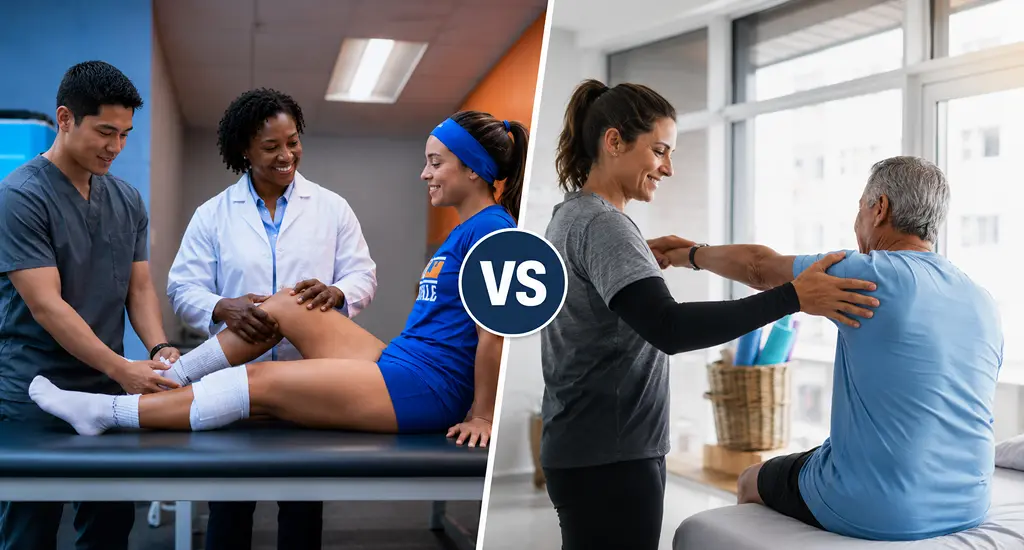
| Factor | Sports Medicine Doctor | Sports Physical Therapist |
| Training | Medical school, residency, and a sports medicine fellowship | Doctor of Physical Therapy (DPT) degree and a national licensing exam |
| Main role | Diagnosis and medical management | Rehabilitation and movement restoration |
| Diagnosis | Tissue-level diagnosis | Movement and function diagnosis |
| Imaging | Orders X-rays, MRI, and ultrasound | Refers to a physician when imaging is needed |
| Medication and injections | Yes | No |
| Surgery | Refers to an orthopedic surgeon | No |
| Hands-on rehab | Limited | Core of every session |
| Typical visits | Short, spaced-out visits | Regular sessions over several weeks |
| Return-to-sport testing | Gives medical clearance | Runs strength and movement testing |
| Referral needed in NJ | Depends on your insurance | Not required under state direct access |
The doctor rules out serious problems, and the physical therapist does the daily work that gets you moving again.
What Does a Sports Medicine Doctor Do?
A sports medicine doctor is a physician (MD or DO) who completes a residency and then extra fellowship training in musculoskeletal and activity-related care. They examine your injury, order imaging when needed, and confirm the diagnosis. From there, treatment may include medication, bracing, injections, or a referral to a surgeon or physical therapist.
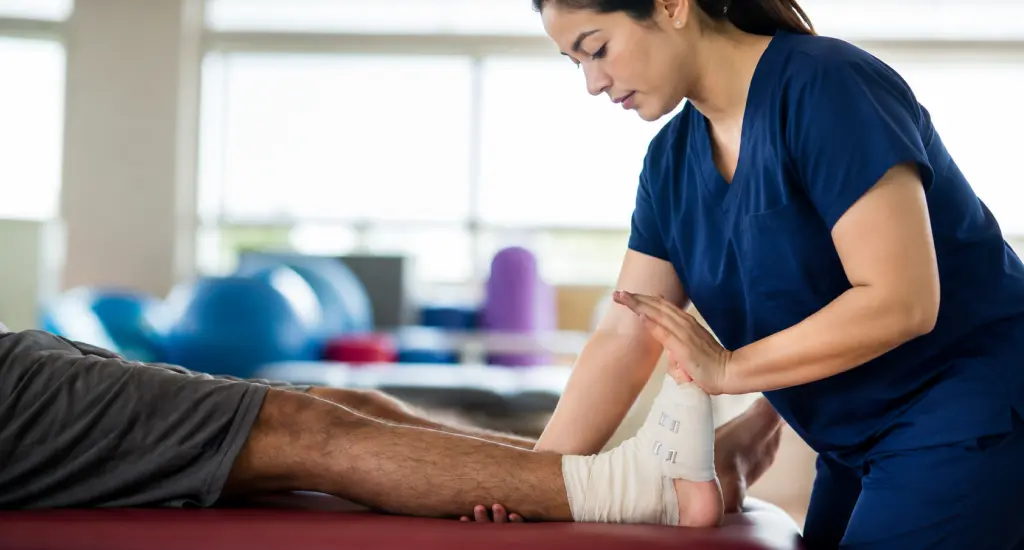
They also manage concussions and decide when it is medically safe to return to play. You do not need to be a pro athlete to see one. Weekend runners, youth players, and active adults all benefit from their care.
Is a Sports Medicine Doctor a Surgeon?
Most sports medicine doctors are not surgeons. They treat injuries without surgery and refer you when an operation is needed. Orthopedic sports surgeons are a different specialty, and they repair torn ligaments, tendons, and cartilage in the operating room.
What Does a Sports Physical Therapist Do?
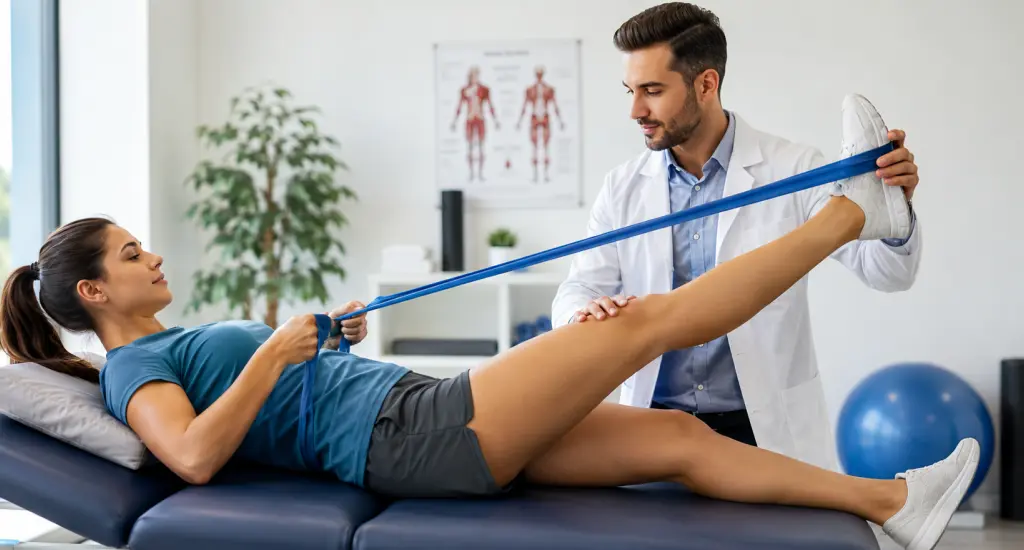
A sports physical therapist is a Doctor of Physical Therapy who focuses on athletes and active adults. The first visit focuses on evaluating how you move, where you compensate, and what is really driving your pain. Treatment is built around your sport and your goals, which you can explore further in this overview of how sports physical therapy works.

Common tools include:
- Manual therapy to ease pain and restore mobility
- Progressive strength training to rebuild the injured area
- Sport-specific drills for running, cutting, jumping, or throwing
- Home exercise programs to keep progress moving between sessions
- Injury prevention work to lower the risk of a repeat injury
A good sports physical therapist also uses objective testing, such as strength and force measurements, to decide when you are truly ready to return. Physical therapists cannot prescribe medication, give injections, or perform surgery, so they refer you back to a physician when those are needed.
Is Sports Medicine the Same as Physical Therapy?
No. Sports medicine is the whole team, and physical therapy is one of its key players. That team can also include athletic trainers, strength coaches, and surgeons. Sports rehab is the recovery phase within sports medicine, and it is usually led by physical therapists and athletic trainers who guide you from injury back to full activity.
Should You See a Sports Medicine Doctor or a Physical Therapist First?
If your injury is sudden, severe, or shows warning signs, see a physician or go to the ER first. If it is minor, gradual, or caused by overuse, a sports physical therapist is a smart first stop.
See a Physician or Go to the ER First If You Notice These Signs
- You cannot put weight on the injured leg.
- A joint or bone looks visibly deformed.
- You heard a loud pop followed by fast swelling.
- You feel numbness, tingling, or weakness down an arm or leg.
- You hit your head and have concussion symptoms.
- You have a fever along with joint pain.
- You have severe pain even at rest.
Start With a Sports Physical Therapist for These Injuries
- Mild to moderate muscle strains
- Tendon pain that builds with activity
- Nagging overuse aches
- Stiffness or a loss of range of motion
- Pain when running, jumping, or throwing
- Injuries that keep coming back
New Jersey allows direct access to physical therapy, so you can book without a referral. Within 30 days of your first treatment, your therapist shares your plan of care with your health care provider and refers you if progress is not reasonable. Some insurance plans have their own rules.
When You Need Both Working Together
Some injuries call for teamwork. If you need surgery, a physical therapist can prepare you with prehab and then guide your post-surgical rehabilitation. Both also work together when you receive an injection alongside rehab, or when progress stalls and you need imaging.
Two Common Scenarios: Hamstring Strain and Shoulder Impingement
Hamstring Injury: ER, Orthopedic Sports Medicine, or Physical Therapy?
Go to the ER if you cannot walk or the pain is severe. See an orthopedic sports medicine doctor if you felt a pop high near your sitting bone, see heavy bruising, or feel a gap in the muscle, because these can signal a tendon tear that may need surgery. For most mild to moderate strains, you can start with structured hamstring injury rehab with a sports physical therapist.
Shoulder Impingement: What to Compare Between Clinics
Shoulder impingement usually responds well to rehab, which you can read about in this guide to shoulder impingement treatment and exercises. When you compare clinics, ask these questions:
- Who treats you each visit: a physical therapist or an aide?
- How long does each session last?
- Does the clinic assess overhead and throwing mechanics?
- Does it measure shoulder strength objectively?
- Can it refer you for imaging or injections if needed?
The right answers point you toward focused care for shoulder pain that fixes the cause and not just the symptoms.
Related Terms People Often Mix Up
Sports Medicine vs Physical Medicine and Rehabilitation
Physical medicine and rehabilitation (PM&R) is a physician specialty. Physiatrists treat function across many conditions, including spine, nerve, and stroke care. Sports medicine focuses on injuries from exercise and sport.
Sports Therapy vs Sports Rehabilitation
Sports therapy is the broad hands-on and conditioning care that keeps athletes healthy. Sports rehabilitation is the structured process of returning from a specific injury, step by step.
Performance Clinic vs Traditional Sports Medicine Practice
A traditional practice focuses on diagnosis and symptom relief. A performance clinic tests and trains you to move past your old baseline, often with tools like force plate testing that measures power and side-to-side balance.
Sports Physical Therapy for Athletes in Cherry Hill, NJ
At Rehabletics, care is led by Dr. Jaime Mor, PT, DPT, ATC, a performance physical therapist and certified athletic trainer who works with athletes from the Philadelphia Flyers and Eagles. Every session is one-on-one for 60 minutes with a Doctor of Physical Therapy. Return-to-sport decisions rely on force plate testing, and the team coordinates with physicians when you need imaging or injections. Visit us at 5 Esterbrook Lane in Cherry Hill, call 609-354-7987, or Book Your Free Comeback Consult to start your plan.