


Cheerleading injuries are mostly sprains and strains, but stunts, dismounts and tumbling can also cause concussions, stress fractures and shoulder problems. Cheer is a skill sport played almost all year, so the body rarely gets a true off-season. This guide covers the injuries cheerleaders get most often, how risk changes for flyers, bases and tumblers, and what a smart return to the mat looks like. If you are already dealing with pain, our approach to sports injury treatment for athletes is built around getting you back to full skills safely.
How Dangerous Is Cheerleading Compared to Other Sports?
Cheerleading has a lower injury rate than most high school sports, but its injuries tend to be more serious when they happen. A study in Pediatrics (Currie et al., 2015) ranked cheer 18th of 22 high school sports for overall injury rate. The same study found cheer had the second highest share of injuries that kept athletes out for three weeks or more, and concussions made up 31.1 percent of all cheer injuries. Most injuries happened at practice, often during stunts and dismounts.
|
Measure |
What the research shows |
| How often injuries happen | Lower than most high school sports |
| How serious injuries are | Higher share of injuries with 3+ weeks of time lost |
| Catastrophic injuries | Down about 85 percent after safety rule changes |
The good news is that rules work. According to USA Cheer, which summarizes national catastrophic injury research, serious injuries fell sharply after basket tosses on hard surfaces were banned.
The Most Common Cheerleading Injuries
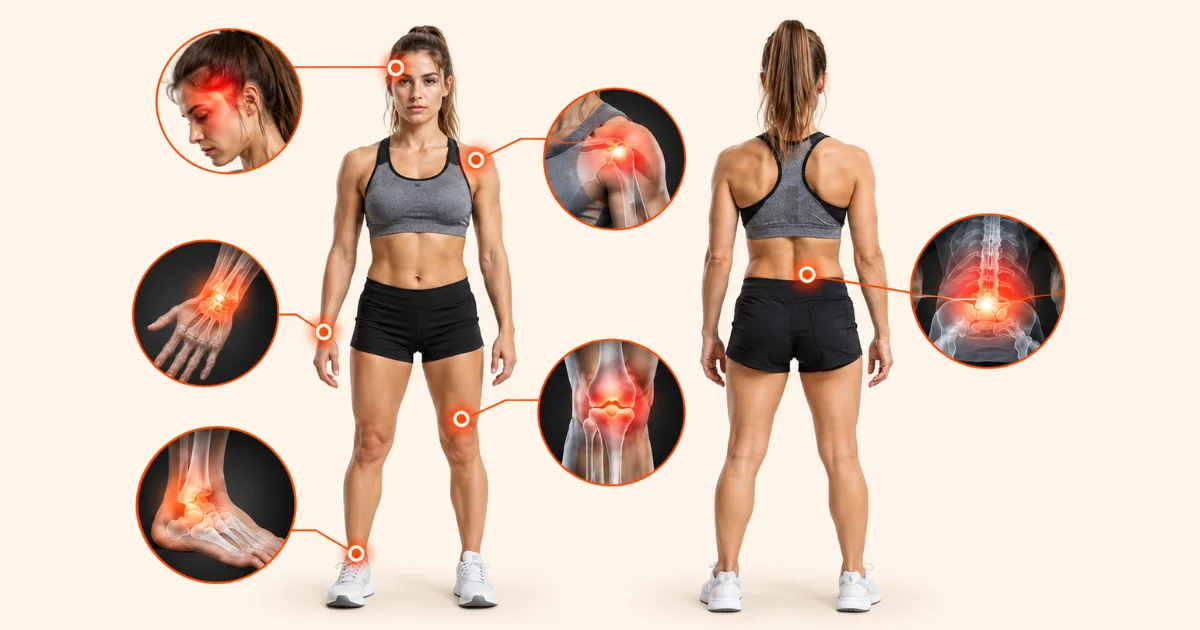
Most injuries in cheer come from landings, falls and repeated loading of the same joints.
|
Injury |
How it happens |
Most at risk |
| Ankle sprain | Awkward landings from tumbling or dismounts | Flyers, tumblers |
| Wrist, hand and finger injuries | Catching, gripping, handsprings | Bases, tumblers |
| Concussion and neck strain | Falls from stunts, contact with teammates | Flyers, bases |
| Lower back pain and stress fracture | Repeated back arching and overhead lifting | Tumblers, bases |
| Knee injuries | Landing with the knee caving inward | Flyers, tumblers |
| Shoulder strain or dislocation | Catching and pressing flyers overhead | Bases, back spots |
Ankle sprains are the single most common cheer injury. A sprain that is not rehabbed properly often turns into repeat rolling, so proper ankle sprain and ankle pain care matters even when the swelling seems minor.
Back pain deserves extra attention. Back walkovers, handsprings and arching jumps stress a small part of the spine, which can lead to a stress fracture called spondylolysis. If back pain is worse when arching and lingers for more than two weeks, get it checked. Our lower back pain treatment starts with finding the exact source. Younger athletes can also develop growth plate irritation below the kneecap, known as Osgood-Schlatter disease.
Injuries by Position: Flyers, Bases and Tumblers
Flyer Injuries
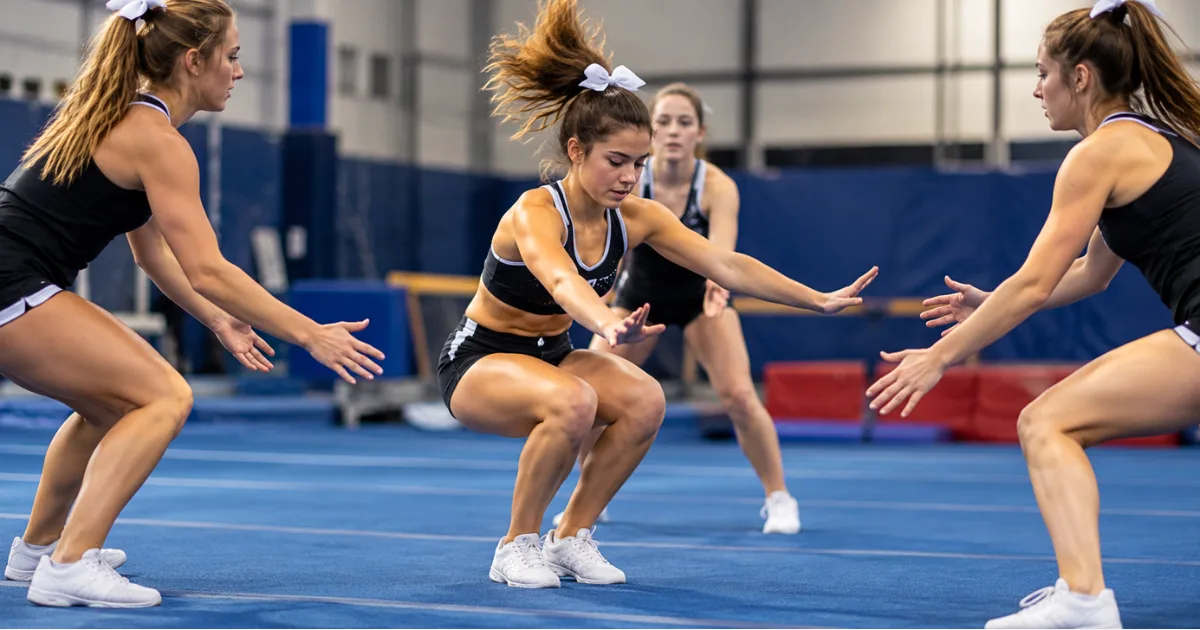
Flyers face the highest risk from falls and landings. Research on pop-off dismounts shows landing forces can reach many times body weight, which loads the ankles, knees and spine. Common flyer injuries include ankle sprains, knee sprains, wrist injuries from breaking a fall, and head or neck impacts during a collapse. Strong core control, steady single-leg balance and soft landings with bent knees and hips are the best protection.
Base and Back Spot Injuries
Bases and back spots absorb the load of every stunt. Repeated overhead catching strains the rotator cuff, while gripping feet stresses the wrists. Lifting with a rounded back can irritate the lower spine, and falling flyers can cause facial and head contact. Building shoulder endurance through targeted shoulder pain physical therapy helps bases stay strong through long practices.
Tumbler Injuries
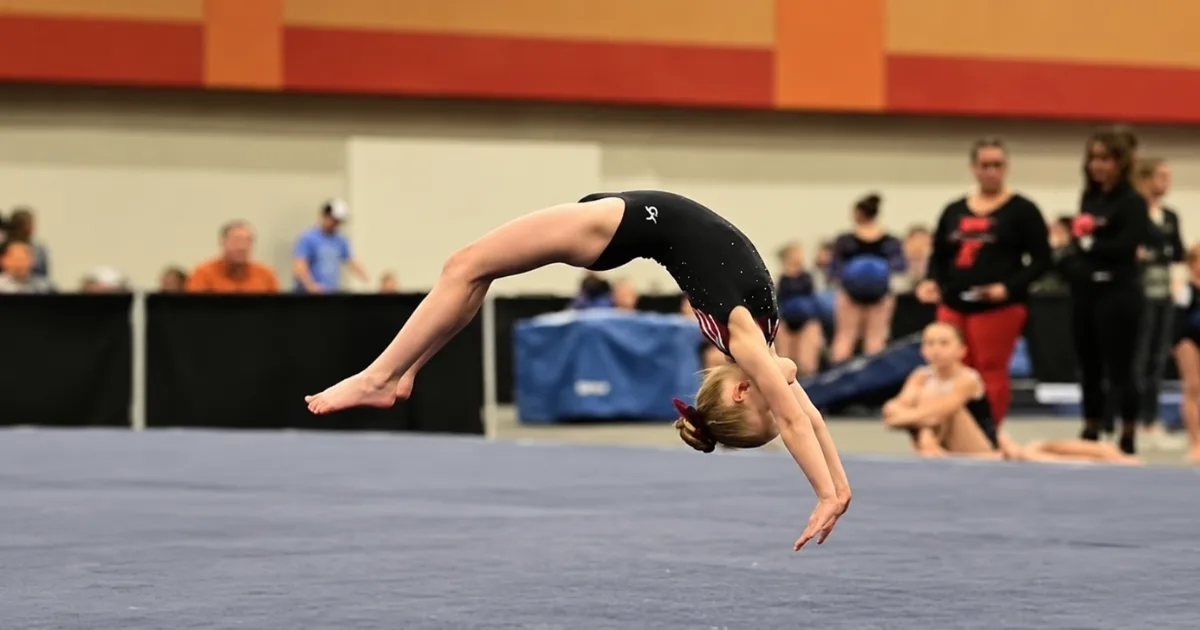
Tumblers repeat the same high-impact skills hundreds of times. Back handsprings and walkovers put the lower back into repeated extension, which is the main driver of stress fractures in young athletes. Handsprings load the wrists, and running passes stress the ankles. Hard or worn floors raise every one of these risks, and so does adding new passes before the basics are clean.
Why Cheerleaders Get Hurt
Most cheer injuries trace back to a few common causes:
- Practicing stunts on hard, wet or uneven surfaces
- Skipping skill progressions to learn advanced stunts quickly
- Training while fatigued, especially late in practice
- Training year-round without planned rest
- Returning too early from a previous injury
- Competing at higher levels with more complex skills
- Practicing without trained coaches or enough spotters
Rehab for Flyers, Bases and Tumblers: How Cheerleaders Recover
Good cheer rehab is built around the athlete’s position, not just the injury. A flyer and a base with the same ankle sprain need different end goals.
|
Phase |
Goal |
Example focus |
| 1. Calm and protect | Reduce pain and swelling | Load management, gentle motion |
| 2. Restore motion | Regain range and control | Ankle, hip and spine mobility |
| 3. Rebuild by position | Strength for the role | Flyers: balance and landings. Bases: shoulder and grip endurance. Tumblers: core and hip control |
| 4. Return to skills | Rebuild stunts and tumbling | Step-by-step skill progressions |
| 5. Test before returning | Prove readiness | Strength and landing testing |
Being pain-free is not the same as being ready. A tumbler may feel fine after six weeks off, but the spine and muscles still need gradual reloading before full passes return. Objective tools such as force plate testing compare left and right legs during jumps and landings, so the return decision is based on data. Skipping this step is one reason why sports injuries keep coming back.
For concussions, no athlete should return to practice until a qualified health professional clears them. After clearance, the return should still be gradual, moving from light conditioning to jumps, then to stunting with extra spotters.
How to Prevent Cheerleading Injuries
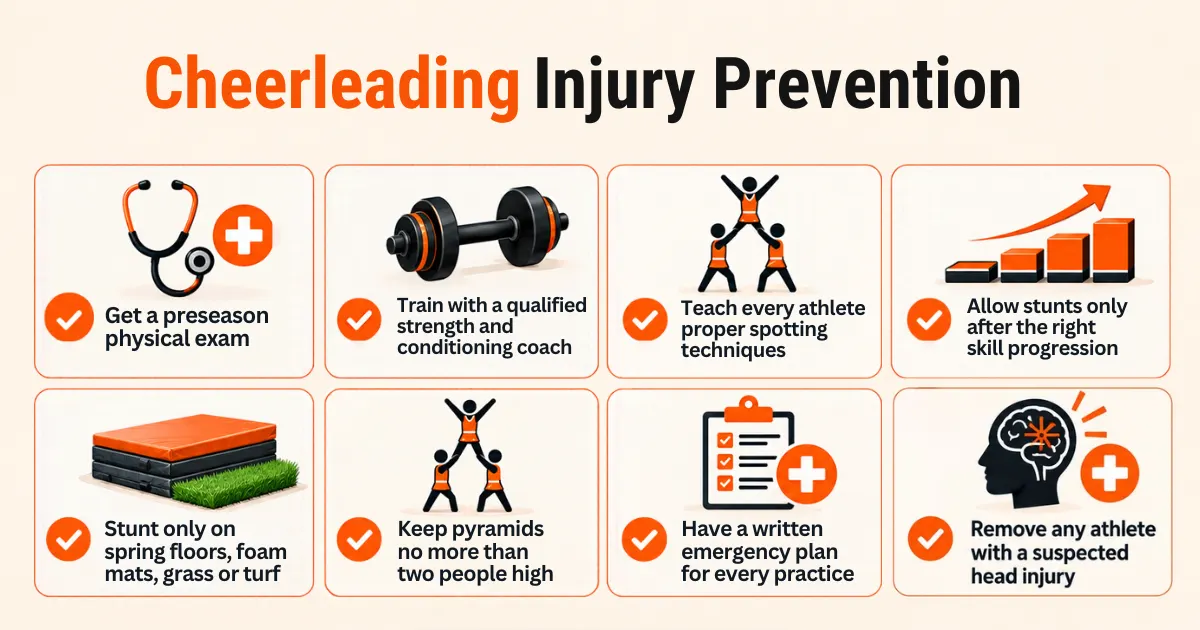
The American Academy of Pediatrics policy statement on cheerleading injury epidemiology and prevention lays out clear steps:
- Get a preseason physical exam
- Train with a qualified strength and conditioning coach
- Teach every athlete proper spotting techniques
- Allow stunts only after the right skill progression
- Stunt only on spring floors, foam mats, grass or turf
- Keep pyramids no more than two people high
- Have a written emergency plan for every practice
- Remove any athlete with a suspected head injury
Coaches should also follow current USA Cheer safety rules for their level. Athletes can help by reporting pain early, sleeping well, staying hydrated and taking at least one full rest day each week.
When Should a Cheerleader See a Sports Physical Therapist?
Book an evaluation if you notice any of these signs:
- Swelling or a joint that feels unstable
- Back pain when arching or tumbling
- Pain that returns every time skills resume
- Numbness or tingling in the arms or legs
- Pain that has not improved after one to two weeks of rest
A headache, dizziness or confusion after a fall needs immediate medical evaluation.
Get Back on the Mat With Confidence
At Rehabletics in Cherry Hill, Dr. Jaime Mor and our team build rehab around your position, your skills and your competition schedule. Whether you fly, base or tumble, we help you return stronger. Book a call with our team to start your plan.