


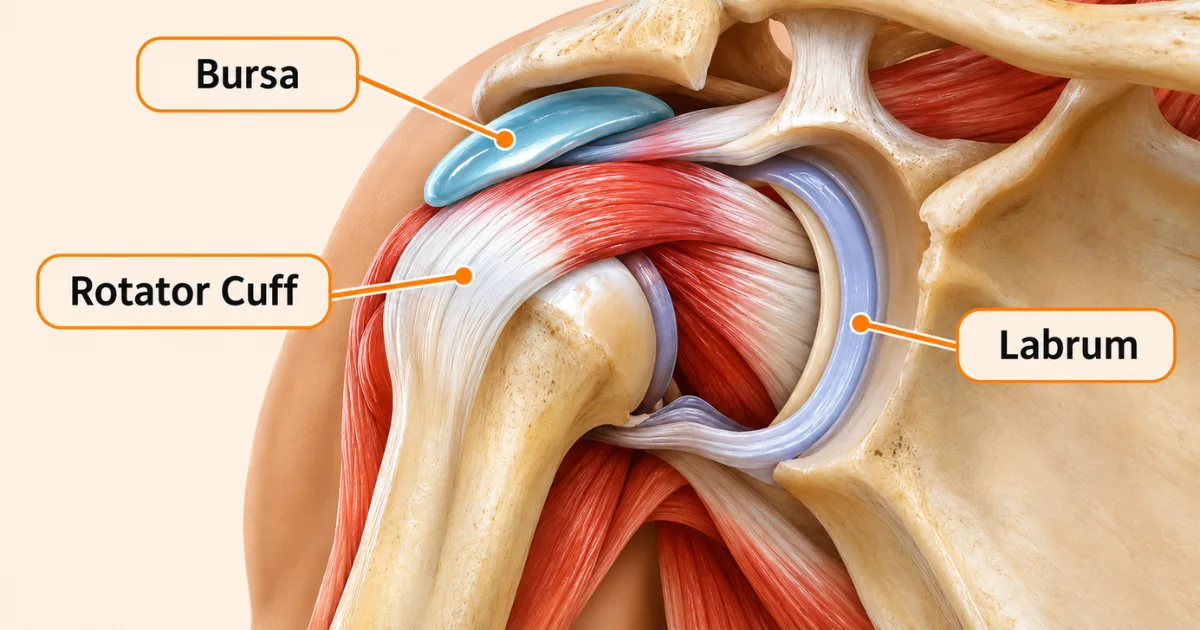
The most common shoulder injuries in volleyball are rotator cuff tendinopathy, impingement, bursitis and labral tears. Most of them build up slowly from thousands of overhead swings rather than from one bad play. The good news is that most volleyball shoulder pain responds well to the right rehab. If your shoulder already aches when you hit, physical therapy for shoulder pain can find the cause and get you back on the court. Here is what is going on and what to do about it.
Why Volleyball Is So Hard on the Shoulder
Volleyball is an overhead sport. Every serve, spike and block asks the shoulder to move through a huge range at high speed and then stop the arm safely. Elite hitters may take up to 40,000 spikes a year, with ball speeds near 120 km/h.
That repetition adds up. Research suggests close to half of adult volleyball players deal with shoulder pain, and a 2025 study found that 52.6 percent of players developed shoulder pain within a single season. Outside hitters and players who serve hard carry the highest risk.
The Most Common Shoulder Injuries in Volleyball Players
Shoulder injuries in volleyball players fall into two groups: overuse injuries that build over weeks, and traumatic injuries from a fall, a dive, or a blocked hand.
|
Injury |
What it feels like |
Typical volleyball trigger |
| Rotator cuff tendinopathy | Ache on the outside of the shoulder, worse after hitting | High hitting and serving volume |
| Impingement | Pinching pain when the arm goes overhead | Repeated spiking with poor shoulder blade control |
| Subacromial bursitis | Sore, tender point at the top of the shoulder | Overuse alongside impingement |
| Labral (SLAP) tear | Deep pain, clicking or catching, loss of power | Hard swings, blocks or falls |
| Instability or subluxation | Shoulder feels loose or slips | Diving, landing on the arm, blocking |
| Suprascapular nerve irritation | Weakness at the back of the shoulder, often without pain | Repeated serving and spiking |
Impingement is one of the most common problems in hitters. The rotator cuff tendons get pinched under the top of the shoulder as the arm goes up, which is why a good guide to shoulder impingement treatment and exercises focuses on shoulder blade control as much as the cuff itself.
Labral tears are less common but more serious. Many settle with rehab, while larger tears may need repair, which our article on labrum surgery recovery walks through. Also watch for one volleyball-specific warning sign: a shoulder that feels weak when you rotate it outward but does not hurt. That can point to suprascapular nerve irritation, which one study found in about 30 percent of professional beach players.
Why Your Shoulder Hurts When Spiking or Serving
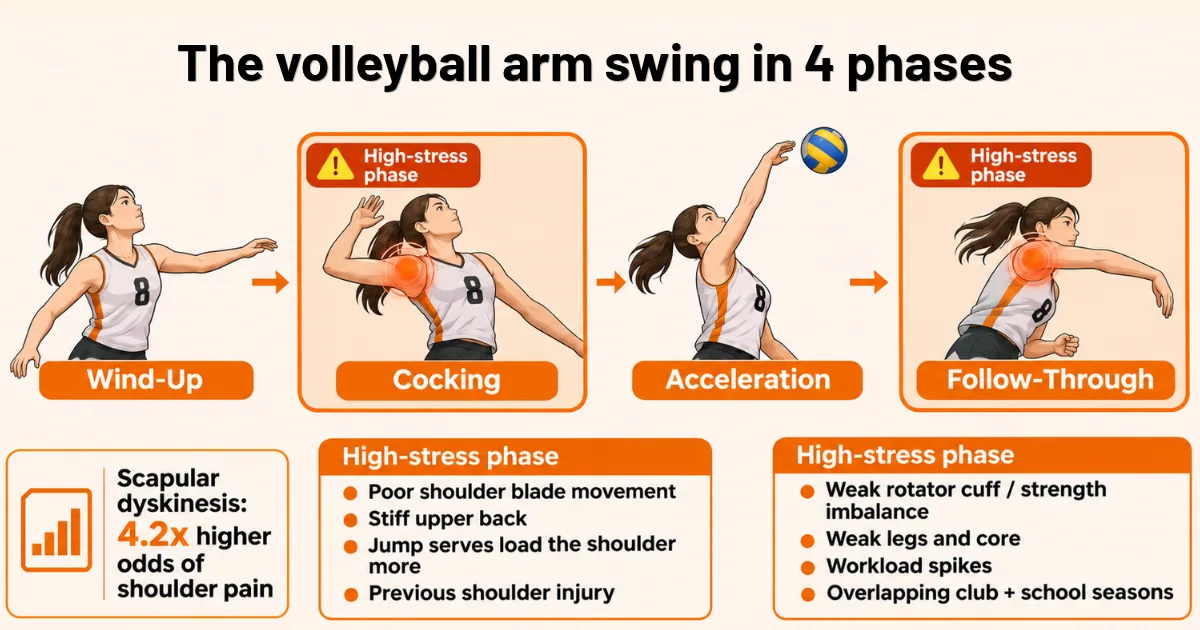
Volleyball shoulder pain when spiking usually shows up at two moments in the swing: the cocking phase, when the arm is pulled back and rotated, and the follow-through, when the rotator cuff has to slow the arm down. Several things make those moments harder on the shoulder:
- Poor shoulder blade movement: In the 2025 study, players with this problem (called scapular dyskinesis) had 4.2 times the odds of shoulder pain.
- Strength imbalance: Strong front muscles paired with a weaker rotator cuff at the back.
- A stiff upper back: The shoulder has to make up for rotation the spine is not providing.
- Weak legs and core: Power should start from the ground, not the arm.
- Workload spikes: Tryouts, tournament weekends and overlapping club and school seasons.
- Jump serves: They load the shoulder far more than float serves.
- A previous shoulder injury: This is the strongest predictor of the next one.
Soreness or Injury? Warning Signs Not to Ignore
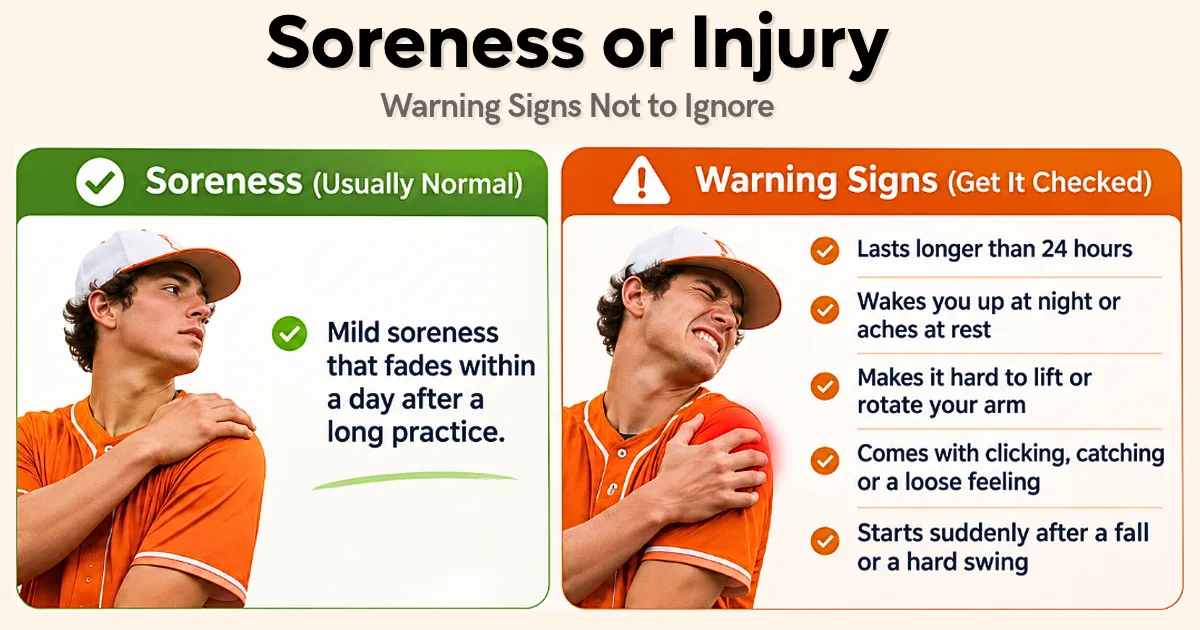
Mild soreness that fades within a day after a long practice is normal. Pain is not normal when it does any of the following:
- Lasts longer than 24 hours
- Wakes you up at night or aches at rest
- Makes it hard to lift or rotate your arm
- Comes with clicking, catching or a loose feeling
- Starts suddenly after a fall or a hard swing
Weakness lifting the arm and pain at night are two classic warning signs of a rotator cuff tear, so get those checked early.
Volleyball Shoulder Pain Treatment and Rehab
Effective volleyball shoulder pain treatment calms the pain first and then fixes the reason it started.
Quick Relief in the First Few Days
For fast volleyball shoulder pain relief, take a short break from hitting and serving rather than from all training. Ice for 15 to 20 minutes after activity, switch to float serves, and keep your legs and core working.
What Sports Physical Therapy Looks Like
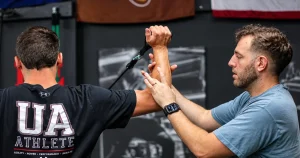
Good volleyball shoulder pain rehab starts with a full assessment of the shoulder, the shoulder blade and the rest of the kinetic chain. At Rehabletics NJ, Dr. Jaime Mor, a sports physical therapist and certified athletic trainer, builds each plan around how you actually play.
Hands-on manual therapy and dry needling for tight shoulder muscles help settle pain early. Rotator cuff and shoulder blade strengthening then rebuilds control. The return to the court is gradual: throwing, then easy downballs, then controlled hitting, then full hitting and serving, and finally game play.
When Imaging or Surgery Comes Into Play
Imaging makes sense after a traumatic injury or when pain does not improve with rehab. Surgery is reserved for significant tears or a shoulder that keeps dislocating.
Volleyball Shoulder Pain Exercises and Stretches
These volleyball shoulder pain exercises target the muscles that protect the joint during hitting:
- Band external rotation: Elbow at your side, rotate the forearm outward.
- 90/90 external rotation: Arm out at shoulder height, rotate the hand up.
- Prone Y, T and W raises: Lie face down and lift the arms into each letter.
- Wall slides or push-up plus: These train the serratus muscle that moves the shoulder blade.
- Band pull-aparts: These strengthen the upper back.
Pair them with three volleyball shoulder pain stretches: the cross-body stretch, the open book rotation for the upper back and the doorway chest stretch. Stay in a pain-free range and train 2 to 3 times a week. For more ideas, see our guide to physical therapy treatment for shoulder pain.
Does KT Tape Help Volleyball Shoulder Pain?
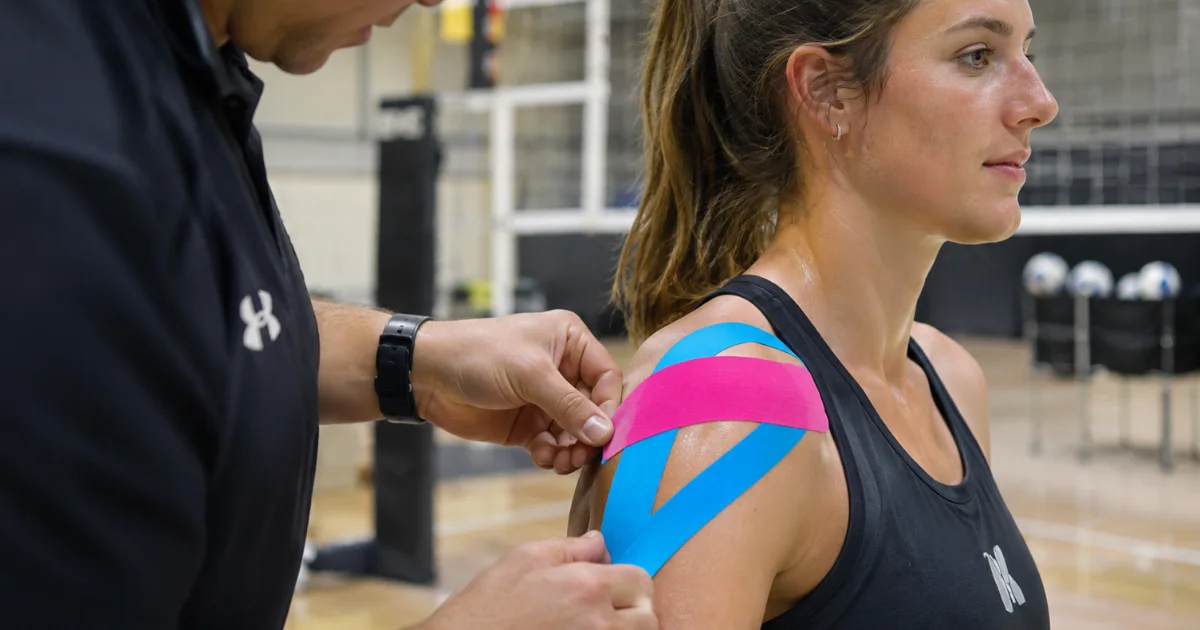
KT tape for volleyball shoulder pain can lower pain and improve your sense of shoulder position during play, but it does not fix the cause. Think of it as support while you rehab. A shoulder brace is mainly useful for instability. Professional kinesiology taping at Rehabletics is applied to match your specific problem.
Volleyball Shoulder Injury Prevention
Volleyball shoulder injury prevention comes down to a few habits:
- Warm up with bands, then throw and hit at about 50 percent effort before going full speed.
- Track how many swings and serves you take each week.
- Strength train your shoulder, legs and core 1 to 2 times a week during the season.
- Take 1 to 2 weeks off after the season ends.
- Get your arm swing checked on video.
Get Back to Hitting Pain-Free With Rehabletics NJ
You do not have to play through shoulder pain. Our sports injury care in Cherry Hill is built for volleyball players who want a clear return-to-hitting plan. Book a call with our team to get started.