

Rotator cuff repair recovery usually takes 4 to 6 months to get back to normal daily life and 6 to 12 months to rebuild full strength for lifting and sport. That can feel like a long time, especially when the pain fades within a few weeks. The tendon your surgeon reattached heals on its own schedule, though, and that schedule sets the pace. This guide breaks recovery into clear phases and answers the questions athletes and active adults ask most: when you can drive, go back to work, lift, run, do push-ups, and throw again. If you want expert support from day one, a structured post-surgical rehabilitation program gives you a plan for every stage.
How Long Does Rotator Cuff Repair Recovery Take?
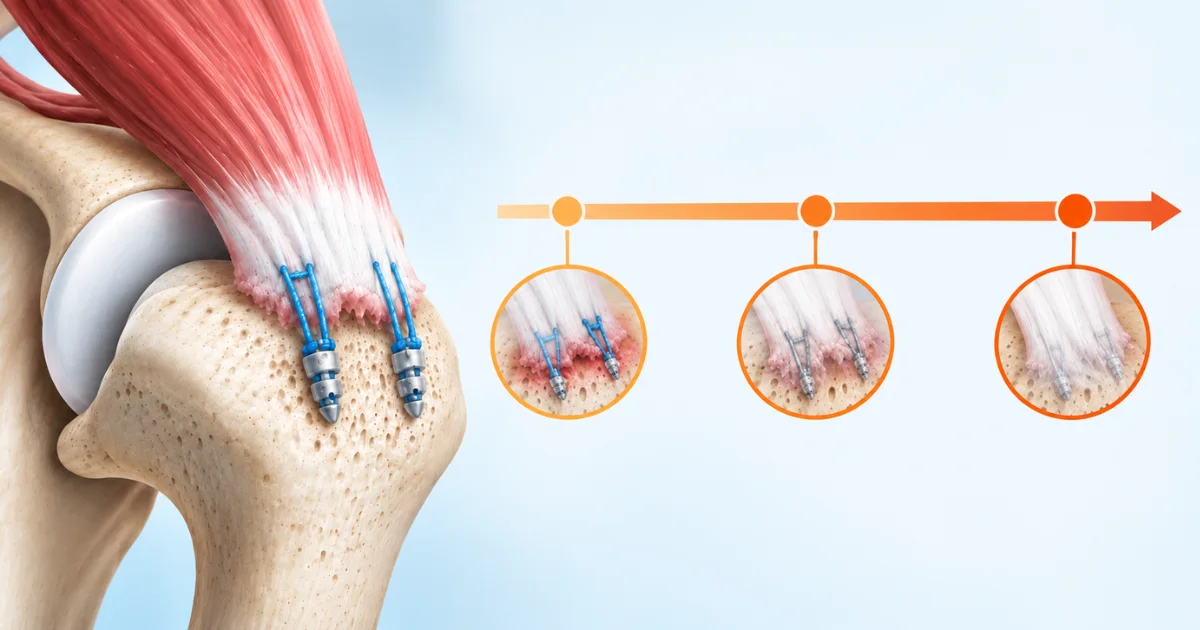
Most people need 6 to 12 months for a full recovery after rotator cuff surgery. You will feel much better well before then, but the repair keeps getting stronger for a year or more.
The reason is biology. Your surgeon stitches the torn tendon back onto the bone, and the tendon then has to grow into that bone. Animal research shows the repair holds less than a third of its normal strength at 6 weeks and only about half at 12 weeks. That is why restrictions continue after the pain settles.
Your personal rotator cuff repair recovery time depends on:
- The size of the tear and how many tendons were involved
- Tendon quality and how long the tear was present before surgery
- Age, smoking, and health conditions such as diabetes
- The repair technique your surgeon used
- How consistently you follow your rehab plan
If your shoulder injury did not need surgery, the path looks different. Our guide to treating a rotator cuff tear without surgery explains that recovery.
Rotator Cuff Rehab Timeline: The 4 Phases
Every surgeon uses a slightly different protocol, and their instructions always come first. Most plans still follow the same four phases, and you move forward by meeting goals, not just by reaching a date on the calendar.
| Phase | Typical timing | Main goal | What you can usually do |
| 1. Protection | Weeks 0 to 6 | Protect the repair | Sling on, hand and elbow movement, passive shoulder motion |
| 2. Active motion | Weeks 6 to 12 | Restore range of motion | Sling off, move the arm on your own, light tasks at waist height |
| 3. Strengthening | Months 3 to 6 | Rebuild strength and control | Bands, light weights, easy running, daily lifting |
| 4. Full activity | Months 6 to 12 | Return to sport and heavy work | Sport drills, heavier lifting, overhead and contact sports with clearance |
Phase 1: Protection (Weeks 0 to 6)
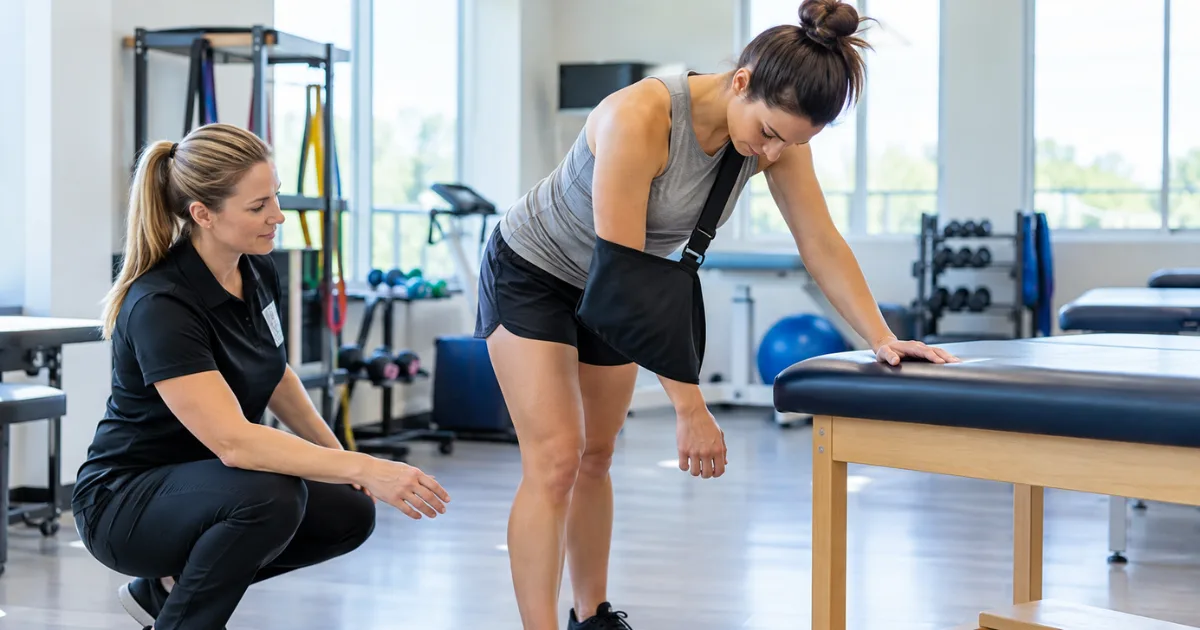
This is the hardest stretch for most people, so here is what to expect after rotator cuff repair. You will wear a sling day and night and remove it only for exercises and showering. Lying flat often hurts, so many people sleep in a recliner or propped up on pillows, with a small towel behind the upper arm. Ice helps with swelling and soreness.
Your physical therapist will move the shoulder for you (passive motion) while you keep your hand, wrist, and elbow active. Daily life becomes a one-arm game, so button-front shirts and a little help at home make a big difference. Patients who complete pre-surgical rehabilitation often find this phase easier because they arrive stronger and already know their exercises.
Phase 2: Active Motion (Weeks 6 to 12)
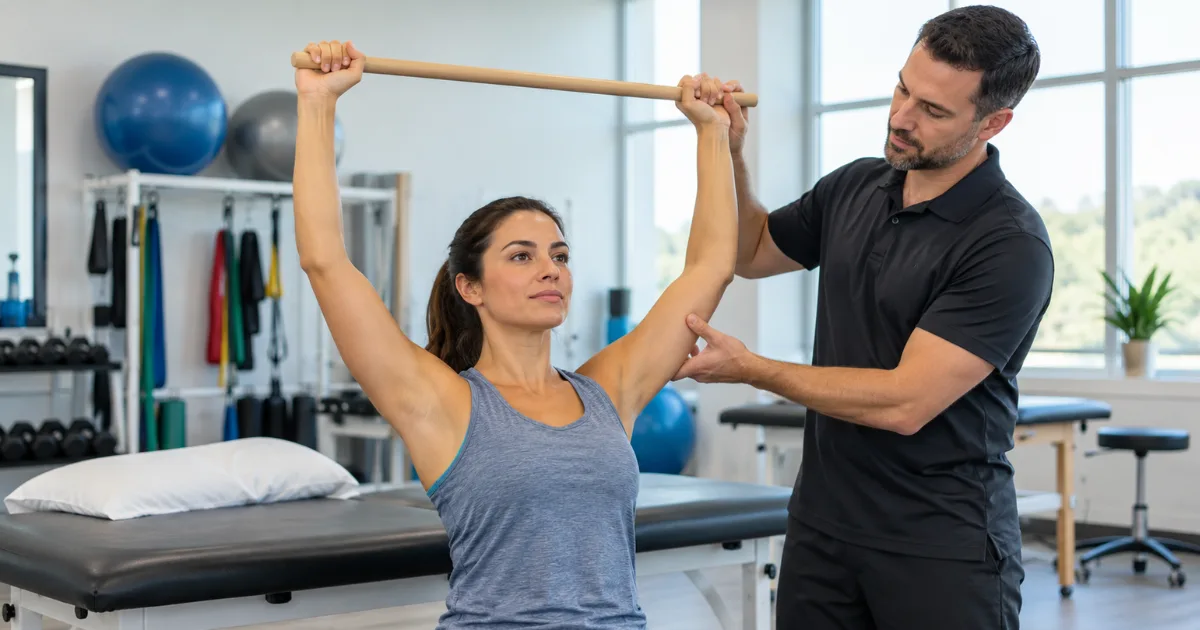
The sling comes off, and you start lifting the arm under your own power. Expect stiffness, especially when reaching overhead or behind your back. Light tasks at waist height are fine, but the repair is still not ready for real lifting.
Phase 3: Strengthening (Months 3 to 6)
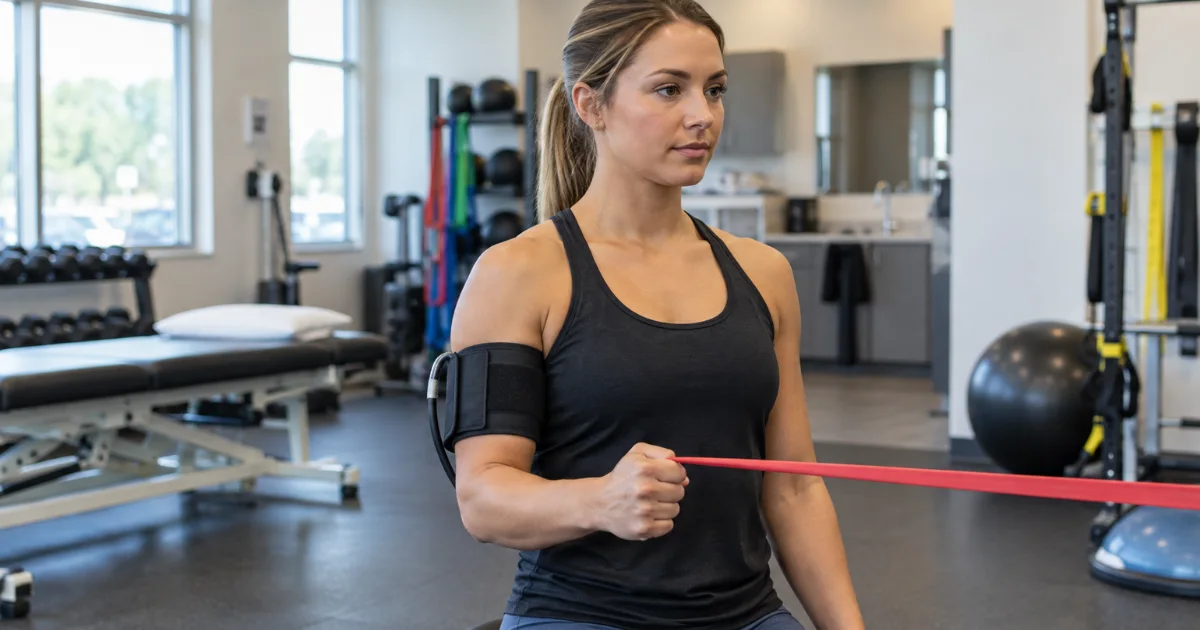
Resistance bands and light weights build the rotator cuff and the shoulder blade muscles that support it. This is also the danger zone. Pain is low, and you feel capable, yet research shows the risk of re-tearing peaks around months 3 to 5. Steady progress beats big jumps.
Phase 4: Return to Full Activity (Months 6 to 12)
Now the focus shifts to power, endurance, and sport-specific movement. Heavier lifting, overhead work, and contact sports return once you pass strength and motion tests and your surgeon clears you.
How Long Will You Have Pain After Rotator Cuff Surgery?
Pain is strongest in the first 1 to 2 weeks and usually becomes manageable by 4 to 6 weeks. Aching at night is the most stubborn part, and it can linger for 3 to 6 months. Soreness after therapy that settles within a day is normal.
Call your surgeon right away if you notice:
- Fever, pus, or redness spreading from the incision
- Pain that your medication does not ease
- Numbness, tingling, or blue or pale fingers
- A sudden pop followed by new weakness or loss of motion
If a sore shoulder still limits you once rehab is underway, targeted shoulder pain treatment can address the stiffness and muscle tension that often keep it going.
When Can You Drive, Work, and Lift Again?
|
Milestone |
Typical timing |
What has to be true first |
| Driving | 4 to 6 weeks | Sling off, no sedating pain medicine, full control of the wheel |
| Desk work | 1 to 2 weeks one-handed, 4 to 8 weeks fully | Pain controlled, arm supported |
| Physical or overhead work | 3 to 6 months or longer | Strength and endurance cleared by your care team |
| Lifting about 5 pounds | 6 to 12 weeks | Active motion restored |
| Lifting 50 pounds | Around 6 months or later | Progressive strength program completed |
Driving
Most surgeons clear you to drive after the sling comes off, usually at 4 to 6 weeks, and once you stop taking sedating pain medicine. One driving simulator study found many patients could drive safely as early as 2 weeks, but your surgeon has the final say. You also need to steer with both hands, buckle your seat belt, and check your blind spots without hesitation. A manual transmission or a right-shoulder repair often means waiting longer.
Time Off Work
With a desk job, you can often work one-handed after 1 to 2 weeks and return more fully at 4 to 8 weeks. Rotator cuff surgery recovery time off work is longer for physical jobs. Roles that involve heavy lifting, overhead reaching, or tools typically need 3 to 6 months, and sometimes more.
Lifting Heavy Objects (Including 50 Pounds)
For the first 6 weeks, nothing heavier than a coffee cup. Light objects of about 5 pounds usually return between 6 and 12 weeks, and many people work up to 20 or 30 pounds around month 4 with guided training. If you are wondering when you can lift 50 lbs after rotator cuff surgery, the typical answer is around 6 months or later. Heavy lifting overhead comes last.
Getting Back to Training and Sport
Running and Cardio
Walking and a stationary bike are usually fine early on, as long as the arm stays protected. Running after rotator cuff surgery typically starts around 12 weeks. By then the sling is off, arm swing feels comfortable, and the main concern is a fall onto the shoulder. Start on even ground with short, easy sessions.
Push-Ups and Gym Training
Push-ups put body weight through a healing shoulder, so they build up in stages. Wall push-ups often start around 3 months, followed by incline push-ups. Floor push-ups and pressing exercises usually return at 4 to 6 months, and bench press and overhead press come back after that with lighter loads first.
Throwing and Overhead Athletes
How soon can throwing athletes return after shoulder surgery? Most start an interval throwing program around 4 to 6 months, once strength and motion tests are met. The program adds distance or volume step by step, never both at once. A full return often takes 6 to 12 months, and pitchers take the longest. Players working through baseball and throwing injuries benefit from a plan that checks mechanics as well as strength.
If pain shows up as throwing volume climbs, learning why shoulder pain shows up when throwing helps you adjust early. Athletes comparing shoulder procedures can also review our labrum surgery recovery timeline.
Physical Therapy for Rotator Cuff Repair
Physical therapy for rotator cuff repair guides you through every phase above. It restores motion without stressing the repair, rebuilds strength in the right order, and tests when you are ready for the next step.
When Physical Therapy Starts
Many surgeons start passive motion within the first 1 to 2 weeks, while others wait until weeks 4 to 6 for larger tears. Your first sessions focus on gentle motion, pain control, and posture. If you are new to therapy, here is what happens at your first sports physical therapy appointment.
How Blood Flow Restriction Training Helps
Blood flow restriction training uses a calibrated cuff on the upper arm so that very light weights produce strength gains similar to heavier lifting. That matters after surgery, when muscles shrink but heavy loading is off limits. Research on its use after rotator cuff repair is growing, and it should always match your surgical clearances. Learn how we use blood flow restriction training at Rehabletics.
Rotator Cuff Repair Rehab in Cherry Hill, NJ
At Rehabletics in Cherry Hill, every session is one-on-one with a doctor of physical therapy. Dr. Jaime Mor, PT, DPT, ATC, has treated athletes since 2013 and consults for the Philadelphia Eagles and Flyers. He builds each rotator cuff plan around your surgeon’s protocol and your goals, from lifting your kids to pitching again.
Whether you are weeks out of surgery or stuck at a plateau, book a free consultation or call 609-354-7987 to plan your next step.