



Most people are up and walking the day of their knee replacement, return to ordinary daily life between three and six weeks, and see most of their improvement within the first three months. Full recovery takes roughly a year.
That is the honest short answer. What people usually do not get is the rest: which days hurt most, the week everything seems to stall, the swelling that outlasts expectations, and the moment around month two when many patients quietly wonder whether they made a mistake. This guide covers both the clinical timeline and the lived one.
How Long Does Knee Replacement Recovery Take?
Knee replacement recovery takes about 12 months, but you will not wait 12 months to live normally. Most people return to everyday activities within three to six weeks and see the bulk of their gains by month three. The final stretch is quieter: strength, endurance, and the last of the stiffness.
Recovery at a Glance
| Milestone | Typical timing |
| Stand and walk with a walker | Same day as surgery |
| Home from the hospital | Same day to 3 days |
| Staples or sutures removed | 10 to 14 days |
| Off the walker, onto a cane | 2 to 4 weeks |
| Everyday activities feel manageable | 3 to 6 weeks |
| Back to driving | 3 to 6 weeks |
| Back to desk work | 3 to 4 weeks |
| Back to physical or standing work | 8 to 16 weeks |
| Knee bends to about 120 degrees | 7 to 11 weeks |
| Most improvement achieved | About 3 months |
| Full recovery | About 12 months |
What Makes Recovery Faster or Slower
Two people can have the same surgery on the same day and finish months apart. What moves the needle: your strength going into surgery, body weight, conditions such as diabetes or heart disease, how consistently you attend physical therapy, and whether you have help at home early on. Procedure type matters too, since partial and robotic-assisted replacements often move faster at first than a traditional total knee replacement.
Knee Replacement Recovery Timeline, Week by Week
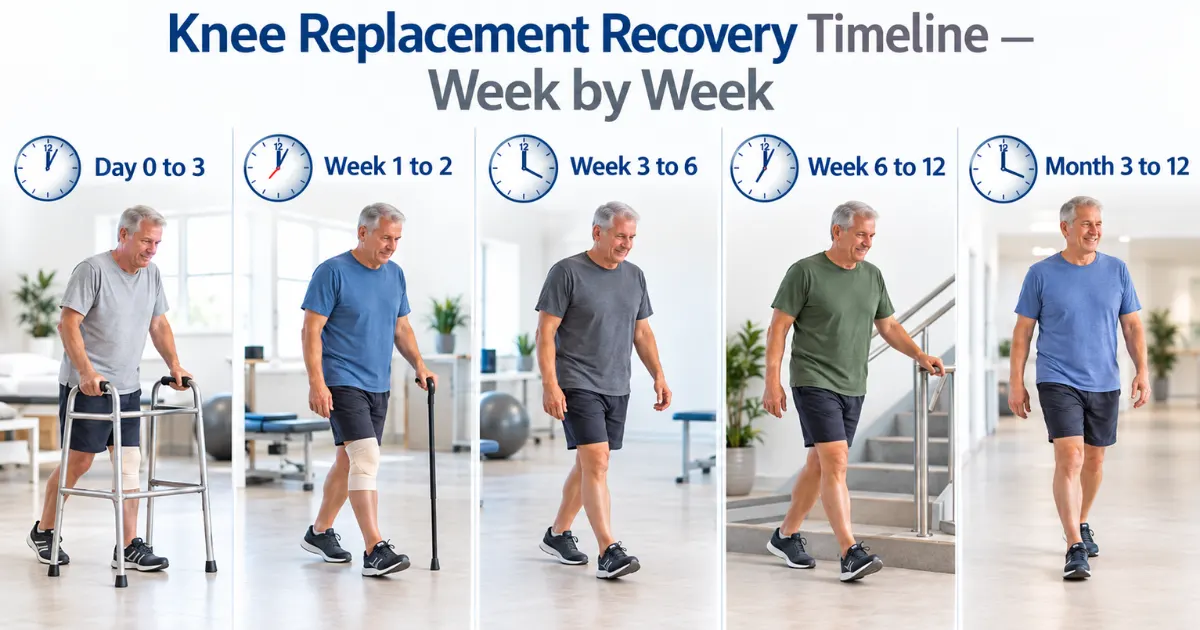
Day 0 to 3: Surgery Day and the First Steps
Physical therapy starts fast, often within four to 24 hours of surgery. You will stand, take a few steps with a walker, and practice getting in and out of bed. Many patients go home the same day, while others stay one to three nights.
The priority nobody explains well is getting the knee straight. Full extension in the first 48 hours matters more than how far you can bend, so do not prop a pillow under it. Blood clot prevention starts now too: brief walks every hour, compression stockings, and usually a blood thinner.
Week 1 to 2: The Hardest Stretch
This is the part people are not prepared for. Pain peaks around days two to four, once the nerve block wears off. Swelling is significant, sleep is broken, and many patients feel genuinely unwell: groggy, discouraged, often constipated from pain medication, and wondering why they feel worse than before surgery.
That is normal. You are healing from a major procedure while exercising on it. Ice for 20 minutes several times daily, elevate above heart level, and take pain medication about 30 minutes before therapy so you can participate. Staples or sutures come out around day 10 to 14.
Week 3 to 6: Walker to Cane
This is the turning point. Most people trade the walker for a cane in weeks two to four, and many stop prescription pain medication by weeks three to four. Knee bend usually reaches about 110 degrees. You can walk for 10 minutes or more, manage stairs one at a time, and handle most self-care independently.
Your surgeon sees you again around six weeks, and for many people, driving and desk work return. Expect swelling to rise after a busy day and settle overnight.
Week 6 to 12: Getting Your Life Back
Bend usually passes 120 degrees, walking aids get put away, and stairs stop being an event. Cycling, swimming, and longer walks become comfortable, and more demanding activity returns from around eight to 12 weeks.
Here is the trap. This is exactly when people overdo it. Feeling good at week seven is not the same as being healed, and the knee will tell you the next morning.
Month 3 to 12: The Long Tail
By three months you have banked most of your improvement, which is why progress now feels slow. It is not stopping, just quieter. Strength and endurance keep building, swelling fades, and scar tissue softens. Stiffness after sitting, mild end-of-day swelling, and numbness around the incision are all still normal at six months. Most people feel fully recovered between 12 and 18 months.
Knee Replacement Recovery Pain: What Is Normal and What Is Not
What Are the Hardest Days After Knee Replacement?
Days two through four are usually the hardest, and weeks one and two are the hardest stretch overall. The nerve block has worn off, swelling peaks, and you are moving a joint that badly does not want to move. Patients consistently call this window the low point, and just as consistently report it easing by week three.
Normal Pain Versus Warning-Sign Pain
| Normal | Call your surgeon | Call 911 |
| Soreness and swelling after a busy day that improves with ice and elevation | Fever above 101°F or chills | Chest pain |
| Good days and bad days, with no clear line of progress | New or worsening calf pain, or a swollen, discolored calf | Sudden shortness of breath |
| Burning, tingling, or hypersensitive skin near the incision, lasting 2 to 6 months | Increasing wound drainage, redness, warmth, or odor | Coughing up blood |
| Numbness to the outside of the scar | Pain not relieved by rest, ice, elevation, or medication | |
| Stiffness first thing in the morning | A sense that the knee is unstable or giving way |
How to Manage Pain and Swelling
Modern recovery layers several tools rather than relying on opioids alone: nerve blocks during surgery, anti-inflammatories, acetaminophen, and a short course of stronger medication, plus ice, elevation, and compression as directed.
One reframe is worth keeping: swelling is feedback, not failure. When the knee swells after a session, it is telling you the day was too much, not that you are doing badly.
Knee Replacement Recovery Exercises by Stage
Weeks 1 to 2: Foundation
Ankle pumps, quad sets, heel slides, straight leg raises, and seated knee bends. Short and frequent beats long and heroic, and protecting full extension is the main goal of this phase.
Weeks 3 to 6: Strength and Motion
Heel and toe raises, hip abduction, standing knee flexion, and short stationary bike sessions, starting with partial pedal revolutions. Walking distance increases gradually.
Weeks 7 to 12 and Beyond: Function
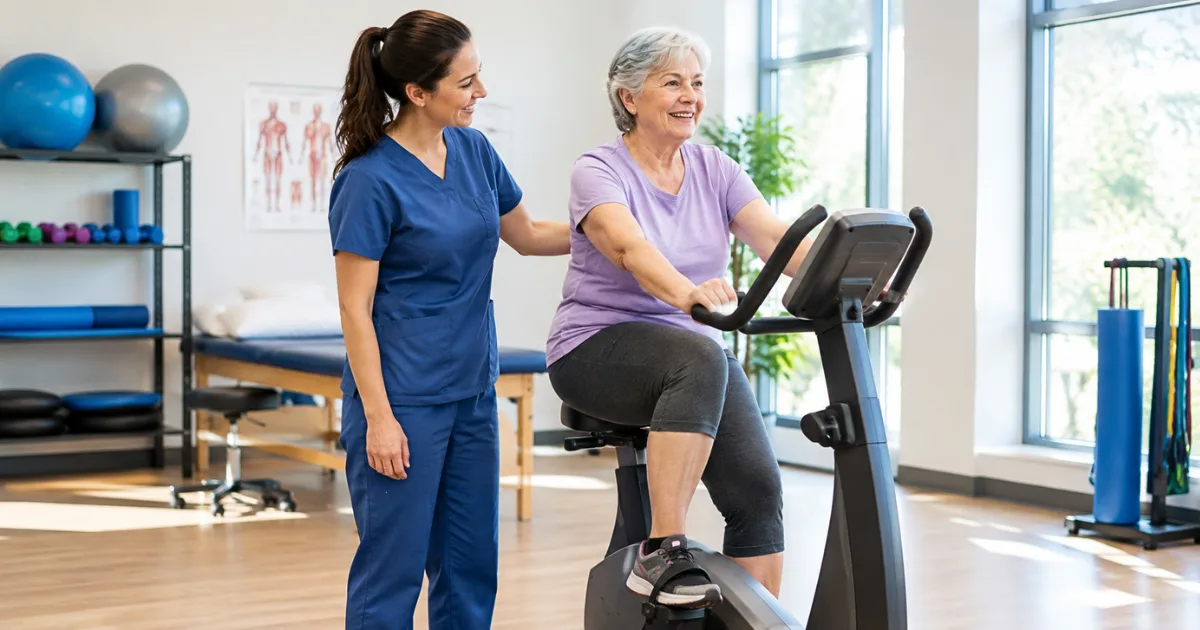
Mini squats, step-ups, single-leg balance, longer walks, and swimming. Golf, dancing, and cycling generally return around 12 weeks. Running, jumping, and contact sports should stay off the table permanently.
Why Pushing Harder Backfires
Healing is not training. Range of motion often plateaus around 110 degrees for several weeks, and patients panic, but motion keeps improving for 12 to 18 months, and forcing a stiff knee usually creates more swelling and less motion. If stiffness persists despite consistent therapy, your surgeon may discuss a manipulation under anesthesia. That is their call, not a reason to push harder at home.
When Can You Drive After a Knee Replacement?
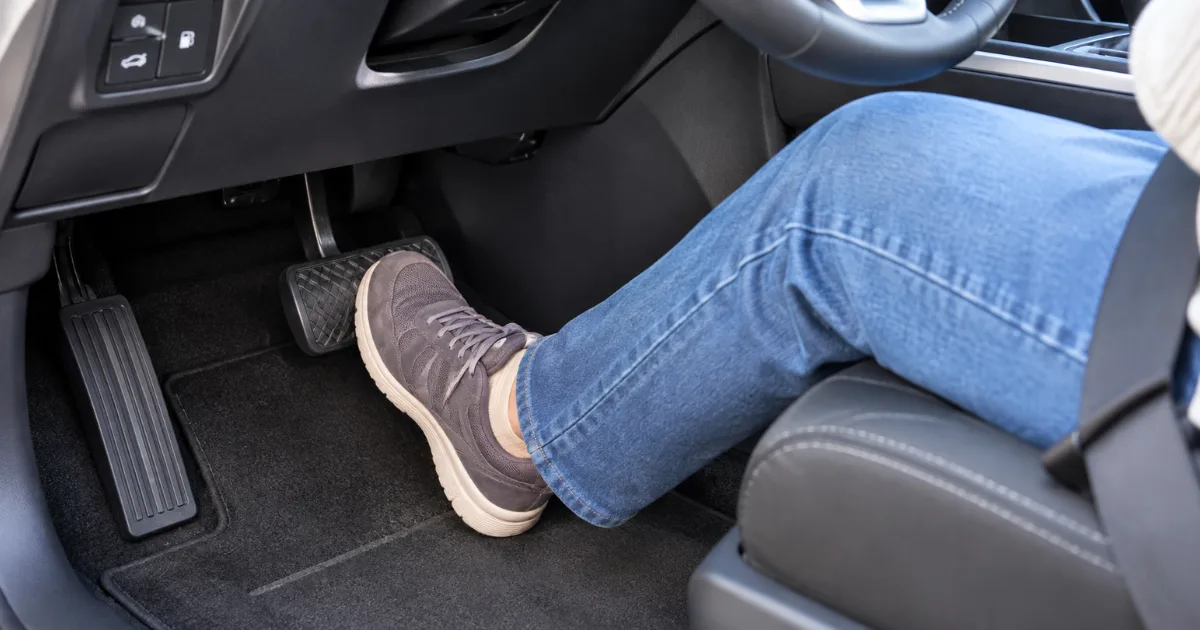
Most people can drive three to six weeks after a total knee replacement, and often around three weeks after a partial knee replacement, but only with your surgeon’s clearance.
Three rules decide it:
- Never drive while taking opioid pain medication. It is unsafe and, in most states, illegal.
- Right knee surgery takes longer than left, because the right leg controls the brake. Your leg can feel ready weeks before your braking reaction time recovers.
- You must be able to perform an emergency stop at full force, without hesitation. If you cannot, you are not ready, whatever the calendar says.
Test yourself in an empty parking lot before taking on traffic.
Knee Replacement Recovery for Elderly Patients

How Recovery Differs After 70
Age alone does not disqualify anyone, and outcomes in the 70s and 80s are generally very good. Recovery does run slower, usually because of lower muscle mass, balance concerns, and conditions such as diabetes or heart disease. Most older adults regain independence within six to 12 weeks, with strength building for up to a year. Diabetic and immunocompromised patients need closer wound monitoring, since healing is often delayed.
Recovering at Home Alone or With Limited Help
The first one to two weeks demand the most support: medication on schedule, meals, and rides to therapy. If you live alone, arrange help before surgery, whether that is family, a short-term caregiver, or home health therapy followed by outpatient physical therapy.
Prepare the house beforehand with grab bars, a shower chair, a raised toilet seat, and stair handrails. Remove loose rugs and cords, and move everyday items to waist height.
The 5 Biggest Mistakes That Slow Recovery Down
- Sitting still. Skipping the home exercise program between sessions is the fastest route to a stiff knee. Change position often and walk frequently.
- Going back to work too soon. Recovery is the job for a while. Ask about light duty or reduced hours instead of full capacity.
- Under-treating pain. Unmanaged pain limits movement, movement loss creates stiffness, and stiffness creates more pain. Use ice, elevation, and prescribed medication as tools, not a last resort.
- Having no plan for after surgery. Decide beforehand where you will recover, who is helping, and how you will get to therapy.
- Doing too much too soon. Severe pain or a jump in swelling means you overshot the day before.
A few restrictions are firm. Do not cross your legs for six weeks, sleep with a pillow under the knee, or kneel on the new knee until you are cleared. Avoid lifting more than 10 pounds for 12 weeks, and skip running and jumping.
What Is the Fastest Way to Recover From a Knee Replacement?
No shortcut compresses a 12-month biological timeline, but these habits change how good the endpoint is:
- Build leg strength before surgery, often called prehab
- Start physical therapy immediately and do not miss sessions
- Protect full knee extension in the first 48 hours
- Prioritize protein, hydration, and sleep
- Use ice and elevation aggressively in the first month
- Pace activity by swelling, not ambition
- Expect a plateau so it does not derail you
What Good Outpatient Rehab Looks Like
The biggest variable most patients control is the quality and consistency of their therapy. Strong post-operative rehab means real one-on-one time, motion and strength tracked against milestones, progression matched to how your knee responds, and direct communication with your surgeon. If you are recovering in South Jersey, look for that rather than a room of machines.
The Bottom Line
Knee replacement recovery is not a straight line. It is two steps forward and one step back, for months. Knowing that in advance is half the battle, because the hardest days are the ones you did not expect. Follow your surgeon’s protocol, show up for therapy, let swelling set your pace, and give it the full year.
If you are preparing for surgery or already recovering and want a rehab plan built around your milestones, our team can help.
This article is general information, not medical advice. Always follow the specific protocol your surgeon and physical therapist provide.