



Your shin started aching on the first week of cross country practice. Now every run starts with the same question: is it shin splints or something worse? The quick answer to the shin splints vs. stress fracture question comes down to where it hurts and how the pain behaves. Shin splints cause a broad, dull ache along the inner shin that often eases once you warm up. A stress fracture causes sharp pain in one small spot that gets worse with every run, and it may hurt when you walk or rest.
Telling them apart early can save you weeks on the sidelines. At Rehabletics, our running injury treatment starts with this exact question. This guide shows you the signs, the tests, and when it is safe to run again.
What Is the Difference Between Shin Splints and a Stress Fracture?
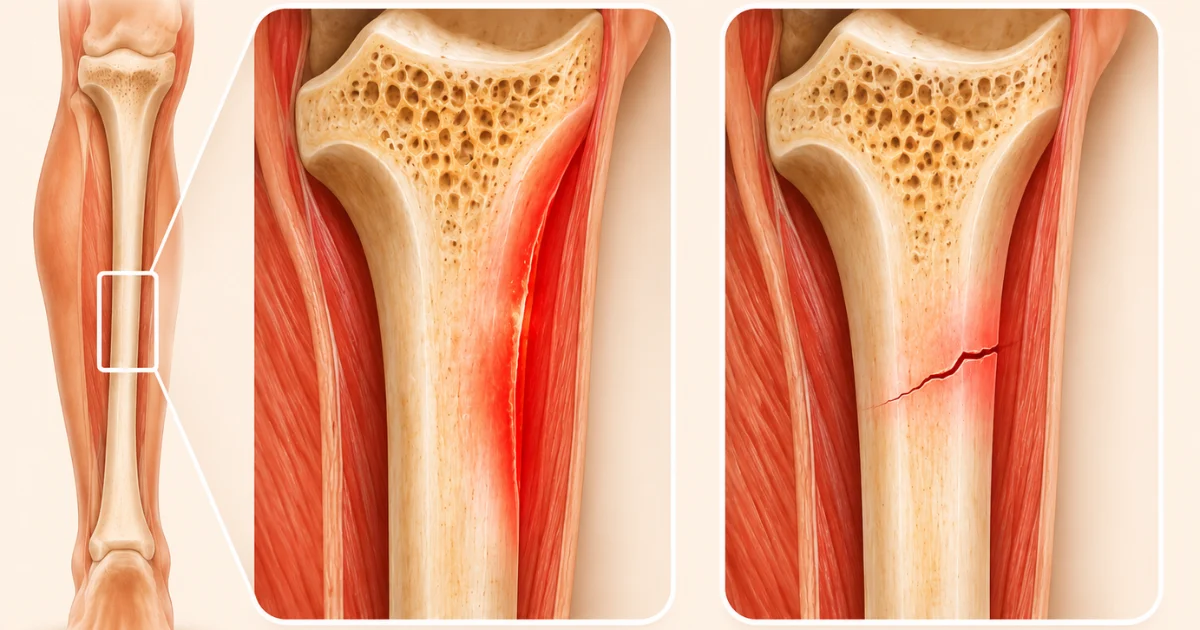
Shin splints and stress fractures are both overload injuries, but they affect different tissues. Shin splints, also called medial tibial stress syndrome (MTSS), are irritation of the muscles and the thin bone lining along the inner edge of the tibia. A stress fracture is a small crack in the bone itself.
In runners, a stress fracture in the tibia is the most common type. It sits at the far end of a bone stress spectrum. Mild stress reactions show swelling inside the bone, and a grade 4 injury on MRI is a true crack. Fractures on the front of the shin are high risk because they heal slowly. Both conditions belong to the larger family of overuse injuries in athletes, where tissue breaks down faster than it can repair.
Shin Splints vs Stress Fracture Symptoms: What Each One Feels Like
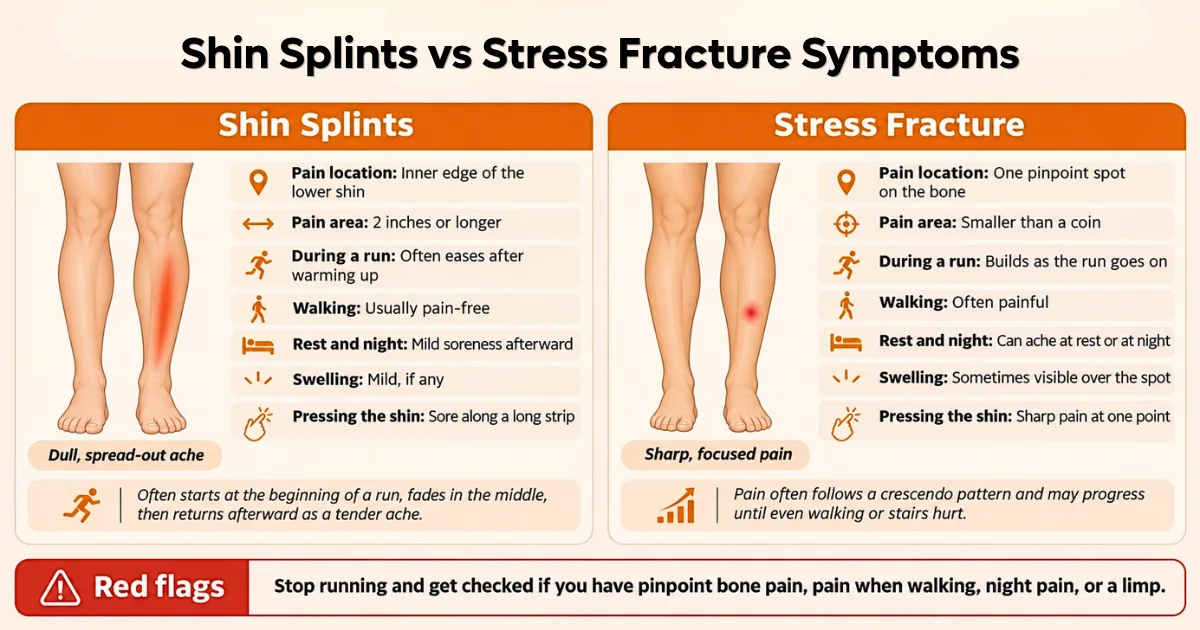
Shin splints feel like a dull, spread-out ache, while a stress fracture feels sharp and focused. The table below compares the most common signs.
|
Sign |
Shin Splints |
Stress Fracture |
| Pain location | Inner edge of the lower shin | One pinpoint spot on the bone |
| Pain area | 2 inches or longer | Smaller than a coin |
| During a run | Often eases after warming up | Builds as the run goes on |
| Walking | Usually pain-free | Often painful |
| Rest and night | Mild soreness afterward | Can ache at rest or at night |
| Swelling | Mild, if any | Sometimes visible over the spot |
| Pressing the shin | Sore along a long strip | Sharp pain at one point |
Shin splints pain usually shows up at the start of a run, fades in the middle, and returns afterward as a tender ache. Many runners describe it as bruised or tight.
Stress fracture symptoms follow a “crescendo” pattern. The pain starts mild, then sharpens with each run until even walking or stairs hurt. A limp, swelling, or pain that wakes you at night are strong warning signs.
Red flags: Stop running and get checked if you have pinpoint bone pain, pain when walking, night pain, or a limp.
How to Tell Them Apart: At-Home Checks and Clinical Tests
The best way to tell them apart is a hands-on exam, backed by imaging when the signs point to bone. A few simple checks at home can show you which way things are leaning.
At-Home Checks You Can Do Today
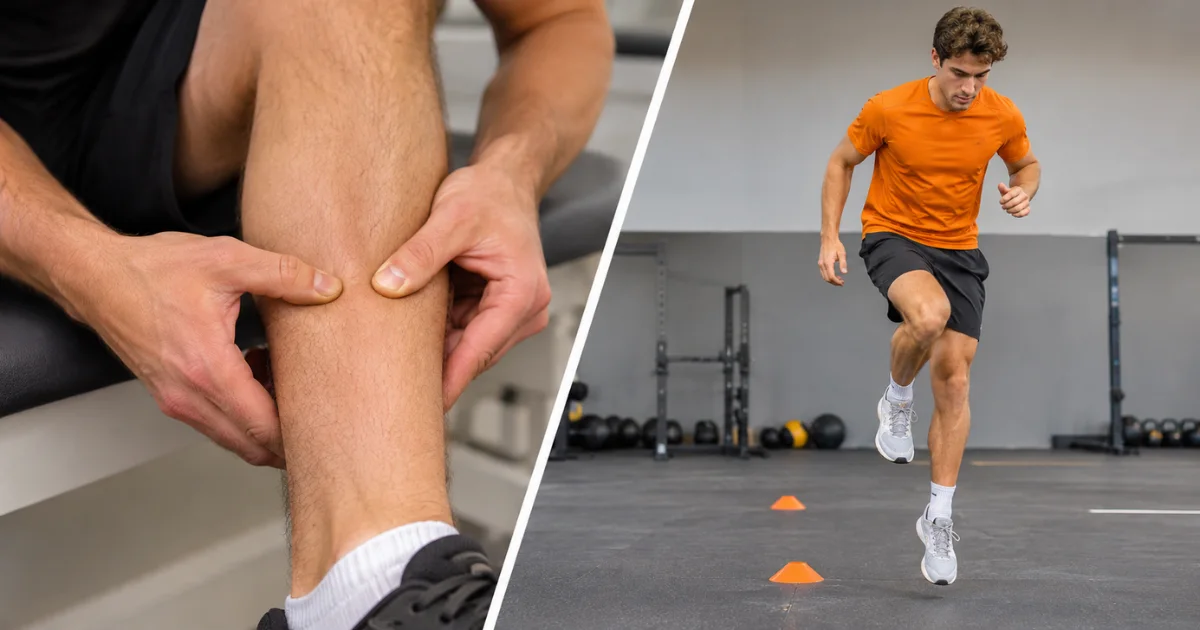
These shin stress fracture checks take two minutes:
- Press test: Run your fingertips slowly down the inside of your shin. Soreness along a long strip points to shin splints. One exquisitely tender spot points to bone.
- Hop test: Hop on the sore leg 10 to 12 times. Sharp, localized pain is a reason to stop and get assessed.
- Walking check: Notice whether normal walking, stairs, or lying in bed causes pain.
These checks are clues, not a diagnosis. Some stress fractures pass a hop test early on.
Imaging: X-ray, MRI, and Bone Scan
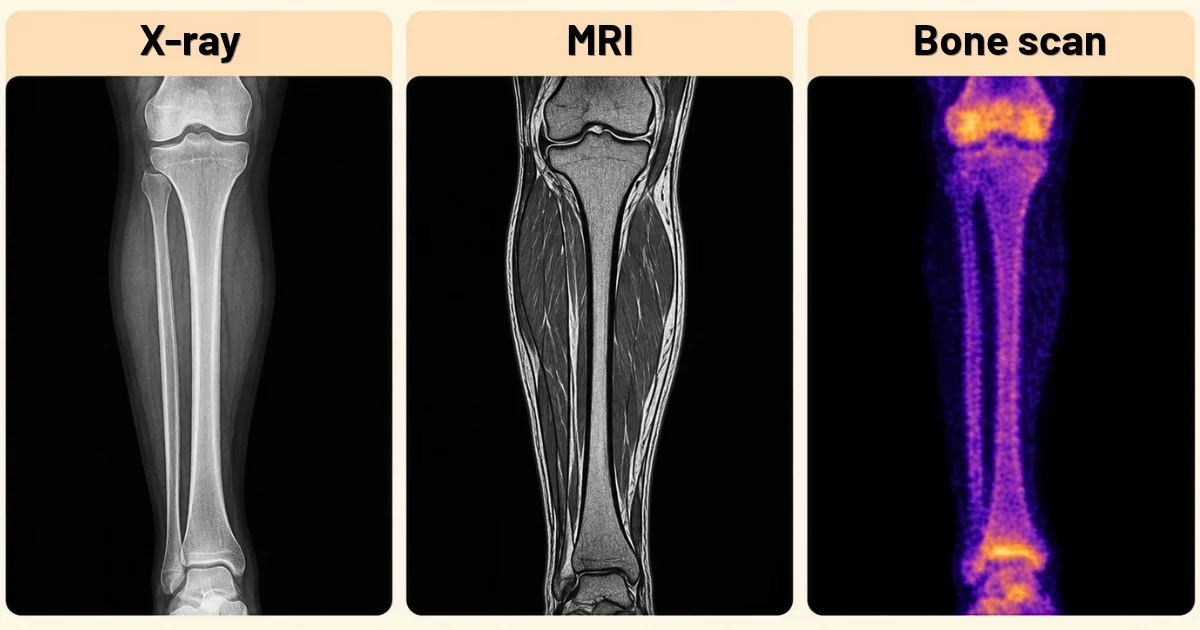
Imaging confirms whether the bone is involved and how serious it is.
|
Test |
What It Shows |
Limitation |
| X-ray | Healing bone or a visible crack | Often looks normal for the first 2 to 3 weeks |
| MRI | Bone swelling, grade of injury, or surface irritation from shin splints | Higher cost |
| Bone scan | Areas of active bone stress | Sensitive but less specific |
MRI is the most accurate test. It can separate surface irritation from swelling deep inside the bone. A bone scan is used when MRI is not an option. A normal early X-ray does not rule out a fracture, so a clinician weighs your history and exam first.
What Causes Shin Splints and Stress Fractures?
Most cases come from loading the leg faster than it can adapt. The most common shin splints causes and stress fracture triggers include:
- Training spikes: Jumping from summer base miles to daily cross country practice
- Walking programs: Brisk walking or hiking on hard surfaces, which explains many cases of shin splints from walking
- Surfaces and shoes: Concrete, banked roads, and shoes past 300 to 500 miles
- Weak links: Weak calves, soleus, and hips that leave the shin absorbing too much force
- Bone health: Too few calories, low vitamin D or calcium, and low bone density
Female runners face two to three times the stress fracture risk of male runners. If you are starting out, these tips for new runners help you build mileage safely.
Stress Fractures Beyond the Shin: Foot, Top of Foot, and Ankle
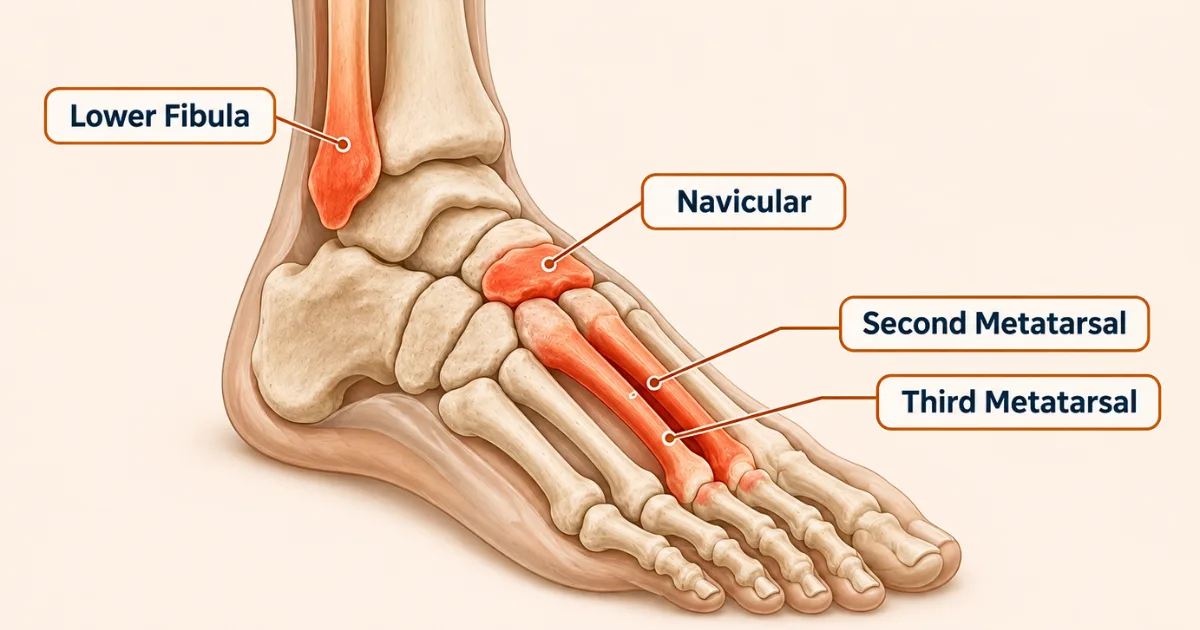
A stress fracture in the foot is common in runners too. The metatarsals cause most stress fracture top-of-foot pain, especially the second and third. The navicular, in the midfoot, is a high-risk site that needs careful care.
A stress fracture of the ankle usually affects the lower fibula or the inner ankle bone. The signs match the shin: pinpoint pain, swelling, and pain with walking. Our foot pain treatment and ankle pain care cover these injuries.
Treatment and Recovery Time
Both injuries heal when you lower the load and rebuild strength. The amount of rest depends on whether the bone is involved.
Treating Shin Splints
Shin splints treatment starts with relative rest, not total rest. Cut back running, ice the shin for 15 minutes, and keep fitness with cycling, swimming, or pool running. Helpful shin splints exercises include:
- Straight-knee and bent-knee calf raises
- Tibialis raises against a wall
- Single-leg balance work
- Side-lying leg raises and bridges for hip strength
For stubborn cases, shockwave therapy can help calm irritated tissue alongside strength work.
Treating a Stress Fracture
Stress fracture treatment means no running until the bone heals. You may need a walking boot or crutches. Eat enough calories, protein, calcium, and vitamin D. High-risk sites need closer medical follow-up.
How Long Does Each Take to Heal?
|
Injury |
Typical Recovery |
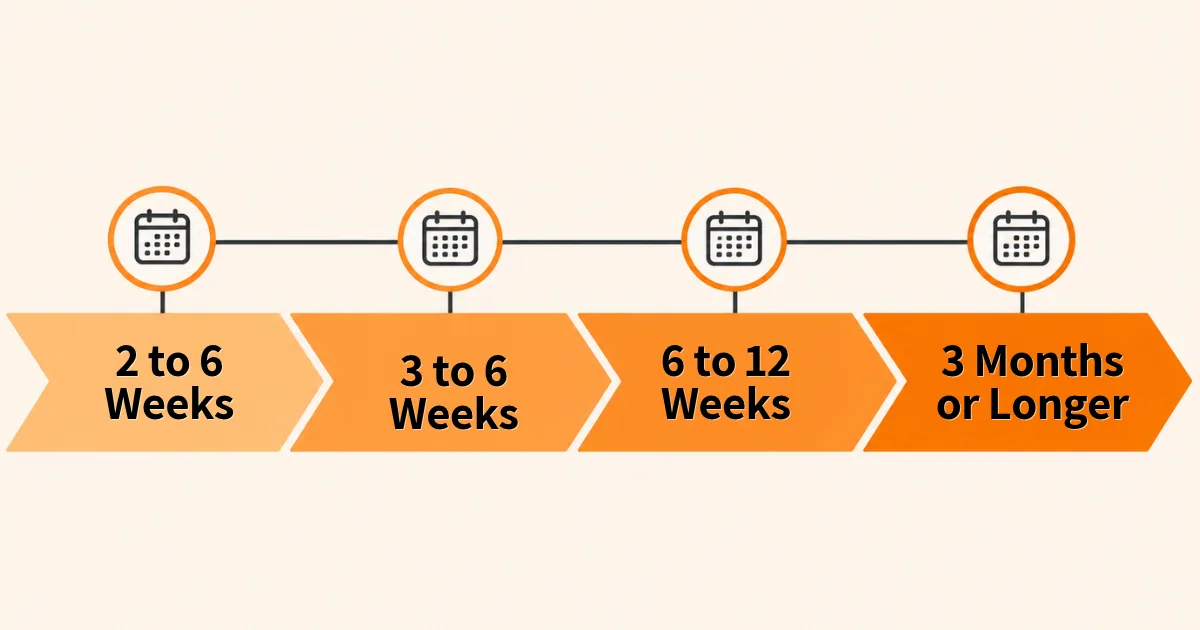
| Shin splints | 2 to 6 weeks |
| Stress reaction | 3 to 6 weeks |
| Tibial stress fracture | 6 to 12 weeks |
| High-risk site fracture | 3 months or longer |
Shin splints usually last 2 to 6 weeks when treated early. Pushing through pain stretches that timeline to months.
How Physical Therapy Helps, and Where Red Light Therapy Fits
Shin splints physical therapy fixes the reason your shin got overloaded. Dr. Jaime Mor, PT, DPT, ATC, and our team check your strength, mobility, and running mechanics. Then we keep you fit while the tissue heals and plan your return step by step.
Red light therapy for shin splints may support tissue recovery when it is part of a full plan. It is not a stand-alone cure, and it does not replace unloading a fractured bone. Our red light therapy sessions pair it with strength and load work for better results.
When Is It Safe to Run Again? A Guide for Cross Country Runners
It is safe to run again when the shin passes clear tests, not when the calendar says so. Use this checklist before your first run back:
- No tenderness when you press along the shin
- Pain-free walking for at least a week
- 10 to 12 pain-free single-leg hops
- A walk-run plan on flat, soft surfaces first
- Weekly volume increases of about 10 percent
- Hills, workouts, and races added last
Cross country runners face pressure to get back for meets. Rushing back is the fastest way to lose the whole season. Objective tools like force plate testing show whether both legs absorb force evenly. Learning why injuries keep coming back helps you avoid repeating the cycle.
Get a Clear Answer for Your Shin Pain in Cherry Hill
Guessing costs runners weeks. Rehabletics, at 5 Esterbrook Lane in Cherry Hill, helps runners across South Jersey find out what is really going on. New Jersey allows direct access, so you do not need a referral. Book a call with our team and get back to running with confidence.