


The most common field hockey injuries are ankle sprains, knee ligament injuries, low back pain, and muscle strains, followed by bruises, fractures, and head or face impacts from the stick and ball. Most of them come from three things: a low, bent-over playing stance, quick cuts on turf, and a hard ball moving at high speed. The good news is that many of these injuries can be prevented with the right training. When one does happen, targeted sports injury rehab for athletes gets you back on the field stronger.
Is Field Hockey a Non-Contact Sport?
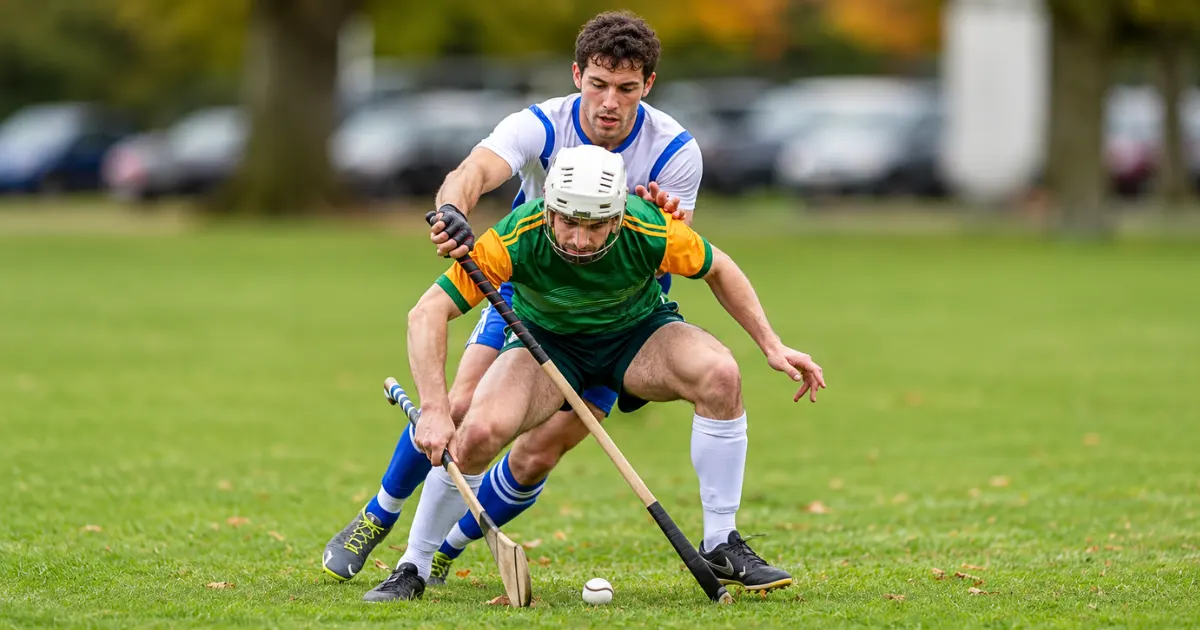
Yes. By the rules, field hockey is a non-contact sport because body checks and stick-to-body contact are fouls. In real games, though, contact still happens. Players get hit by the ball, catch a stick to the hand or face, collide during a tackle, or run into the goal cage.
A typical field hockey accident is a raised ball or a swinging stick striking the face, hand, or shin. If it happens, stop playing right away. Apply ice and compression, and get checked by a professional, especially for any blow to the head or eye.
The Most Common Field Hockey Injuries
Here is a quick view of the injuries players see most often:
|
Injury |
How it happens |
Common signs |
| Ankle sprain | Rolling the ankle while cutting | Swelling, bruising, pain when walking |
| ACL or MCL injury | Planting and twisting in a crouch | A pop, swelling, knee giving way |
| Low back pain | Hours in a bent, rotated stance | Stiffness, aching after practice |
| Muscle strain | Sprinting from a low position | Sharp pull in the hamstring or groin |
| Shin splints | Running on hard turf, fast load increases | Aching along the inner shin |
| Hand or finger fracture | Stick or ball impact | Swelling, pain gripping the stick |
Ankle Sprains
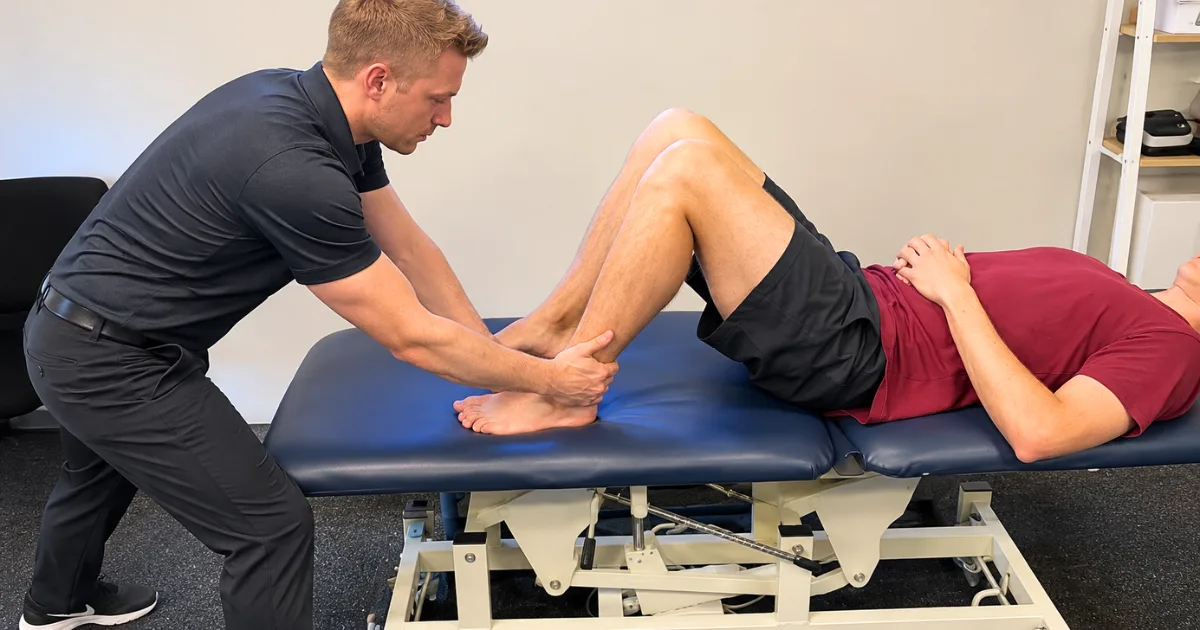
Ankle sprains are the single most frequent problem, making up about 15 percent of field hockey injuries. Most are inversion sprains, where the foot rolls inward during a sharp cut on turf. High ankle sprains take longer to heal. Repeat sprains often point to weak balance and strength, which proper ankle pain treatment is designed to rebuild.
Field Hockey Knee Injuries
Field hockey knee injuries usually happen when a player plants a foot and changes direction while staying low. The ACL is the most serious concern, but MCL sprains and meniscus tears are also common. Female athletes face a higher ACL risk, so strength and landing mechanics matter. If you felt a pop or your knee gives way, early ACL injury care protects the joint long term.
Low Back Pain From the Crouched Stance
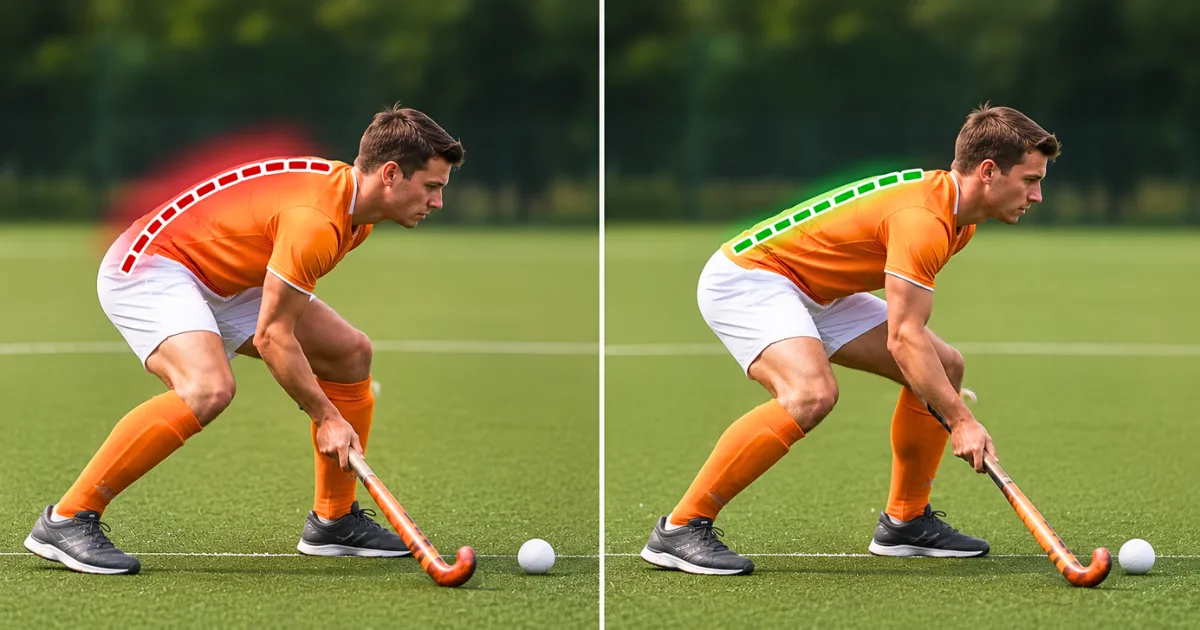
Field hockey players spend over an hour bent forward with their right hand low on the stick. This creates constant flexion and one-sided rotation through the spine. Research puts low back pain rates between 33 percent and over 60 percent of players. Stiff hips and a weak core make it worse, and lower back pain therapy addresses both.
Hamstring, Groin and Quad Strains
Explosive sprints from a low stance load the hamstrings and groin. A ball strike to the thigh can also cause a deep quad bruise, often called a “dead leg.”
Shin Splints and Stress Fractures
Hard synthetic turf and sudden jumps in training volume can lead to shin splints and stress fractures in the leg or foot. Pain that builds with every session calls for overuse injury treatment.
Hand, Finger and Face Injuries
The lower right hand is exposed to sticks and balls, so finger fractures are common. Raised balls cause facial cuts and dental injuries.
Head Injuries and the Worst Field Hockey Injuries
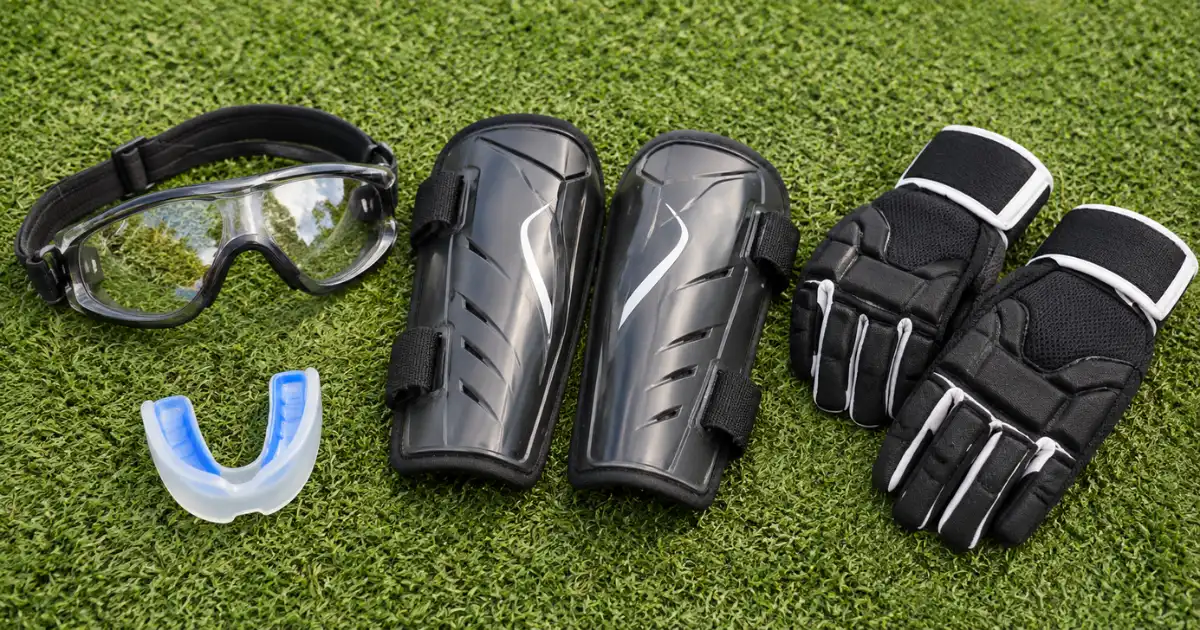
Field hockey head injuries include concussions, cuts, facial fractures, and eye trauma. Concussions make up about 7 percent of injuries during games, and dizziness and confusion are the most common early signs. Protective eyewear makes a major difference: one national study found that players in states without a goggle requirement were more than five times as likely to suffer an eye injury.
The worst field hockey injuries are the ones that end a season or affect long-term health:
- ACL tears
- Concussions
- Eye injuries and facial fractures
- Stress fractures that are ignored too long
Seek same-day care for any loss of consciousness, vision changes, a deformed joint, or an inability to bear weight.
Field Hockey Goalie Injuries
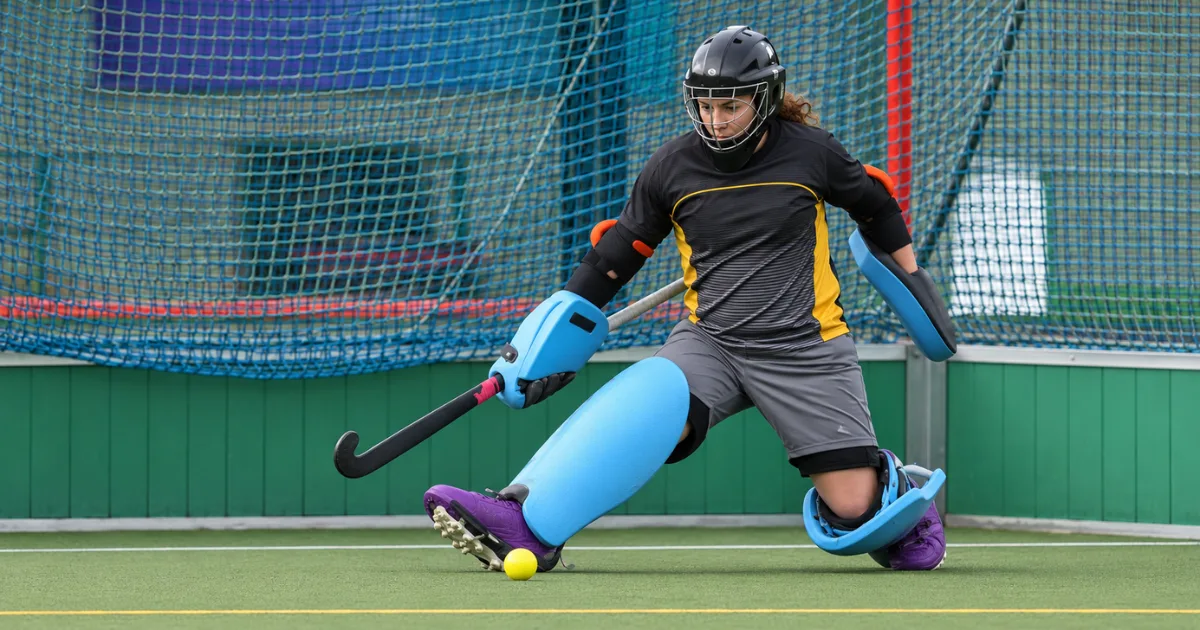
Field hockey goalie injuries look different from field player injuries. Goalies lunge, drop into splits, and kick out at shots, which strains the hips, groin, and knees. Hard shots can still find gaps in the padding. Heavy gear also raises heat stress in warm weather, so goalies need hip mobility work, leg strength, and smart hydration.
Field Hockey Injury Prevention: What Works
Good field hockey injury prevention combines training, equipment, and smart scheduling:
- Do a neuromuscular warm-up with jumps, cuts, and balance drills before every session.
- Build hip and core strength so your body can handle the low stance.
- Train single-leg balance to protect your ankles.
- Increase training load gradually and take breaks between seasons.
- Wear goggles, a mouthguard, shin guards, and gloves every time.
- Report pain early instead of playing through it.
A quick preseason readiness checklist helps you spot weak links before the first game.
How a Hockey Physical Therapist Helps You Recover and Perform Better
A hockey physical therapist understands the demands of the sport, from the crouched posture to the fast cuts. Physiotherapy for a hockey injury goes beyond rest. It restores strength, mobility, and control, then tests whether you are truly ready to return.
At Rehabletics, return to play is measured with force plate testing for return to play, not guesswork. Physiotherapy to improve hockey performance also builds speed, power, and durability for healthy players. A hockey recovery session can include soft tissue work, mobility drills, and recovery tools that help your body bounce back between games. Our sport-specific hockey rehab approach shows how this works in practice.
Low Back, Ankle and Knee Rehab for Cherry Hill and South Jersey Players
Rehabletics, led by Dr. Jaime Mor, helps field hockey players across Cherry Hill and South Jersey recover from back, ankle, and knee injuries. Our clinic at 5 Esterbrook Lane in Cherry Hill offers one-on-one, sport-specific care for high school, college, and adult players. Whether you are dealing with a fresh sprain or nagging back pain, book a call with our team to start your plan.