



Hockey is fast, physical, and demanding on the body. Players face stress on muscles and joints during every match. Without proper care, small issues can turn into serious injuries over time.
Hockey physiotherapy helps players recover, stay strong, and improve performance on the ice. It focuses on sport-specific care that matches hockey movement and physical demands. This approach supports safe and steady progress.
This guide will explain injuries, assessment, and recovery programs in simple terms. It will also help you understand how the right clinic can support long-term health and performance.
What Is Hockey Physiotherapy?
Hockey physiotherapy focuses on care made for ice hockey players and their physical needs. It is a part of physiotherapy that deals with sport-specific movement and stress.
This type of care falls under sports physiotherapy, which targets injuries linked to athletic activity. It uses detailed checks to assess strength, balance, and joint control during hockey actions.
A hockey physiotherapy program supports hockey injury rehabilitation and safe return to play. It also improves speed, stability, and control so players perform better on the ice.
Why Ice Hockey Requires Sport-Specific Physiotherapy
Ice hockey puts high stress on the body through speed, force, and repeated movement. Players need control, balance, and strength. These demands require sport-specific physiotherapy for safe play and injury care.
Unique Physical Demands of Ice Hockey
Skating biomechanics keep players in a low stance with a deep hip bend. This position increases pressure on hip joints and nearby muscles. Good hip mobility and strong core stability help control balance.
Hockey movement patterns include quick turns, stops, and fast direction shifts. These actions create rotational torque that stresses the groin and hip area. Repeated hip flexion and adduction increase load.
Contact vs Non-Contact Injury Risk
Ice hockey includes contact that results in musculoskeletal injuries during matches. Body checks, boards, and collisions can cause sprains, bruises, or joint damage. These are common contact sports injuries.
Non-contact injuries develop from repeated stress on muscles and joints. Overuse can cause pain in the hips, knees, or lower back.
Common Ice Hockey Injuries Treated by Physiotherapists
Ice hockey causes many injuries because of speed, contact, and repeated strain on the body. Physiotherapists treat these problems with care plans that reduce pain, restore movement, and support a safe return to play.
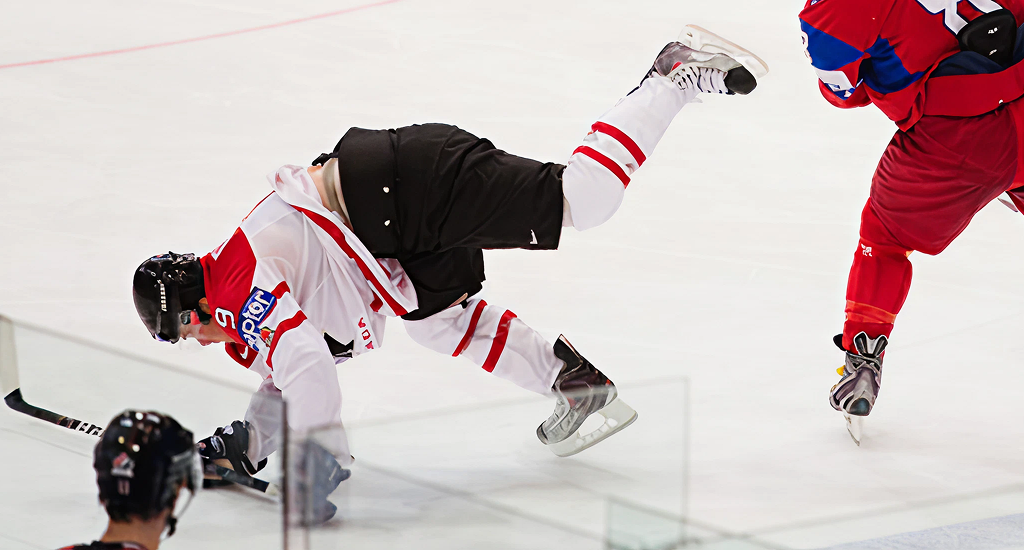
Lower Body Injuries (Most Common)
Lower body injuries often appear because of the strong skating force and repeated hip motion. A groin strain is common when inner thigh muscles face sudden stress. This issue causes pain during skating and quick direction changes.
Hip problems like Femoroacetabular Impingement can limit smooth joint movement and create sharp pain. This hip injury hockey players face may worsen without proper care. Knee ligament stress also develops from sudden stops and twists.
Upper Body & Spine Injuries
Upper body injuries occur during contact or falls against boards. Shoulder instability happens when the joint feels loose or slips during movement. Shoulder instability rehabilitation helps restore strength and joint control over time.
AC joint injuries affect the top of the shoulder and cause pain during lifting. Shoulder injury hockey cases also include neck strain from sudden impact or awkward posture during play.
For this injury case, treatment should be taken immediately to prevent future struggles. To support your injured upper body and spine, a physical therapy clinic like Rehabletics is the best choice if you happen to be in NJ.
Overuse & Chronic Conditions
Some injuries develop slowly because of repeated stress over time.
- Tendinopathy causes pain in tendons after long use.
- Lower back pain occurs from long periods in a bent posture.
Assessment Process in Hockey Physiotherapy
Ice hockey needs careful assessment because of fast movement and high physical stress. Physiotherapists use detailed checks to find weak areas. This process builds a clear plan for safe recovery and better performance.
Movement & Skating-Specific Assessment
Therapists study skating posture through simple on-ice posture simulation or similar drills. This step shows how the body moves during real play. It helps detect stress points and poor alignment.
They also check the range of motion in the hips and nearby joints. Functional movement screening and stride analysis reveal limits in motion and control. These findings guide proper treatment plans.
Strength, Balance & Neuromuscular Testing
Therapists test strength through single-leg control and observe side-to-side differences. These checks highlight weak muscles and poor joint support during movement.
Balance training tests show how well the body stays stable under pressure. A full strength assessment helps improve control and reduce injury risk. Trusted clinics like Rehabletics in NJ provide mobility and movement therapy with expert evaluation methods that often help in this case.
Hockey Injury Rehabilitation Programs
Injuries in ice hockey need a clear and step-by-step recovery plan. Physiotherapists create structured programs that match each healing stage. This approach reduces pain, rebuilds strength, and prepares the body for safe return.
Acute Injury Rehab
Acute injury rehabilitation starts soon after damage to control pain and protect tissues. Early care of athlet recovery focuses on swelling control and gentle movement. These steps help maintain joint function and prevent stiffness.
Therapists add light exercises to support early mobility without extra stress. Careful progress in this stage protects healing tissue and prepares the body for later phases.
Progressive Strength & Mobility Phase
This stage builds strength in the hips, core, and adductor muscles. A planned strengthening program improves muscle power and joint support. Mobility exercises help restore smooth joint motion and reduce tightness after rest. Controlled progress ensures safe load increase without risk of new injury.
Return-to-Play Protocols
Return to Play follows clear steps before full game action. Gradual load increase helps the body adjust to sport demands again. Return to sport criteria guide progress through skating drills and controlled practice sessions. This phase builds confidence and prepares players for full competition.
Top 3 Clinics for Performance-Focused Hockey Physiotherapy
Finding the right clinic can improve recovery speed and long-term performance. The best clinics use advanced methods, sport-focused care, and personalized plans. Here are three trusted options known for strong results in athlete rehabilitation.
1. Rehabletics

- Location: Esterbrook Lane, Cherry Hill, New Jersey
- Best For: Hockey athletes needing performance-based rehab
- Special Focus: Movement analysis, force plate testing, injury prevention
- Programs: R.E.P.A.I.R. Lab (structured recovery system)
- Ideal Stage: Injury recovery → return-to-sport optimization
This clinic focuses on performance-based rehabilitation designed for athletes like hockey players. The Rehabletics team uses detailed movement analysis and advanced tools to detect weak areas and injury risks.
Their R.E.P.A.I.R. Lab uses force plate data and movement analysis to identify imbalances, reduce injury risk, and rebuild strength. The focus is not just recovery, but returning hockey players stronger, faster, and game-ready. Their methods are trusted by professional athletes, which shows strong expertise in high-level performance care.
2. Elite Chiropractic and Recovery
- Location: Brick Township, NJ
- Best For: Pain relief and muscle recovery support
- Special Focus: Chiropractic care, soft tissue therapy
- Services: Adjustment therapy, recovery sessions
- Ideal Stage: Early pain management and recovery support
Elite Chiropractic and Recovery focuses on reducing pain and restoring movement through hands-on therapy. Their combined approach supports muscle recovery and mobility, making it useful for hockey players dealing with strain, stiffness, or early-stage injuries.
3. Trinity Rehab
- Location: Cherry Hill, Flemington, Emerson, & so on.
- Best For: General physical therapy and structured rehab
- Special Focus: Strength, mobility, injury recovery
- Programs: Personalized therapy plans
- Ideal Stage: Post-injury rebuilding and long-term conditioning
Trinity Rehab delivers structured physical therapy to improve strength and mobility. Their personalized programs help athletes recover steadily while building long-term stability, making them suitable for hockey players transitioning back to regular training.
Choosing the Right Hockey Physiotherapy Clinic
The right clinic can improve recovery speed and long-term performance for ice hockey players. A few key factors help you choose a clinic that matches sport-specific needs and supports safe return.
- Experience with hockey players: Clinics with real hockey cases understand injury patterns, movement demands, and recovery needs better than general care providers.
- Return-to-play protocols: A clear step plan ensures safe progress before full sport activity and reduces the risk of repeat injury.
- On-ice understanding: Therapists who understand skating posture and game movement can design better treatment plans for real performance needs.
- Advanced assessment approach: Clinics like Rehabletics use detailed movement checks to find weak areas and improve recovery outcomes.
- Personalized care plans: A clinic should offer custom programs that match each player’s injury, strength level, and performance goals.
Conclusion
Hockey physiotherapy supports safe recovery, better strength, and improved performance on the ice. With the right care, players can reduce injury risk and return with more confidence and control in every movement.
Choosing a trusted clinic like Rehabletics ensures expert guidance and sport-focused treatment. The right support helps players stay active, recover faster, and perform at their best level.