


The best ankle sprain rehab exercises follow a clear order: restore motion first, then rebuild strength, then retrain balance, and finally add sport drills. Each stage has a simple test you should pass before moving to the next one. This guide walks athletes and active adults through the full progression, from the first few days after the injury to game day. If your ankle is still painful or swollen, start with an ankle pain treatment plan in Cherry Hill before you push into harder drills.
When Should You Start Ankle Sprain Rehab Exercises?
Most people can start gentle movement within 1 to 3 days. Complete rest and constant icing are no longer recommended, because careful motion helps the ligament heal stronger. Use a simple pain rule: a mild ache is fine, but sharp pain or extra swelling the next day means you should scale back.
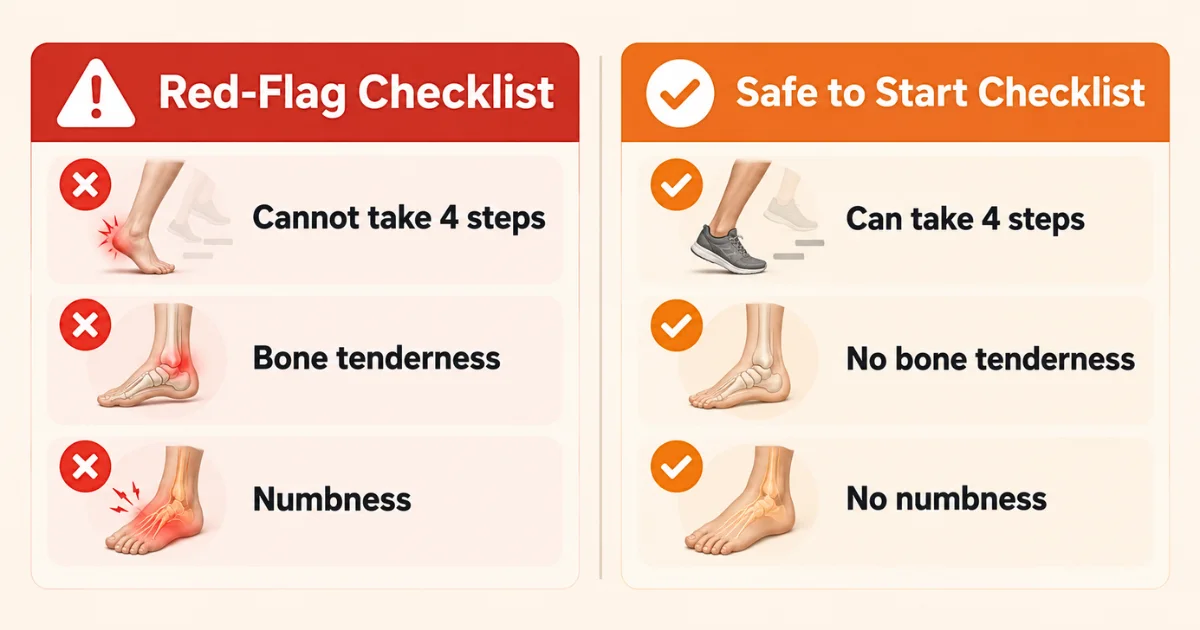
Get an X-ray first if you cannot take four steps or if the bone on either side of your ankle is tender to the touch. Early ankle sprain recovery exercises also look different for high ankle sprains, which heal more slowly. Our guide to high and low ankle sprains explains how to tell them apart.
The Ankle Sprain Rehab Progression at a Glance
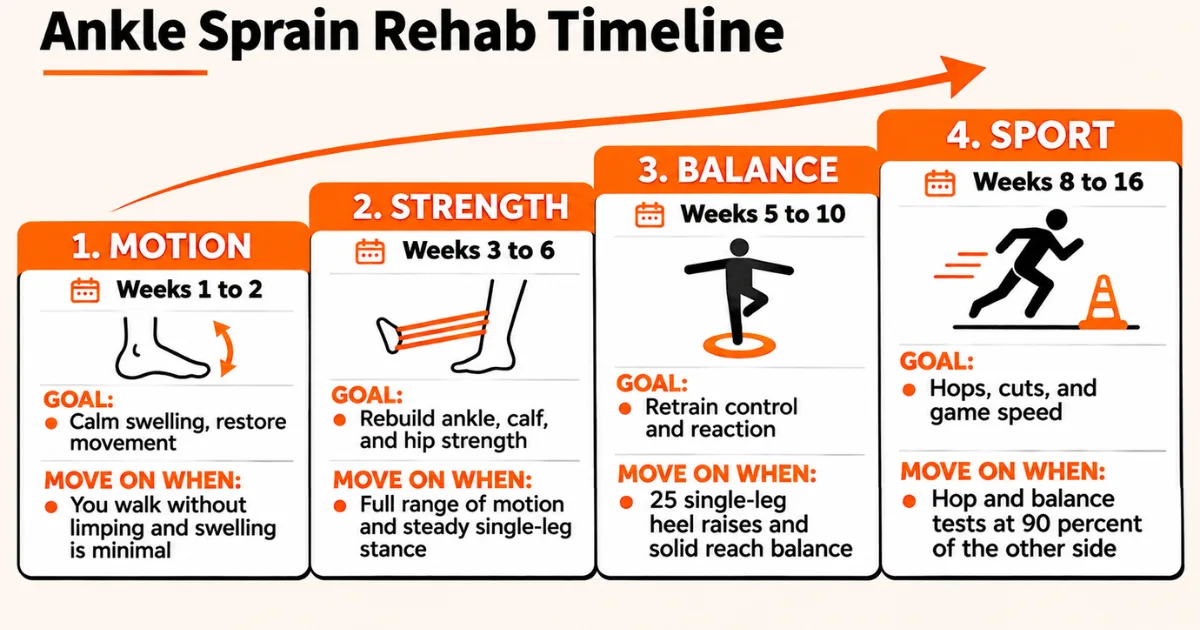
A good ankle sprain rehab protocol moves you forward based on what your ankle can do, not just the date on the calendar.
|
Phase |
Typical timing | Main goal |
Move on when |
| 1. Motion | Weeks 1 to 2 | Calm swelling, restore movement | You walk without limping and swelling is minimal |
| 2. Strength | Weeks 3 to 6 | Rebuild ankle, calf, and hip strength | Full range of motion and steady single-leg stance |
| 3. Balance | Weeks 5 to 10 | Retrain control and reaction | 25 single-leg heel raises and solid reach balance |
| 4. Sport | Weeks 8 to 16 | Hops, cuts, and game speed | Hop and balance tests at 90 percent of the other side |
Mild sprains often move through this ankle sprain rehab progression in a few weeks, while severe sprains take longer.
Phase 1: Early Recovery Exercises to Restore Motion
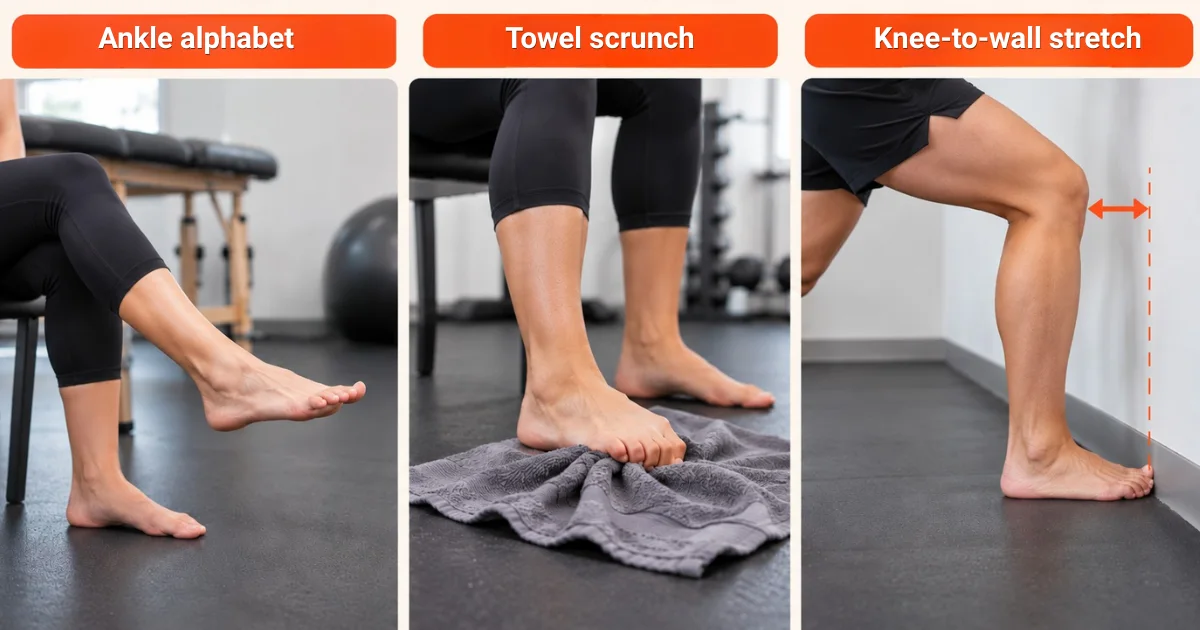
These are the first ankle sprain PT exercises most patients receive. Do them 2 to 3 times a day.
- Ankle alphabet: Trace the letters A to Z in the air with your big toe.
- Ankle pumps and circles: Point and flex your foot 20 times, then circle it 10 times each way.
- Towel scrunch: Grip a towel on a hard floor with your toes, 10 to 15 times.
- Seated calf stretch: Loop a towel around your foot and hold for 30 seconds, 3 times.
- Knee-to-wall stretch: Drive your knee toward a wall while keeping your heel down, 10 times.
Phase 2: Ankle Sprain Strengthening Exercises
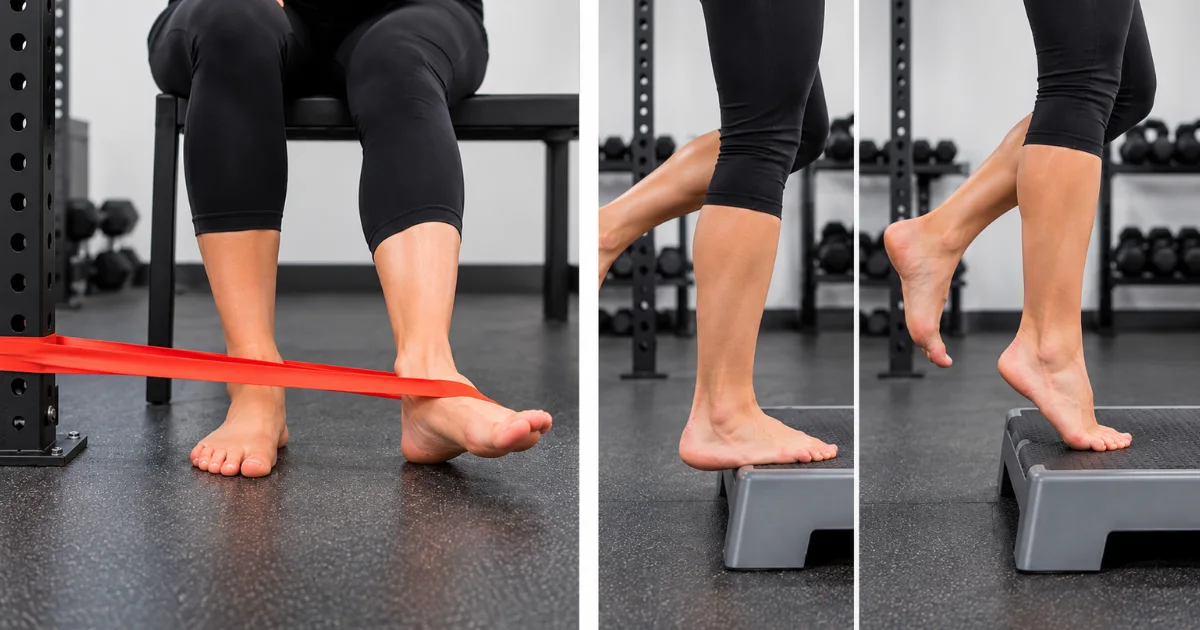
Once you can walk without pain, it is time to rebuild strength. Aim for 3 sets of 15 to 20 reps on most of these exercises.
- Band work in four directions: Push your foot up, down, out, and in against a resistance band. Add the inward direction last, because it stretches the healing ligament.
- Heel raises: Start on two legs, progress to one leg, and then work off a step. The goal is 25 slow single-leg reps.
- Step downs and split squats: These build knee and ankle control together, and they also improve ankle bend.
- Single-leg deadlifts and side band walks: Weak hips shift extra load onto the ankle, so hip strength protects it too.
Phase 3: Balance and BOSU Drills to Get Back on the Field
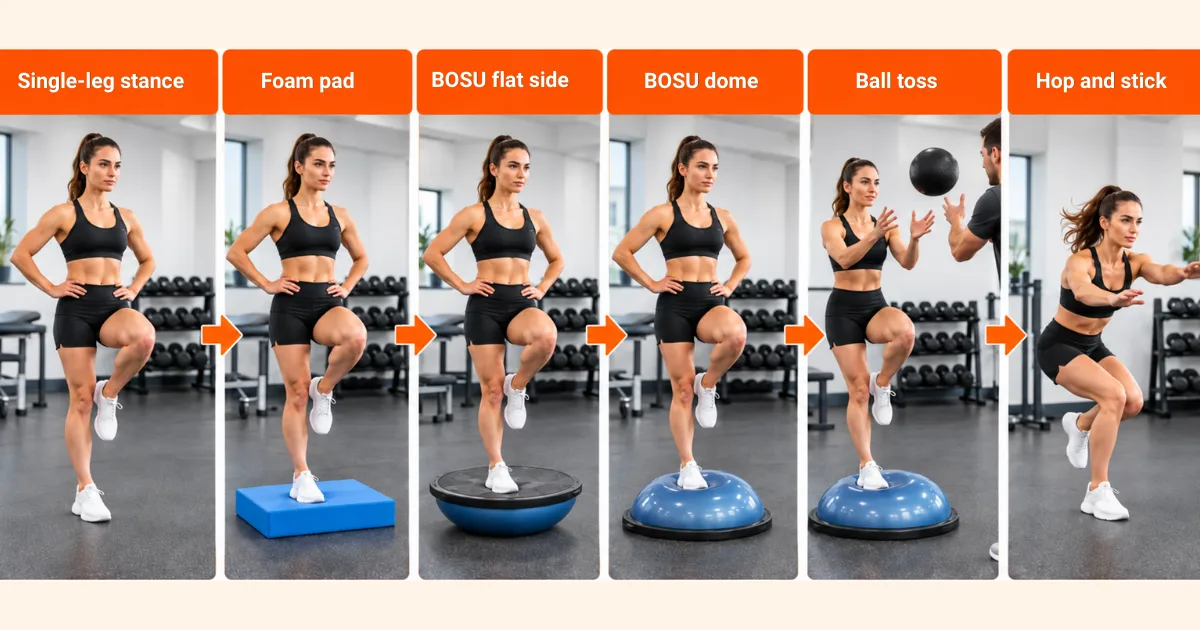
Balance training is the strongest tool for preventing another sprain. A sprain damages the tiny sensors in your ligaments that tell your brain where your foot is, and these drills retrain them. Hold each balance drill for 30 seconds and repeat it 3 times.
- Single-leg stance: Stand on the injured leg with a soft knee.
- Eyes closed: Remove your vision, then add slow head turns.
- Foam pad or pillow: Balance on a soft surface.
- BOSU, flat side up: Stand on the wobbly platform and control the tilt.
- BOSU, dome side up: Stand on the dome and add small squats.
- Star reach: Balance on one leg and reach the other foot forward, sideways, and back.
- Ball toss on the BOSU: Catch and throw while staying steady.
- BOSU hop and stick: Hop onto the dome, land quietly, and hold for 3 seconds.
Do some balance work at the end of practice, when you are tired. Ankles usually roll late in games, so your ankle needs to stay stable under fatigue.
Phase 4: Advanced Ankle Sprain Rehab Exercises for Athletes
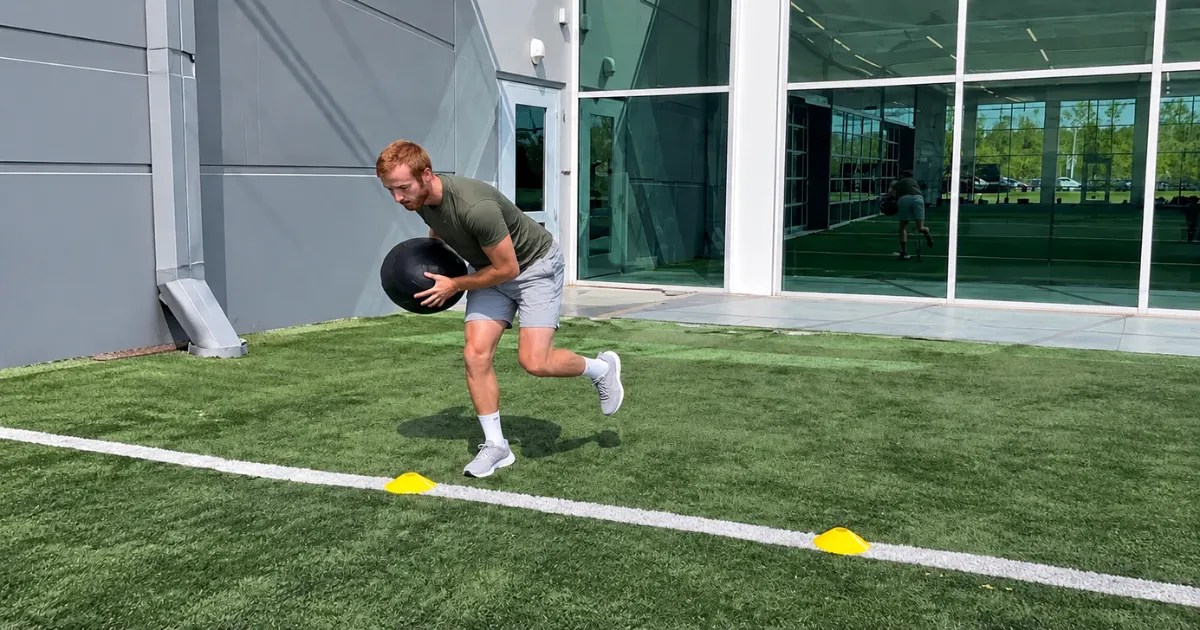
This stage turns a healed ankle into a game-ready one. Ankle sprain rehab for athletes should copy the exact demands of their sport.
- Hop progression: Two legs in place, then forward and back, then side to side, then the same pattern on one leg.
- Lateral bounds: Leap sideways and stick the landing for 2 seconds.
- Agility work: Ladder drills, cone cuts, and quick stops to train deceleration.
- Running return: Walk and jog intervals come first, then strides, then full sprints.
- Sport-specific drills: Cutting for soccer and basketball, jump landings for volleyball, and lateral shuffles for tennis and lacrosse.
Start these advanced ankle sprain rehab exercises at low volume and build up over 2 to 3 weeks.
Return-to-Sport Checklist for Athletes
An ankle sprain rehab protocol for athletes should end with testing, not with a guess. You are ready to play when you can tick every box:
- No swelling after training
- Full ankle range of motion
- 25 single-leg heel raises, equal to the other side
- Reach balance and hop tests (single, triple, and crossover) at 90 percent or better
- Confident cutting and landing at full speed
For 6 to 12 months after the sprain, wear a lace-up brace or use kinesiology taping during practices and games.
Why Your Ankle Keeps Rolling When Rehab Stops Early
Pain fades long before stability returns. Research shows that up to 40 percent of people develop chronic ankle instability after a first sprain, and stopping rehab once walking feels normal is a common reason. The fix is finishing the balance and sport phases, not more rest. Our chronic ankle instability guide explains the full picture.
How a Sports Physical Therapist Speeds Up Ankle Sprain Rehab
A sports PT tests your strength, balance, and hops instead of guessing, and adjusts your plan to your sport. Hands-on manual therapy frees up stiff ankle joints so the exercises work better. At Rehabletics, care is led by Dr. Jaime Mor, PT, DPT, ATC, a sports physical therapist and certified athletic trainer.
Get Back on the Field With Confidence
You do not need a referral to start physical therapy in New Jersey. Our sports injury rehab team in Cherry Hill builds every plan around your sport. Book your free consultation or call 609-354-7987.