



If you’re looking for a joint pain alternative treatment, the options with the strongest evidence are physical therapy and low-impact exercise, acupuncture, weight management, heat and cold therapy, and a handful of well-studied supplements like turmeric and omega-3s. No single remedy works for everyone, but combining two or three of these approaches often brings meaningful relief — without surgery or long-term medication.
This guide walks through every major joint pain natural treatment, what the research says about each, and how to build a plan that fits your life. As with any health decision, check with your doctor before starting something new, especially if you take medication.
Why People Look Beyond Medication for Joint Pain
There are good reasons so many people search for a joint pain holistic treatment. NSAIDs like ibuprofen work, but long-term use carries real risks — stomach ulcers, kidney damage, and cardiovascular concerns. Joint replacement surgery is effective for end-stage arthritis, yet it’s rarely the first step, and most people want to delay or avoid it entirely.
Alternative doesn’t mean anti-medicine. The best results come from using natural approaches alongside your doctor’s guidance, not instead of it. Think of these treatments as tools that reduce your reliance on pills, not a replacement for medical care.
Movement-Based Therapies: The Foundation of Natural Joint Pain Relief
It sounds counterintuitive, but movement is the single most effective treatment for joint pain and stiffness. Resting too much weakens the muscles that support your joints, which makes pain worse over time.
Physical Therapy and Targeted Exercise
Physical therapy consistently ranks as the most effective non-surgical option for hip and knee pain. A physical therapist identifies weak or imbalanced muscles that put stress on your joints, then builds a program to strengthen them, improve range of motion, and correct posture and movement patterns.
On your own, aim for 150 minutes of low-impact activity per week, as the CDC recommends. The best options include:
- Walking
- Swimming and water aerobics
- Cycling
- Gentle stretching and range-of-motion exercises
Avoid high-impact, repetitive activities like running, jumping, and tennis if they flare your pain.
Tai Chi and Yoga for Pain and Stiffness
Tai chi combines slow, flowing movements with deep breathing and meditation, and research shows it reduces joint pain while improving range of motion and function. Yoga delivers similar benefits — studies link it to less joint pain and stiffness, better relaxation, and lower stress. Both are gentle enough for osteoarthritis, rheumatoid arthritis, and fibromyalgia.
Hydrotherapy and Warm Water Exercise
Exercising in warm water supports your body weight and takes pressure off painful joints. Studies show hydrotherapy combined with physical therapy improves pain, function, and quality of life more than physical therapy alone. Even a warm bath with Epsom salt can loosen stiff joints before activity.
Hands-On Alternative Treatments
Manual and stimulation-based therapies are among the most popular alternative treatments — and some have solid research behind them.
Acupuncture
Acupuncture has the strongest evidence of any complementary therapy for joint pain. This traditional Chinese practice inserts thin needles at specific points to stimulate nerves, improve blood flow, and activate the body’s natural painkillers. A 2016 meta-analysis found acupuncture improves both short- and long-term physical function in people with chronic knee pain from arthritis, though pain relief itself tends to be short-term. Because the risk is low, it’s considered a safe addition to conventional treatment. Always choose a licensed, certified acupuncturist.
Massage Therapy and Chiropractic Care
Gentle massage with moderate pressure reduces joint pain and stiffness and can improve range of motion. One 2021 study found Swedish massage helped people cut back on pain relievers. Timing matters, though — skip massage during an active flare when joints are tender. Chiropractic care helps some people with joint-related discomfort, particularly in the back and neck, though evidence is more limited.
TENS Therapy
Transcutaneous electrical nerve stimulation (TENS) uses small electrodes placed on the skin to deliver a mild electrical current that interrupts pain signals. Physical therapists often use it for osteoarthritis, and affordable home units are widely available.
Home Remedies: Heat, Cold, and Topical Relief
Heat and cold are the simplest natural remedies for joint pain and inflammation — and knowing when to use each matters.
Use heat (warm showers, heating pads, paraffin wax) for stiffness. It relaxes muscles and boosts circulation. Limit heating pads to 20 minutes at a time.
Use cold (wrapped ice packs) for swelling and acute flare-ups, especially after activity. Never apply ice directly to skin.
For targeted relief, capsaicin cream — made from the compound that gives chili peppers their heat — blocks pain signals when applied over a sore joint. Menthol gels and diclofenac gel (Voltaren) are other proven topical options.
Natural Remedies for Joint Pain and Inflammation: Diet and Weight
What you eat and what you weigh both directly affect how your joints feel.

Anti-Inflammatory Foods to Eat (and Avoid)
An anti-inflammatory diet built on whole foods can reduce disease activity, and Mediterranean-style eating patterns show particular promise for arthritis.
| Eat more | Cut back on |
| Fatty fish (salmon, sardines) | Added sugars |
| Olive oil | Processed meats |
| Berries, grapes | Ultra-processed foods |
| Ginger, garlic | High-sodium foods |
| Leafy greens, broccoli | Fried foods high in AGEs |
| Walnuts | Excess refined vegetable oils |
Why Losing Even a Little Weight Helps
Every pound you lose removes about four pounds of pressure from swollen knees and hips. Research shows that losing just 5% of body weight produces measurable improvements in pain and mobility. Combined with low-impact exercise, weight management is one of the most powerful long-term treatments for joint pain and stiffness.
Supplements and Herbs for Joint Pain: What the Science Says
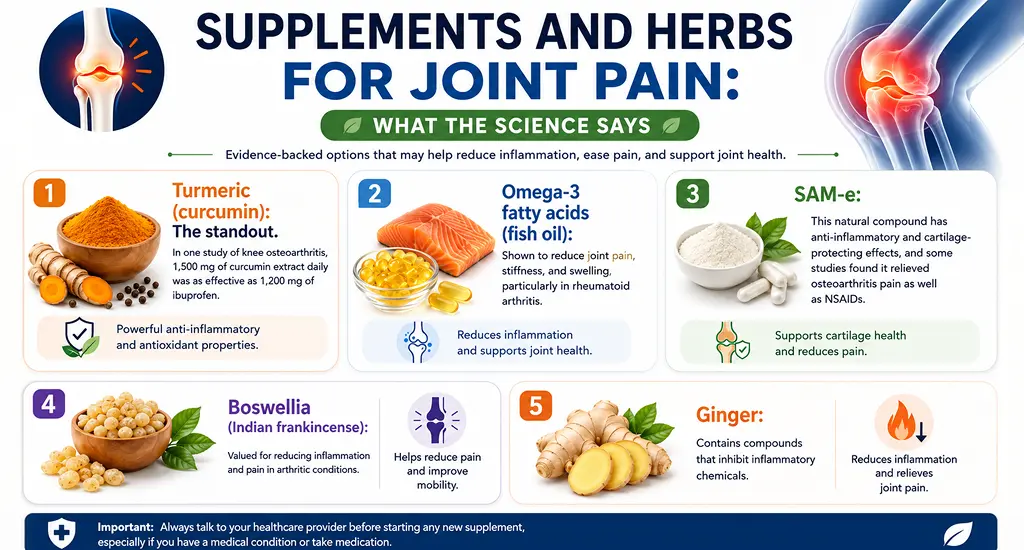
Supplements are the most searched joint pain natural treatment — and the area with the most hype. Here’s what the evidence supports:
- Turmeric (curcumin): The standout. In one study of knee osteoarthritis, 1,500 mg of curcumin extract daily was as effective as 1,200 mg of ibuprofen. Take it with black pepper or a fatty meal to improve absorption.
- Omega-3 fatty acids (fish oil): Shown to reduce joint pain, stiffness, and swelling, particularly in rheumatoid arthritis.
- SAM-e: This natural compound has anti-inflammatory and cartilage-protecting effects, and some studies found it relieved osteoarthritis pain as well as NSAIDs.
- Boswellia (Indian frankincense): Valued for reducing inflammation and pain in arthritic conditions.
- Ginger: Contains compounds that inhibit inflammatory chemicals.
One important caveat: despite its popularity, the American College of Rheumatology recommends against glucosamine for hip, knee, and hand osteoarthritis — the evidence simply doesn’t hold up. Chondroitin is conditionally recommended only for hand osteoarthritis.
Remember that the FDA doesn’t monitor supplements for quality or safety, and some interact with medications like blood thinners. Buy from reputable brands and clear any supplement with your doctor first.
Mind-Body Approaches to Managing Joint Pain
Chronic pain isn’t just physical. Stress, anxiety, and depression increase inflammation and amplify pain signals — people with rheumatoid arthritis are twice as likely to experience depression. Mindfulness meditation, guided imagery, and deep breathing lower stress and ease pain perception. Cognitive behavioral therapy (CBT) is especially well studied, helping you change thought patterns that make pain feel worse. There’s no downside to relaxation techniques, which makes them an easy addition to any joint pain holistic treatment plan.
When Alternative Treatments Aren’t Enough
Natural approaches can’t fix everything. See a doctor promptly if your pain is severe or persistent, your joint is visibly swollen or deformed, or pain keeps you from daily activities. Options like corticosteroid or hyaluronic acid injections can bridge the gap, providing weeks or months of relief while you continue conservative treatment. If joint damage is advanced, replacement surgery may ultimately offer the best quality of life. Ignoring worsening pain risks further joint damage — so keep your healthcare team in the loop.
FAQs
What is the most effective alternative treatment for joint pain?
Physical therapy and regular low-impact exercise have the strongest evidence, followed by acupuncture and weight management. Most people get the best results from combining several approaches.
Can joint pain be cured naturally?
No natural treatment cures arthritis, but many significantly reduce pain, improve function, and slow progression — often enough to delay or avoid surgery.
Does acupuncture really work for arthritis?
Yes, research supports it for short-term pain relief and improved physical function, particularly in knee osteoarthritis. It’s low-risk and safe alongside conventional care.
How can I stop joint pain from getting worse?
Stay active with low-impact exercise, maintain a healthy weight, eat an anti-inflammatory diet, don’t smoke, and follow your treatment plan consistently.
Final Thoughts
The best joint pain alternative treatment is rarely one thing — it’s movement, weight management, smart home remedies, and evidence-backed supplements working together. Start with one or two changes, track what helps, and build from there with your doctor’s support.