



If you’ve spent an evening reading back pain forums, you’ve seen the question phrased bluntly: is red light therapy legit, or expensive mood lighting?
Here’s the honest answer. Moderate-quality evidence supports short-term pain relief for chronic non-specific low back pain, but only when the dose is high enough and the therapy is paired with movement. Other well-designed trials found no advantage over a sham device. And no amount of light will repair a herniated disc or widen a stenotic spinal canal.
This guide covers what the research found, how the mechanism works, which types of back pain respond, an at-home protocol, what to look for in a device, and where the FDA claims end.
What Is Red Light Therapy for Back Pain?
Red light therapy uses specific wavelengths of red and near-infrared light to stimulate cellular activity. Applied to the back, it targets the muscles, fascia, and inflamed nerve tissue that generate most everyday back pain. It’s non-invasive, drug-free, and non-thermal. The light does not heat tissue the way a heating pad does.
Red light vs. near-infrared: which one reaches your spine?
Wavelength determines how deep the light penetrates, and for back pain, that’s the whole ballgame.
| Wavelength | Type | Approximate penetration | What it reaches |
| 630–660 nm | Red | ~8–10 mm | Skin, superficial fascia, surface circulation |
| 810–880 nm | Near-infrared (NIR) | Deepest of the common range | Paraspinal muscle, fascia, facet joint region |
| 1064 nm | Near-infrared | Deeper still, usually clinic-grade | Deep muscle and connective tissue |
For back pain, near-infrared does the heavy lifting. Red light alone treats the skin on your back, which is why every credible protocol calls for a dual-wavelength device that delivers red and NIR together.
Red light therapy, photobiomodulation, LLLT, and cold laser: same thing?
Mostly, yes. Photobiomodulation (PBM or PBMT) is the term used in journals. Low-level laser therapy (LLLT) and cold laser therapy refer to the same principle, delivered by laser diodes rather than LEDs. Marketing calls it all “red light therapy,” but you should search the research under photobiomodulation.
Does Red Light Therapy Work for Back Pain? What 4 Key Studies Actually Show
The evidence is genuinely mixed, and the split isn’t random: trials that used a high enough dose on shorter-duration pain tend to show benefit, while trials using low doses or home-grade output tend to match placebo. Here are both sides.
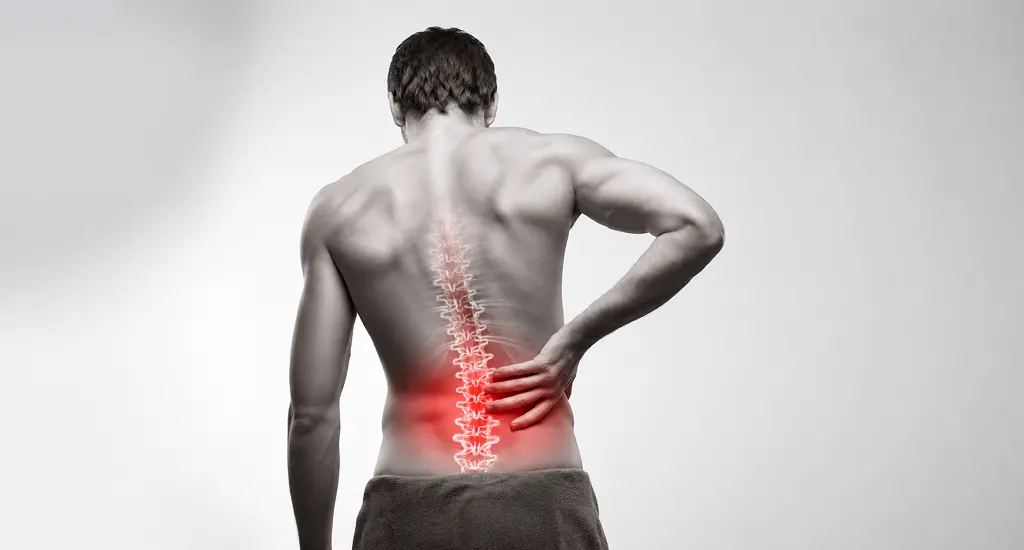
The evidence that supports it
The most-cited work is a 2016 meta-analysis by Glazov and colleagues in Acupuncture in Medicine, pooling data from 15 randomized trials involving 1,039 participants. It found moderate-quality evidence (GRADE) for a clinically important short-term reduction in chronic non-specific low back pain. The detail almost every product page omits: the benefit appeared only in trials delivering at least 3 joules per treatment point, and only where back pain had lasted under 30 months.
The Gale, Rothbart, and Li trial (2006) in Pain Research and Management tested a portable infrared wrap (800–1200 nm) in 40 patients with over 6 years of intractable low back pain over 7 weekly sessions. Average pain fell from 6.9 to 3.0 out of 10 in the treated group, versus 7.4 to 6.0 in the placebo group, with no adverse effects.
The evidence that doesn’t
A 2020 systematic review by Tomazoni and colleagues in the Journal of Physiotherapy pooled data from 12 trials involving 1,046 participants, most of whom were at low risk of bias, and reached the opposite conclusion. Against sham, the effect on pain and disability was clinically unimportant in both acute and chronic non-specific low back pain, and no better than exercise.
A 2026 double-blinded trial in Lasers in Medical Science then tested a home-based portable device (670, 780, 830 and 910 nm) in 30 patients, 20 minutes a day, five days a week for three weeks. Both the real-device and sham groups improved, with no significant difference on any outcome.
So what’s the honest verdict?
| Study | Year | Size | Finding |
| Glazov et al., Acupunct Med | 2016 | 15 RCTs, n=1,039 | Moderate GRADE evidence of benefit at ≥3 J/point, pain under 30 months |
| Gale et al., Pain Res Manag | 2006 | n=40 | Pain 6.9 → 3.0 vs placebo 7.4 → 6.0 over six weeks |
| Tomazoni et al., J Physiother | 2020 | 12 RCTs, n=1,046 | No clinically important benefit vs sham; no better than exercise |
| Wang et al., Lasers Med Sci | 2026 | n=30, home device | Real device equaled sham on all outcomes |
The picture is consistent rather than contradictory: dose and pain duration explain most of the disagreement. Under-powered devices and under-dosed protocols perform like placebo. Adequately dosed treatment, on pain that hasn’t been entrenched for years, shows a real short-term effect. Red light therapy is a reasonable adjunct with a strong safety record. It is not a proven cure, and not a substitute for loading the spine through exercise.
Why don’t doctors recommend red light therapy?
Clinicians stay cautious because sham-controlled results conflict, device output and dosing vary wildly between products, treatment is rarely covered by insurance, and long-term safety data doesn’t exist. Cleveland Clinic notes home devices are far less powerful than professional equipment and that results vary substantially between individuals. That’s caution, not dismissal.
How Red Light Therapy Relieves Back Pain (The Mechanism, Simply Explained)
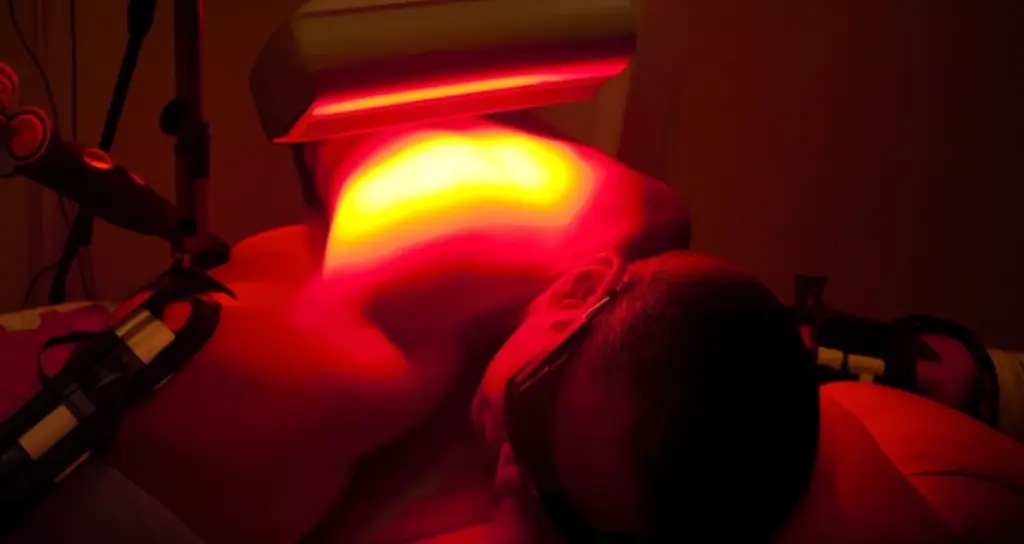
Photobiomodulation works through five overlapping cellular effects:
- Energy production. Red and NIR light is absorbed by cytochrome c oxidase in your mitochondria, raising ATP output, which is the fuel cells use to repair themselves.
- Circulation. The reaction releases nitric oxide, which dilates blood vessels so that oxygen reaches the tissue and waste clears faster.
- Reduced inflammation. Treated tissue shows lower pro-inflammatory cytokine levels, and inflammation around a nerve root is a major driver of pain.
- Tissue repair. Increased collagen synthesis supports rebuilding of strained muscle and connective tissue.
- Nerve modulation. Light appears to quiet overactive pain-signaling nerves and reduce muscle guarding.
“Can red light even reach the spine?” Answering the biggest objection
This is the most common criticism in back pain communities, and it deserves a straight answer: near-infrared light does not flood the intervertebral disc. Anyone claiming a panel reaches the nucleus of an L5–S1 disc is overselling it.
But that assumes the disc is the only thing generating your pain, and usually it isn’t. NIR light does reach the paraspinal muscles, thoracolumbar fascia, and tissue overlying the facet joints, and in most chronic back pain, muscle guarding and nerve inflammation account for much of what you feel day to day. Easing that layer can produce real relief even though the structure is unchanged: calming the alarm, not rebuilding the wall.
Which Types of Back Pain Respond Best (and Which Don’t)
| Condition | Evidence strength | Realistic expectation |
| Chronic non-specific low back pain | Strongest (still mixed) | Meaningful short-term pain reduction |
| Acute / sub-acute muscle strain | Good | Fast relief, often 1–2 weeks |
| Muscle spasm, myofascial and postural pain | Good | Less stiffness, easier movement |
| Herniated / bulging disc | Moderate, indirect | Less nerve inflammation, no structural change |
| Degenerative disc disease | Moderate, indirect | Symptom management only |
| Sciatica/radiculopathy | Partial | Helps inflammatory component only |
| Spinal stenosis | Weakest | Minimal; the problem is mechanical |
Chronic non-specific lower back pain
This is the best-studied application, and it is what every meta-analysis above measured. “Non-specific” means no single structural cause has been identified, which describes most long-term back pain. If that’s your diagnosis, you’re the population the research studied.
Acute muscle strain and muscle spasm
Strained paraspinal muscles and spasm respond fastest, often within one to two weeks. This is also where red light therapy for back muscle recovery makes the most sense: you’re accelerating a process that was going to happen anyway.
Does red light therapy help with herniated and bulging discs?
No. It cannot mechanically repair, retract, or reabsorb a disc. It can reduce inflammation around the irritated nerve root, which is often what turns a disc problem into daily pain.
A bulging disc protrudes while its outer layer stays intact; a herniated disc is one in which that layer cracks and the inner material escapes. Neither is reversed by light, and both can become far less painful once the surrounding inflammation settles.
Degenerative disc disease and spinal arthritis
Treat this as symptom management. Age-related disc changes and facet arthritis aren’t reversible, but less inflammation and stiffness can improve how far you walk and how well you sleep.
Sciatica and radicular pain
Sciatic pain down the leg comes from nerve root irritation, sometimes compounded by piriformis tightness. Red light therapy addresses the inflammatory and muscular contributors, not the compression. Expect partial help.
Does red light therapy help with spinal stenosis?
Evidence is weakest here. Stenosis is a mechanical narrowing of the spinal canal, and light cannot widen a canal. Some people report relief from easing the inflammatory and muscular layers around the narrowing, but this should never be considered a stenosis treatment.
When it’s the wrong tool: red flags that need a doctor
See a clinician if you have radiating numbness or weakness in a leg, changes in bowel or bladder control, pain that began after a fall, pain that wakes you at night, fever, or unexplained weight loss. These need diagnosis, not a light panel.
Red more related blog: Red light therapy for tendonitis
How to Use Red Light Therapy for Back Pain (Step-by-Step Protocol)
| Parameter | Recommendation |
| Wavelengths | Red 630–660 nm plus NIR 810–850 nm |
| Session length | 10–20 minutes per treatment area |
| Frequency | 3–5× per week (daily acceptable in weeks 1–4) |
| Course length | 4 weeks minimum, 8 weeks optimal |
| Distance | 1–6 inches; up to 12 inches for high-irradiance panels |
| Maintenance | 3–4× per week once improved |
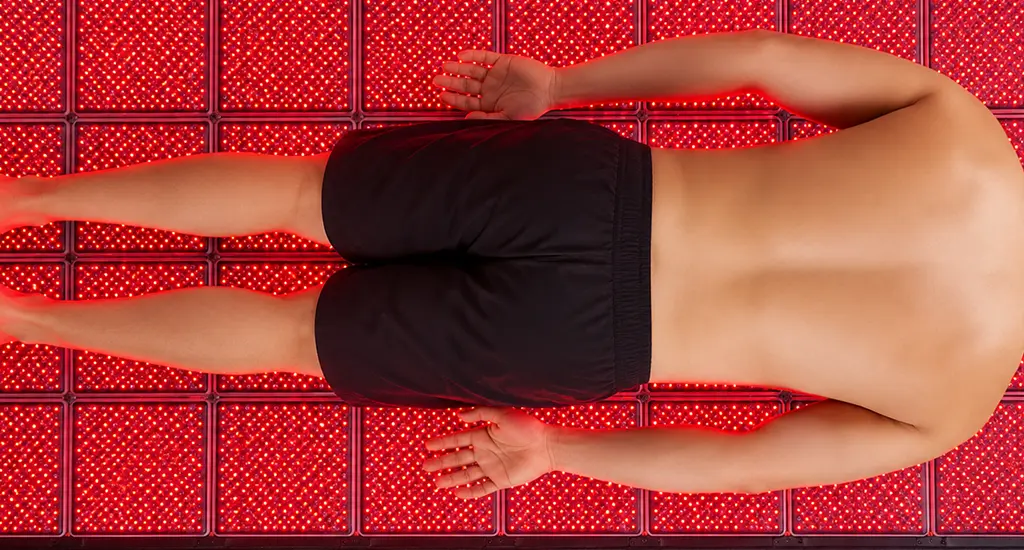
Step 1: Pick the right wavelength
Choose a device that emits red and near-infrared simultaneously. Red-only panels marketed for skin do very little for a deep lumbar problem. Near-infrared is invisible, so don’t judge output by how bright the device looks.
Step 2: Position it correctly
Treat bare skin, because clothing blocks much of the light. Center the device over the L4–L5 region or wherever tenderness is greatest. For disc-related pain, sit the panel slightly lateral to the midline rather than over the spinous processes. For sciatica, extend coverage toward the piriformis, midway between the sacrum and the outside of the hip. If both sides hurt, treat each for 10 minutes.
Step 3: Get the dose right
Ten to twenty minutes per area, three to five times a week, for at least four to eight weeks. This is what most people get wrong: not positioning, but consistency. In the trials that showed benefit, participants completed a full structured course; the forum users reporting results describe five days out of seven, week after week.
Step 4: Don’t overdo it, and respect the biphasic dose response
More is not better. Photobiomodulation follows a biphasic dose response: below the optimal window, nothing happens; above it, the benefit is blunted rather than amplified. So is 40 minutes too long? Yes. Stay within the manufacturer’s recommended duration.
Step 5: Using it for back muscle recovery after training
Treat the worked area after your session, or use the device 20–30 minutes before physical therapy to reduce guarding and improve what you can do in it. Keep timing consistent rather than chasing a perfect window.
Step 6: Stack it with movement
Here research and experienced users converge: red light therapy accelerates recovery; exercise creates it. Trials comparing photobiomodulation to exercise found no advantage for light alone. Used alongside core strengthening, walking, and physiotherapy, it earns its place. Used instead of them, it’s the expensive mood lighting the skeptics describe.
How Long Does Red Light Therapy Take to Work on Back Pain?
Most people need 2–4 weeks of consistent use before improvement is clearly noticeable. Acute muscle strain can respond in 1–2 weeks.
| Timeframe | What to expect |
| Week 1–2 | Reduced stiffness; acute strains may already feel better |
| Week 2–4 | Meaningful pain reduction for most responders |
| Week 4–8 | Peak benefit from a full course |
| After stopping | Pooled data suggests benefits can persist for weeks, but relief commonly fades within weeks of stopping |
Set a decision point: if you’ve had no change after 4–6 weeks of correctly dosed, consistent use, it isn’t working for your condition. Stop, and put the money into something with a better fit.
Choosing the Best Red Light Therapy Device for Back Pain
Panel vs. belt/wrap vs. handheld vs. clinic
| Type | Best for | Trade-off | Typical price |
| Entry belt/pad | Testing cheaply | Low output, small area | $79–$150 |
| Wearable wrap | Lumbar treatment while seated | Limited area | $200–$350 |
| Flexible band | Hands-free, any position | Narrow coverage | ~$500 |
| LED panel | Full back, highest output | Bulky, needs mounting | $500–$1,200 |
| In-clinic laser | Deep, high-power, tailored | Cost per visit | Varies |
The 6 specs that actually matter
Dual wavelengths (red plus near-infrared, not red alone). Irradiance in mW/cm², which determines whether you can reach a therapeutic dose. LED count and density. Coverage area matched to your painful region. No blue light if you’ll use it in the evening, since blue wavelengths interfere with sleep. And a 30–60 day return window, because you need a full trial course to know.
At-home device vs. in-clinic photobiomodulation
Clinic devices deliver far higher power and can be tuned to your condition, typically once or twice weekly. Home devices are lower-powered and rely on frequency to compensate, and the 2026 home-device trial found no advantage over sham. Searching for red light therapy for back pain near you and booking a short clinic course is a sensible way to learn whether you respond before buying hardware.
The cheapest way to test it before you commit
Many gyms, including Planet Fitness, offer red light beds as part of membership. A short trial there, or an entry-level belt, costs a fraction of a panel and answers the only question that matters: does your body respond?
Is it covered by insurance, HSA, or FSA?
Red light therapy is generally not covered by insurance. Many devices are HSA- or FSA-eligible, often with a letter of medical necessity. Ask before you buy.
Is Red Light Therapy for Back Pain FDA Approved?
No device is “FDA approved” for back pain. The correct term is FDA 510(k) cleared, a Class II pathway in which a manufacturer demonstrates that their device is substantially equivalent to one already on the market. Cleared claims are narrow: temporary relief of minor muscle and joint pain, relief of arthritis pain, and increased local blood circulation.
Cleared vs. approved vs. registered: how to read a product page
| Term | What it means |
| FDA approved | Reserved for high-risk Class III devices. No red light device qualifies. |
| FDA cleared | Legitimate. A 510(k) review of substantial equivalence for a Class II device. |
| FDA registered | Administrative only. The FDA has not reviewed the device or verified any claim. |
If a listing says “FDA approved” or “FDA certified” for a red light panel, that’s a marketing error at best. Look for a 510(k) number, and remember that clearance addresses safety, not how well something works.
Side Effects, Safety and Who Should Avoid It
Common (and rare) side effects
Red light therapy has a strong safety record; across the pooled trials, no serious adverse events were reported. The usual complaints are mild and temporary: slight skin redness or warmth, occasional headache, and eye strain without protection. Burns occur only through misuse.
Who should check with a doctor first?
Talk to your physician first if you have active or suspected cancer in the treatment area, if you’re pregnant and would treat the lower back or abdomen, if you take photosensitizing medications (some antibiotics, retinoids and diuretics), if you have a photosensitive condition such as lupus, or if you have an implanted device such as a spinal cord stimulator.
Skin tone, eye safety and long-term unknowns
The American Academy of Dermatology notes people with darker skin tones may experience hyperpigmentation, so start with shorter sessions. Wear eye protection when treating the upper back or neck, as near-infrared light is invisible yet intense. And be realistic about the evidence gap: nobody knows the effects of years of regular use because the studies haven’t run long enough.
Red more related blog: Red Light Therapy for Injury
Red Light Therapy vs. Other Back Pain Treatments
| Treatment | How it works | Evidence for low back pain | Best used for |
| Exercise / physical therapy | Loading, strength, motor control | Strongest of any option | Foundation of any plan |
| Red light therapy | Cellular repair, less inflammation | Mixed; moderate at adequate dose | Adjunct to exercise |
| Heating pad | Surface warmth, muscle relaxation | Modest, short-lived | Immediate comfort |
| TENS | Electrical nerve stimulation | Modest, variable | Temporary symptom control |
| NSAIDs | Systemic anti-inflammatory | Effective short-term | Flare-ups, GI caution |
| Chiropractic/manual therapy | Mobilization, manipulation | Moderate short-term | Stiffness, acute episodes |
| In-clinic laser | High-power photobiomodulation | Better dosing than home units | A supervised trial course |
Red light therapy vs. a heating pad: is it just expensive heat?
No, the mechanisms differ. A heating pad raises tissue temperature, relaxing muscle for as long as it’s on. Red light therapy is non-thermal: it triggers a photochemical reaction in your mitochondria that continues after the session ends. Heat manages the symptom; light targets the repair process. Many people use both: heat before movement, light as the recovery protocol.
What Real Users Say About Red Light Therapy for Back Pain
Scan the long-running back pain threads on Reddit and Mayo Clinic Connect, and a pattern emerges. Skeptics argue the light can’t penetrate deep enough to matter, a fair objection that is addressed above. The people reporting real results almost always describe the same behavior: using the device roughly five days out of seven, for weeks, while continuing to exercise or attend physiotherapy. Several make the reframe explicitly: light helps you recover from training and rehab, so it only pays off if you’re doing them.
Expectations among long-term users are modest and consistent: less inflammation, less stiffness, easier to stay active, better sleep, and a repeated caveat that it won’t cure the underlying problem. A common rule of thumb is that if it’s going to help, you’ll notice within about six weeks. That’s pattern recognition, not proof, but it lines up with the trials.
Is Red Light Therapy Worth It for Your Back Pain?
It’s worth a structured 6–8 week trial if you have chronic non-specific or muscular low back pain, you’ll genuinely use it 3–5 times a week, and you’re pairing it with exercise or physiotherapy. It’s not worth your money if you expect structural repair of a disc, relief from spinal stenosis, or a replacement for the movement work that rebuilds a back.
Test it cheaply first, dose it properly, and give it four to six weeks before you decide.



One Response
Clear and simple to understand information. Thanks you.
For lower back pain and sciatica I have been prescribed steroid injections (L3-4 and 4-5) with lidocaine and the use of dye. My RLT device package recommends a waiting period for the use of RLT after a steroid injection, but not how long. Do you have an opinion or recommendation about this ?
Gratefully,
Jacques