


Manual Therapy in Cherry Hill, NJ for Athletes and Active Adults

Treatment Modalities
Athlete-First Approach
You wake up with a locked-up neck. Your lower back tightens every time you sit too long. Your shoulder won’t let you reach overhead without a pinch. If you’re tired of working around the pain, manual therapy can help you move freely again. At Rehabletics, our sports physical therapists use precise, hands-on techniques to ease pain, loosen restricted joints and restore the motion you’ve been missing. Then we pair that hands-on work with targeted movement, so the relief lasts and you get back to training, competing and living without holding back.
Ready to feel the difference? Call Rehabletics today to book your manual therapy evaluation in Cherry Hill
What Is Manual Therapy?
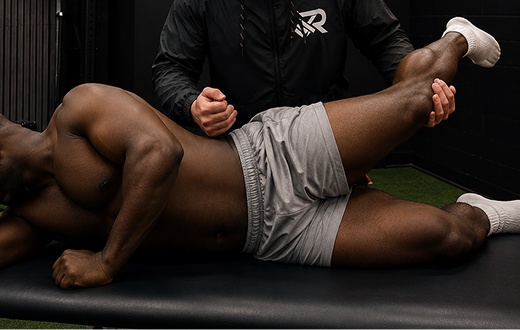
Manual therapy is a skilled, hands-on form of physical therapy. A trained therapist uses their hands to apply controlled pressure and movement to your joints, muscles, ligaments and fascia. The goal is to reduce pain, improve mobility and help your body move the way it is built to move.
The American Physical Therapy Association describes manual therapy as the use of skilled hand movements to mobilize joints and soft tissue. Modern manual therapy does more than loosen tight tissue. It also calms an overprotective nervous system, which is often the real reason a joint feels stiff or a muscle won’t let go.
What Is Manual Physical Therapy?
Manual physical therapy is simply manual therapy delivered inside a full physical therapy plan. Hands-on treatment is one piece. It works alongside a thorough evaluation, corrective exercise, strength training and education about your injury. That is the key difference between manual physical therapy and a one-off massage or adjustment: every technique has a clear purpose and leads into the next step of your rehab.
Manual Therapy vs. Massage
Massage is often aimed at general relaxation. Manual therapy is targeted. Your therapist first finds the specific joint, muscle or fascial restriction that limits you, treats it directly and then checks how your movement changed. It is diagnosis-driven care, not a spa service.
Manual Therapy Techniques We Use
No two bodies respond the same way, so your therapist chooses techniques based on what your evaluation shows. Here are the main tools in our hands-on toolbox.
Joint Mobilization
Gentle, rhythmic movements applied to a stiff joint. Mobilization improves joint mechanics, eases pain and restores range of motion in places like the spine, shoulder, hip, knee and ankle.
Joint Manipulation
A quick, low-amplitude thrust applied to a joint. You may hear an audible “pop,” which is simply gas releasing from the joint fluid. Manipulation is used only when it suits your condition and after careful screening.
Soft Tissue Mobilization
Pressure, kneading and stretching applied to tight or guarded muscles. It helps muscles relax, improves blood flow and makes it easier to move through a full range of motion.
Myofascial Release
Sustained pressure on fascia, the connective tissue that wraps your muscles. Releasing restricted fascia can reduce tension and help you move more smoothly.
Trigger Point Therapy
Focused pressure on tender muscle knots that often send pain to other areas. Easing these knots can reduce local pain and referred pain, such as headaches that start in a tight upper trapezius.
Active Release and Adhesion Work
This technique combines firm pressure with active movement. Your therapist holds pressure on a tight or scarred area while you move the muscle through its range. It helps break up adhesions and scar tissue that build up after injury or repetitive training.
Mobilization With Movement
Your therapist applies a sustained glide to a joint while you actively perform the movement that usually hurts. Many patients find the motion becomes easier and less painful right away, which makes it a great bridge into exercise.
Instrument-Assisted Soft Tissue Mobilization
Specialized tools let your therapist apply precise pressure to tissue and detect restrictions the hands might miss. Learn more about our scraping (IASTM) therapy.
Active Release Technique in Cherry Hill: How We Approach It
Many athletes come to us searching for active release technique after a tight hamstring, a stubborn hip flexor or a forearm that flares with every workout. Active Release Techniques® is a specific, trademarked soft tissue system. The idea behind it is simple: tension plus movement. Pressure pins down the restricted tissue while the muscle lengthens underneath it, which helps the layers glide again.
At Rehabletics, active release and adhesion work is part of our manual therapy toolbox. We use it where it fits your evaluation, and we follow it with mobility and strength work so the muscle keeps its new range when you return to your sport.
What Is Functional Manual Therapy?
Functional manual therapy is an approach that connects hands-on treatment to how you actually move. Rather than treating a joint or muscle in isolation, the therapist looks at three things together: how well your tissues and joints move, how well your muscles fire and control that motion, and how you use it in real tasks such as squatting, running, throwing or lifting.
The term Functional Manual Therapy® is a registered name for a specific system taught by the Institute of Physical Art. Our care is built on the same core idea. We treat the restriction with our hands, then immediately retrain the movement so your nervous system learns to use the new range. That is how a looser hip turns into a better squat and a calmer shoulder turns into a stronger throw.
How Manual Therapy Relieves Pain
Manual therapy works on two levels: your nervous system and your tissues.
- It calms pain signals. Hands-on input sends signals to your spinal cord that help block pain messages from reaching your brain. This is often called the pain gate effect.
- It relaxes a protective system. When you are hurt, your body guards the area with muscle tension. Skilled touch helps your nervous system feel safe enough to let go.
- It improves tissue mobility. Mobilization and soft tissue work restore glide between muscles, fascia and joints.
- It supports blood flow. Better circulation helps tissues recover. Some research also suggests manual therapy may reduce certain inflammatory markers.
The relief you feel after a session opens a window. We use that window to load the tissue with exercise so the improvement sticks.
Benefits of Manual Therapy for Athletes and Active Adults
- Less pain so you can train and move with confidence
- More range of motion in stiff joints and tight muscles
- Smoother, more efficient movement for running, lifting, throwing and cutting
- A faster start to strength work because pain no longer blocks your exercises
- Less reliance on pain medication for many patients
- Better recovery between hard training blocks and competitions
Ask a Specialist!
🔒 Your info is safe. We never share it.
Conditions We Treat With Manual Therapy
Manual therapy is most effective when it is paired with exercise and education. We commonly use it for:
- Neck pain and stiffness, including tension headaches
- Low back pain and stiffness from sitting or lifting
- Shoulder pain and limited overhead reach
- Hip, knee and ankle joint pain
- Muscle tension and tightness
- Sports injuries such as strains and sprains
- Tendinopathy and other overuse problems
- Plantar fasciitis
- Arthritis-related pain and stiffness
- Recovery after surgery, as part of our post-surgical rehabilitation program
What a Manual Therapy Session Is Like
H3: Your First Visit Starts With a Full Evaluation
Your first appointment begins with a conversation. Your therapist listens to your history, learns what makes your symptoms better or worse and asks about your sport, work and goals. Then we test your movement, strength, joint mobility and posture, looking above and below the sore spot to find the real cause. We also screen your health history to make sure hands-on care is safe for you. Want a step-by-step preview? Read what to expect at your first sports physical therapy appointment.
During Treatment
Every visit is one-on-one with a Doctor of Physical Therapy for the full session. Your therapist applies the techniques that fit your evaluation, checks in with you about pressure and comfort, and retests your movement to confirm the change. Most sessions move straight from hands-on work into targeted exercise.
After Your Session
Many people feel looser and move more easily right away. Mild soreness for a day or two is common, much like the soreness after a new workout. You’ll leave with simple home exercises and self-management strategies so you keep making progress between visits.
How Many Sessions Will I Need?
It depends on your condition, how long you’ve had it and what you want to get back to. Some people notice relief within a few visits, while longer-standing problems typically need more time. We review your progress at every session and adjust the plan as you improve.
Is Manual Therapy Safe and Worth It?
For most people, manual therapy is both safe and effective. Clinical guidelines recommend it for many common musculoskeletal conditions, especially when combined with exercise. Serious side effects are rare.
Your therapist screens your health history before treatment and monitors how you respond throughout every session. Please tell us before your visit if you have:
- Osteoporosis or a recent fracture
- A bleeding disorder or a prescription for blood thinners
- An active infection, open wound or skin condition in the area
- Unexplained pain, numbness or weakness
- A history of cancer or recent surgery
None of these automatically rule you out. They simply help us choose the safest techniques for you.
How Manual Therapy Fits Into Your Rehab Plan
Hands-on care gets you moving. Exercise keeps you moving. That is why manual therapy is never a stand-alone fix at Rehabletics. Depending on your needs, we may combine it with:
- Strength and mobility training to lock in your new range of motion
- Movement retraining for the specific demands of your sport
- Dry needling for stubborn trigger points that hands alone can’t fully release
- Recovery technology from our 20-plus treatment options, matched to your injury
Why Choose Rehabletics for Manual Physical Therapy in NJ
- Care led by Dr. Jaime Mor, PT, DPT, ATC: Our founder is a Doctor of Physical Therapy, a Certified Athletic Trainer and a sports physical therapy contractor for the Philadelphia Flyers and Philadelphia Eagles.
- Skilled, hands-on therapists: Every technique is guided by clinical reasoning, not a routine.
- One-on-one sessions: You work with a Doctor of Physical Therapy for the full visit, with no hand-offs to aides.
- Care built around you: Your plan reflects your body, your sport and your goals, never a template.
- Lasting results: We pair hands-on care with exercise so you don’t need us forever.
- A 5.0 Google rating: Athletes and active adults across South Jersey trust us with their recovery.
Serving Cherry Hill and South Jersey
Our clinic is at 5 Esterbrook Lane in Cherry Hill, NJ, an easy drive for athletes and active adults across South Jersey. We regularly see patients from Haddonfield, Voorhees and nearby towns.
New Jersey allows direct access, so you can usually start physical therapy without a doctor’s referral. Learn how direct access physical therapy in NJ works. Questions about insurance? See how our out-of-network physical therapy model works.
Take the First Step Toward Moving Better
You don’t have to keep working around the pain. Schedule your manual therapy evaluation in Cherry Hill, NJ, and let our team build a plan that gets you back to the training, sport and daily life you love.
Ask a Specialist!
🔒 Your info is safe. We never share it.
Frequently Asked Questions
What Is Manual Therapy and How Is It Different From Massage?
Manual therapy is a skilled, hands-on form of physical therapy delivered by a trained therapist to treat joints, muscles and connective tissue. Unlike a relaxation massage, it targets specific restrictions found during your evaluation and is paired with movement and education for lasting change.
Does Manual Therapy Hurt?
Manual therapy should not be painful to work. Most techniques are gentle, and your therapist adjusts the pressure to your comfort. Some people feel mild soreness for 24 to 48 hours afterward, similar to the soreness after a workout.
How Many Manual Therapy Sessions Will I Need?
It varies with your condition, how long you've had it and your goals. Some people feel relief within a few visits, while longer-standing problems usually take more time. We track your progress each session and adjust your plan as you improve.
Is Active Release Technique the Same as Manual Therapy?
Active release is one type of manual therapy. It combines pressure on a tight or scarred area with active movement to help tissues glide again. At Rehabletics, active release and adhesion work is one of several hands-on techniques we use, always paired with exercise.
Is Manual Therapy Safe?
Yes, for most people. Serious adverse events are rare. Your therapist reviews your health history, screens for any conditions that need a different approach and monitors your response throughout each session.