


Cupping Therapy in Cherry Hill, NJ for Athletes and Active Adults

Treatment Modalities
Athlete-First Approach
Tight hamstrings that never seem to loosen. A stiff upper back after a long week at your desk. Legs that still feel heavy two days after a game. If stretching and foam rolling only take the edge off, cupping therapy may be the missing piece. At Rehabletics, we use gentle suction to release tension, improve blood flow, and help your muscles recover so you can get back to training, competing, and moving with confidence.
Every session is guided by a sports physical therapist who knows how muscles, fascia, and joints work together. That means cupping is never a random add-on. It is one targeted part of a plan built around your body and your goals.
Ready to feel the difference? Call Rehabletics today to book your first cupping therapy session.
Stiff, Sore, and Tired of Pain That Won’t Let Go?
Some muscle tension sticks around no matter what you try. Tissue gets tight, blood flow slows, and the area stays sore and restricted. Cupping works differently from pressing into a muscle. Instead of pushing down, it lifts the tissue up, which helps reach layers that stretching and foam rolling often miss. Many athletes and active adults tell us their muscles feel looser and lighter after a session, and that makes the strength work that follows more productive.
What Is Cupping Therapy?
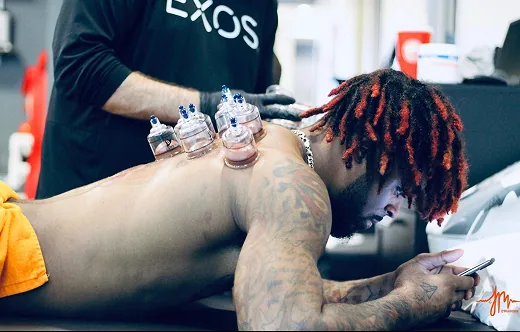
Cupping therapy is a hands-on treatment where a trained therapist places special cups on your skin and creates gentle suction. The suction lifts the skin and the tissue underneath, drawing fresh blood to the area and easing tension in tight muscles and fascia.
This kind of suction cup therapy has been used for thousands of years in China, Egypt, and the Middle East. It reached a much wider audience when Olympic swimmer Michael Phelps competed with the circular marks on his shoulders and back. Today, muscle cupping is a common part of modern physical therapy and sports recovery, used alongside exercise and other hands-on care.
How Does Cupping Therapy Work?
When a cup is placed on your skin, the suction pulls the tissue upward and expands the space between your muscle layers and fascia. That simple change can help in several ways:
- Decompresses tissue: Lifting the layers apart can ease the feeling of tightness and restriction.
- Increases circulation: Fresh blood moves into the area, bringing oxygen and nutrients that support recovery.
- Helps calm inflammation: Better local blood flow can help the tissue settle after hard training.
- Relaxes tight muscle bands: Muscles that have been guarding or knotted up often let go more easily.
- Improves range of motion: Looser tissue usually means smoother, freer movement.
Cupping also stimulates nerves just under the skin, which may help quiet pain signals for a while. That window of relief is a great time to move, stretch, and strengthen.
How Do Suction Cups Work on Your Back?
Your back is one of the most common places we use cupping, because the large, flat muscles along your spine and shoulder blades are easy to reach. The cups lift the tissue that gets compressed from sitting, lifting, and training. Many people feel the area loosen as the cups pull, and they notice it is easier to bend, twist, and reach afterward. If back tightness is part of a bigger problem, we also treat the cause through our back pain treatment program.
Does Cupping Really Work?
Many athletes and active adults report less soreness, less tension, and better mobility after cupping. The research is still growing, though. A 2018 systematic review of studies in amateur and professional athletes (Bridgett and colleagues, Journal of Alternative and Complementary Medicine) concluded that more high-quality research is needed before firm recommendations can be made. That is exactly why we use cupping as one part of a complete rehab plan, not as a stand-alone fix.
Types of Cupping Therapy We Offer
Dry Cupping
The cups stay in one place for several minutes to create steady suction over a tight area. Dry cupping is the most common approach in clinical settings, and it is the foundation of our cupping treatments in Cherry Hill.
Running Cupping (Cupping Massage)
Your therapist applies a light oil and glides the cups across the area. This cupping massage feels similar to a deep tissue massage with cupping added, and it works well over larger muscles like the back, hamstrings, quads, and calves. Athletes often know it as sports massage cupping, because it is a favorite for loosening up between hard training days.
Silicone and Pump Cupping
Modern silicone cups and hand-pump cups let your therapist fine-tune the amount of suction. This helps us match the pressure to your comfort level and the area being treated.
Dry Cupping vs. Wet Cupping (Hijama)
Wet cupping, also called hijama, adds small, shallow cuts to the skin so a small amount of blood can be drawn into the cup. It is a traditional practice with roots in the Middle East and Asia. Dry cupping uses suction only and does not break the skin. Our sessions use dry cupping methods, which fit naturally into a sports physical therapy plan focused on muscle recovery and movement.
Sports Cupping Therapy: Benefits for Athletes and Active Adults
Cupping for athletes is all about helping your body bounce back between workouts, practices, and games. Common benefits include:
- Faster-feeling recovery after heavy training or competition
- Less muscle soreness and tightness in hard-working areas
- Better range of motion so you can move freely and train with good form
- Relief from stubborn knots that keep coming back
- A relaxing reset for both your muscles and your stress levels
Whether you run, lift, play a field sport, or simply want to stay active without nagging aches, sports cupping therapy can support the work you are already putting in.
Conditions We Use Cupping Therapy For
Cupping is most helpful for muscle and soft tissue problems. We often use it as part of care for:
- Back pain and stiffness
- Neck and shoulder tension
- Tight muscles and limited range of motion
- Muscle strains once the early healing phase has passed
- Sports injuries and post-workout soreness
- Knee pain linked to tight thigh and hip muscles
- Headaches related to muscle tension
- Stress and general muscle fatigue
Cupping for Plantar Fasciitis
Heel pain from plantar fasciitis is often linked to tight calves and tension along the bottom of the foot. Small cups on the calf and arch can help loosen that tissue and ease the pull on your heel. We pair it with calf and foot strengthening, load management, and footwear advice through our plantar fasciitis treatment plan, because lasting relief comes from building a stronger foot, not just a looser one.
Cupping for Tension Headaches
Tension headaches often start with tight muscles across the upper back, shoulders, and base of the skull. Cupping these areas can help release that tension and improve blood flow. We also look at your posture, desk setup, and neck strength, so the headaches are less likely to return once the muscles relax.
Ask a Specialist!
🔒 Your info is safe. We never share it.
What to Expect During Your Cupping Session
Before Treatment
Your therapist reviews your health history, any medications, and what you want to get out of treatment. We check how you move and where the tension is coming from, then explain what we plan to do and what you will feel.
During Treatment
You get settled in a comfortable position, usually lying down. Your therapist places the cups on the target area and adjusts the suction. You will feel a pulling or tightening sensation that most people find relaxing. Cups usually stay on for about 5 to 10 minutes, or your therapist may glide them across the muscle. A full session can last anywhere from 15 minutes to an hour, depending on what else is included in your visit.
After Treatment
Round, reddish or purple marks are normal. They are not true bruises. They come from blood being drawn toward the surface and usually fade within a few days to about a week. The color can vary with your skin tone and how tight the area was.
Post Cupping Care: What to Do After Your Session
A little aftercare helps you get the most from each session:
- Drink plenty of water through the rest of the day.
- Keep the area warm and covered, especially in cold weather.
- Move gently with easy walking and the stretches your therapist gives you.
- Skip very hot showers, saunas, and intense workouts for the rest of the day.
- Eat a normal, balanced meal and go easy on alcohol.
People often ask what to eat after hijama or cupping. There is no special diet. Light, nourishing meals, plenty of fluids, and a good night’s sleep are usually all your body needs to recover.
Is Cupping Therapy Safe? Side Effects and Who Should Check First
Cupping is a low-risk treatment for most healthy adults when a trained professional performs it. The most common side effects are temporary marks, mild soreness similar to a deep massage, and occasional light-headedness. When people search for the dangers of cupping, the real risks usually come from poor technique, unclean equipment, or treating someone who should not have it. That is why we screen every client first and follow strict sanitization between sessions.
Please talk with us before cupping if you:
- Are pregnant
- Take blood thinners
- Have a bleeding disorder
- Have cardiovascular disease
- Have a skin condition such as eczema or psoriasis
- Have open wounds, a recent injury, or inflamed skin in the area
If cupping is not the right fit, we have many other ways to help you recover.
How Cupping Fits Into Your Rehab Plan
Cupping works best as one part of a bigger plan. After the cups loosen tight tissue, we use that window to restore movement and build strength so the results last. Depending on your goals, cupping may be combined with:
- Manual therapy to mobilize stiff joints and soft tissue
- Scraping (IASTM) to work through stubborn, restricted tissue
- Targeted strengthening and movement retraining to address why the tension built up in the first place
Curious how cupping compares with other natural options for aches and stiffness? Our guide to alternative treatments for joint pain explains what each approach can and cannot do.
Why Rehabletics Is a Trusted Choice for Cupping Therapy
Finding a trusted cupping therapist matters, because the same tool can feel very different in skilled hands. Here is what you get at Rehabletics:
- Care led by Dr. Jaime Mor, PT, DPT, ATC: Our founder is a Doctor of Physical Therapy, a Certified Athletic Trainer, and a proud PT contractor for the Philadelphia Flyers and Philadelphia Eagles.
- Trained, licensed therapists: Our team understands anatomy, injury, and recovery, so cupping is placed where it will help most.
- Personalized treatment plans: We build every plan around your condition, your sport, and your goals.
- A clean, safe environment: We follow strict sanitization between every client.
- More than 20 treatment modalities: Cupping is one of many tools, so you always get the right mix for your body.
- A 5.0 Google rating: Athletes and active adults across South Jersey trust us with their recovery.
Where Can I Get Cupping Done Near Cherry Hill?
Our clinic is at 5 Esterbrook Lane in Cherry Hill, NJ, an easy drive for athletes and active adults across South Jersey. Many clients come to us from nearby towns, including Haddonfield and Voorhees.
Clinic hours:
- Monday to Friday: 7:00 AM to 7:00 PM
- Saturday: 8:00 AM to 12:00 PM
- Sunday: 9:00 AM to 12:30 PM
Early, evening, and weekend appointments make it easier to fit recovery around school, work, and your training schedule.
Ready to Feel Looser, Lighter, and Back in the Game?
Stop letting tight, sore muscles hold back your training. Talk with our team about whether cupping therapy fits your recovery plan, and get a clear path forward from day one.
Ask a Specialist!
🔒 Your info is safe. We never share it.
Frequently Asked Questions
Does cupping therapy hurt?
Cupping should not be painful. Most people feel a pulling or tightening sensation that becomes relaxing within a minute or two. You may feel mildly sore afterward, similar to how you feel after a deep massage. Your therapist adjusts the suction to keep you comfortable.
How long do cupping marks last?
Cupping marks usually fade within a few days to about a week. They are not true bruises. They come from blood drawn toward the surface of the skin, and their color can vary with your skin tone and how much tension was in the area.
How often should I get cupping therapy?
It depends on your goals. For an ongoing issue, many people start with one or two sessions a week, then move to occasional maintenance visits as they improve. Your therapist will recommend a schedule that fits your condition and training load.
Is cupping therapy safe?
Cupping is a low-risk treatment when a trained professional performs it with clean equipment. It is not recommended for everyone, including people who are pregnant, take blood thinners, or have bleeding disorders, heart conditions, or certain skin conditions. We screen every client before treatment.
What is the difference between dry cupping and wet cupping?
Dry cupping uses suction only and does not break the skin. Wet cupping, or hijama, adds small cuts so a little blood is drawn into the cup. At Rehabletics, we use dry cupping methods as part of sports physical therapy and recovery care.
How should I prepare for my cupping session?
Wear loose, comfortable clothing, drink water beforehand, and avoid a heavy meal right before your visit. Let your therapist know about any medications or health conditions so we can make sure cupping is right for you.